The Divide
Over 300,000 Rohingya still live in Myanmar in a situation of apartheid. Stateless, scapegoats for the country’s misfortunes, they suffer discrimination, deprivation and confinement at the hands of the state, with no hope that the situation will change, while the neighboring Buddhist majority continues its economic and social development.
By studying the appropriation each community has of Sittwe beach, one same geographic and symbolic space, this photo series aims to reveal the very different realities each group has to face.
This short stretch of land facing the Bay of Bengal could be a beach like any other.
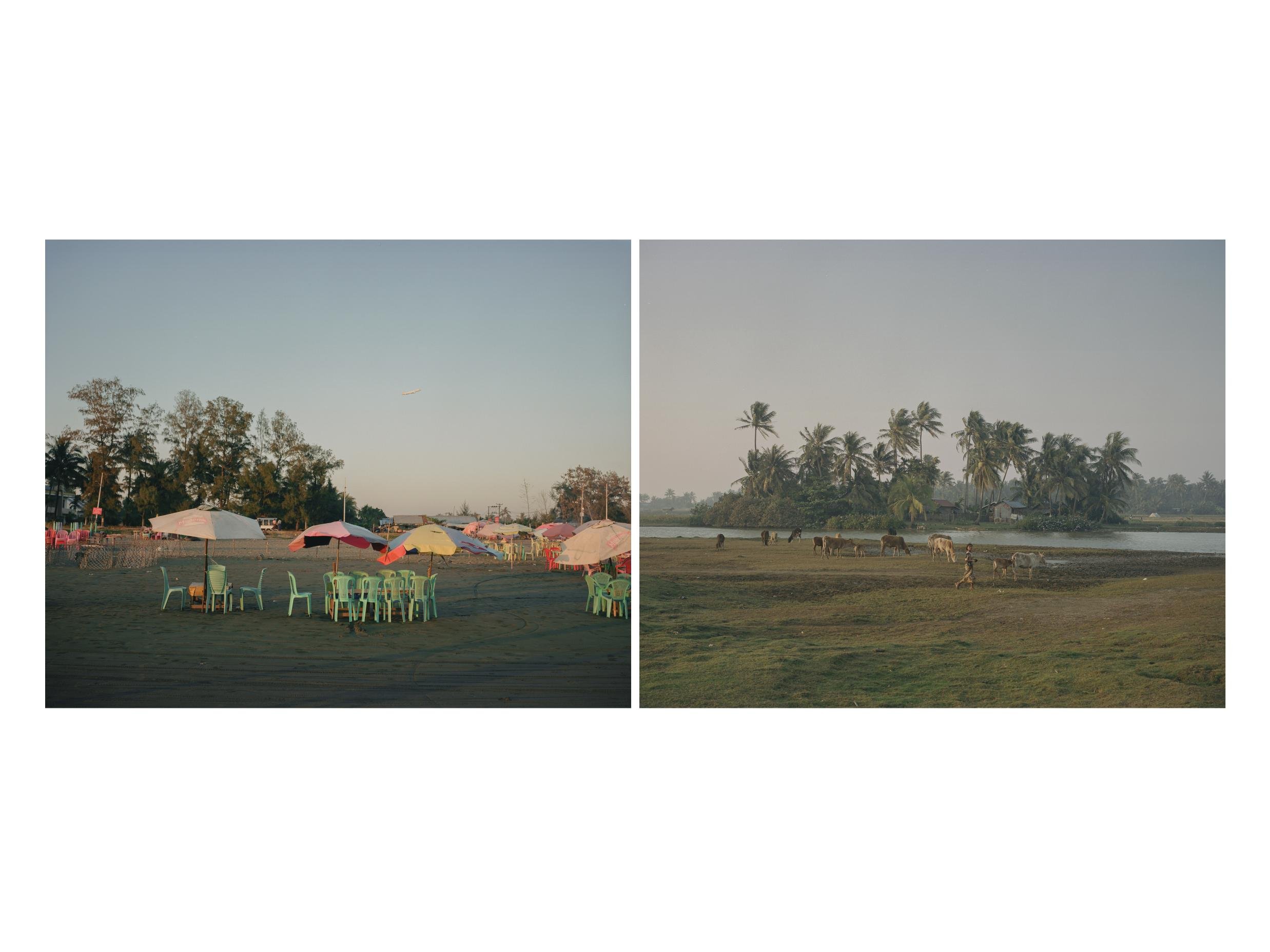
Children build sand castles - pagodas, rather, courtesy of the preponderant Buddhist culture -, families rent large inflatable tubes, run to the sea and play in the waves, men and women in their Sundays best take romantic strolls enjoying the breeze and snapping selfies as the sun sets over the horizon. On weekends, come rain or shine, endless football games are played as restaurants fill with lively chatter and loud Burmese cover songs are blasted through the loudspeakers. This is a place of leisure, pleasure, consumption and relief, oblivious to the tragedies that play out only meters away.
But cross the small bridge to the north, past the high-end hotel and the guard post, where the concrete road gives way to a dirt track and potholes, and a different reality comes into sight.
Here, there are no fun and games. No restaurants, lampposts or fancy motorcycles to show off on. Only an endless stretch of empty beach, the crashing waves on one side, rundown fences on the other, keeping visitors away as much as populations in. Lone fishermen from villages nearby risk themselves across the fences, setting-up worn-up nets for a paltry pittance, careful never to venture to the other side, barred from entering the city ever since the violent clashes that opposed the Buddhist majority to the Muslims.
This is the Rohingya side of the beach.
On this tacit border between two communities, the beach is the epitome of the different realities each side has been facing since segregation measures were implemented against the Rohingya, acting as a mirror to the apartheid that has slowly settled in the region.
Today, meters apart, under the same sky and looking to the edge of the same horizon, are two very different realities. And one’s playground has become another’s prison.
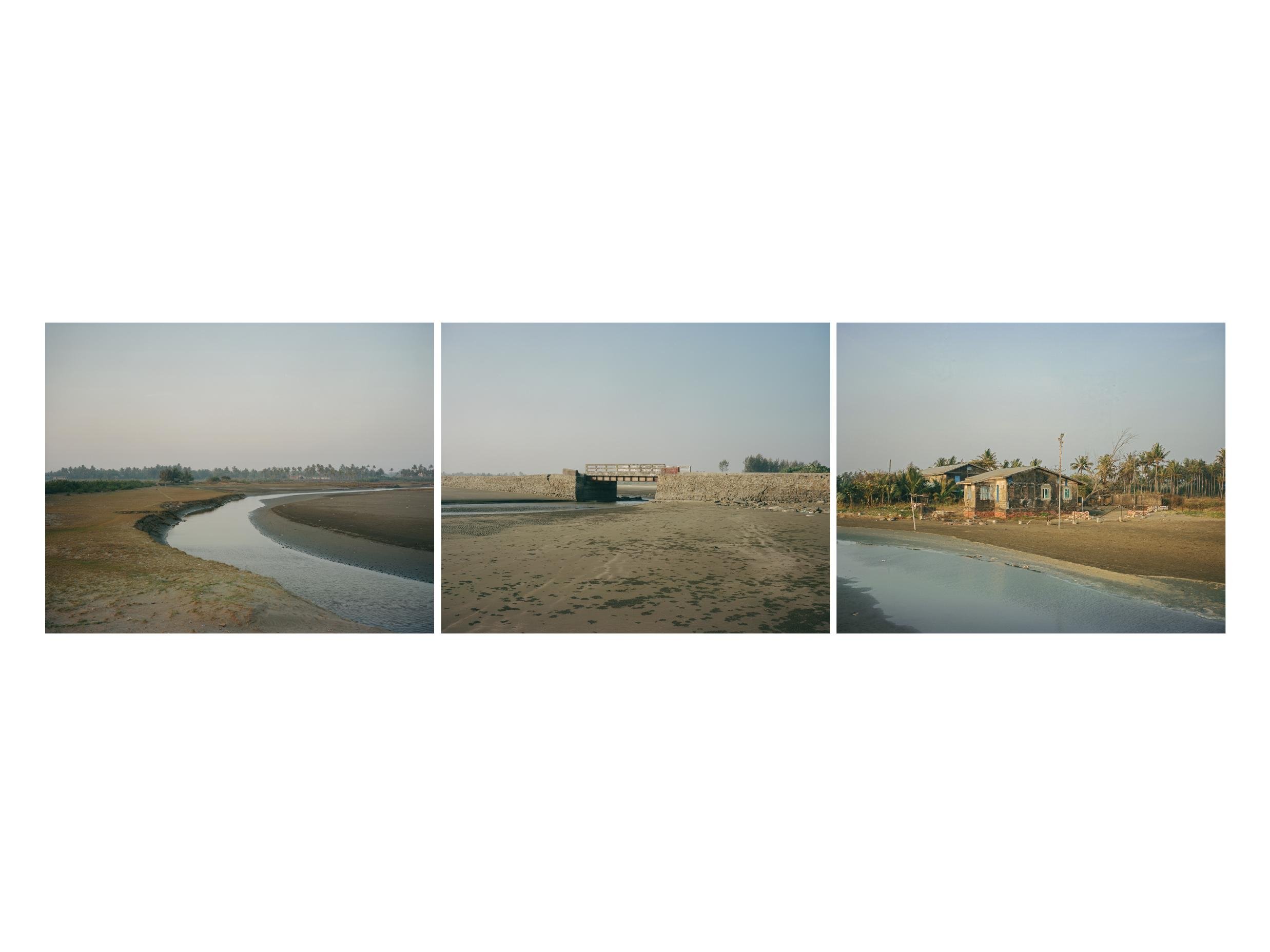
Panorama of the bridge separating the two communities. Since the violent clashes of 2012 between the two communities, a state of apartheid is slowly settling in Central Rakhine. Today, Rohingya are forbidden from entering Buddhist populated areas and the authorities keep a close watch on them. On the beach, the river crossing it has been used as a natural separation between the two communities, and Muslims make sure never to enter the Buddhist areas, although the contrary isn't always true.
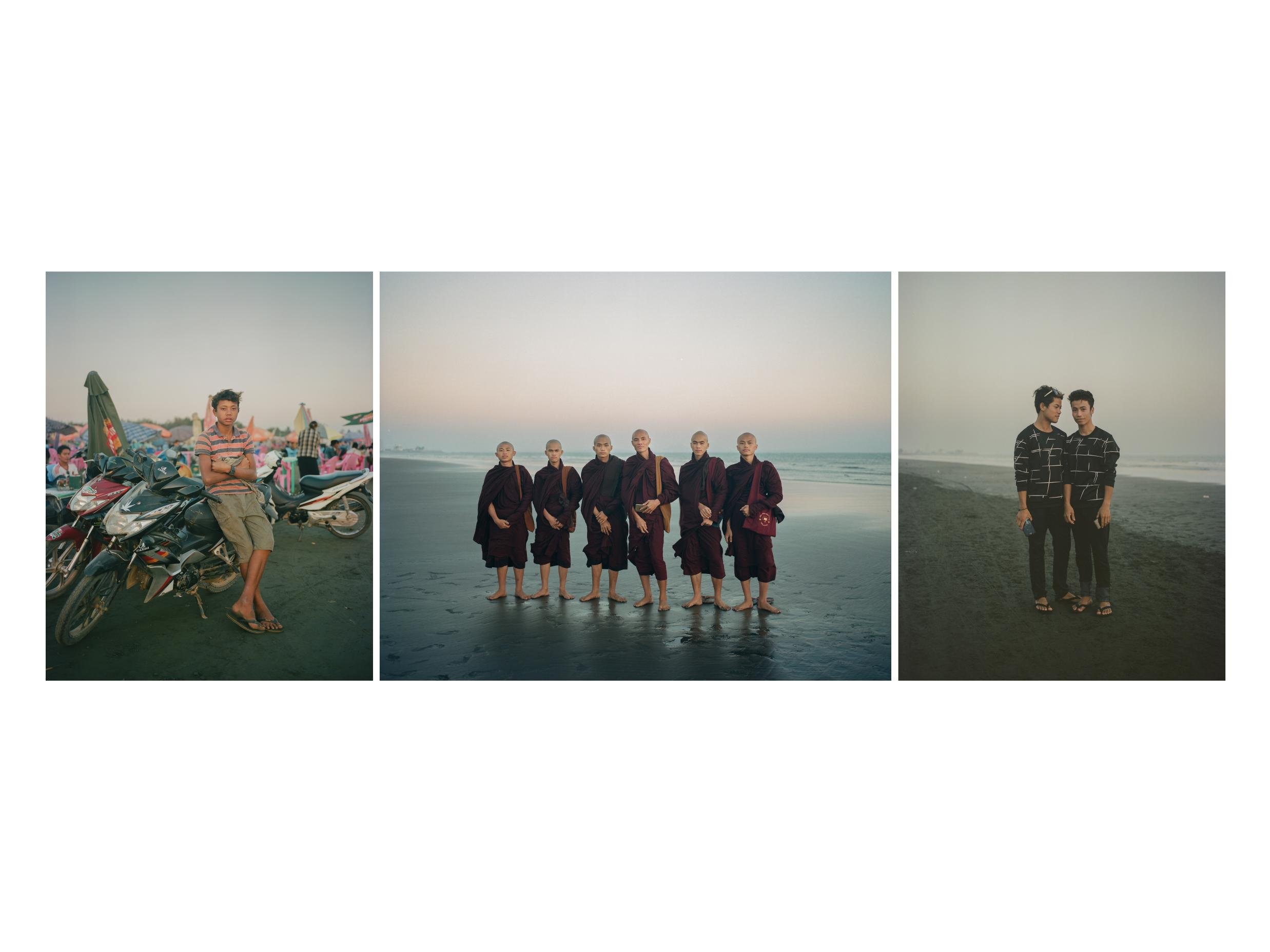
Rakhine Buddhists Portraits Left: A young boy working at one of the many restaurants on the Buddhist side of the beach, March 3rd 2019 Middle: Novice monks. February 14 2019. Right: Two friends on a Sunday stroll on the beach. February 17 2019
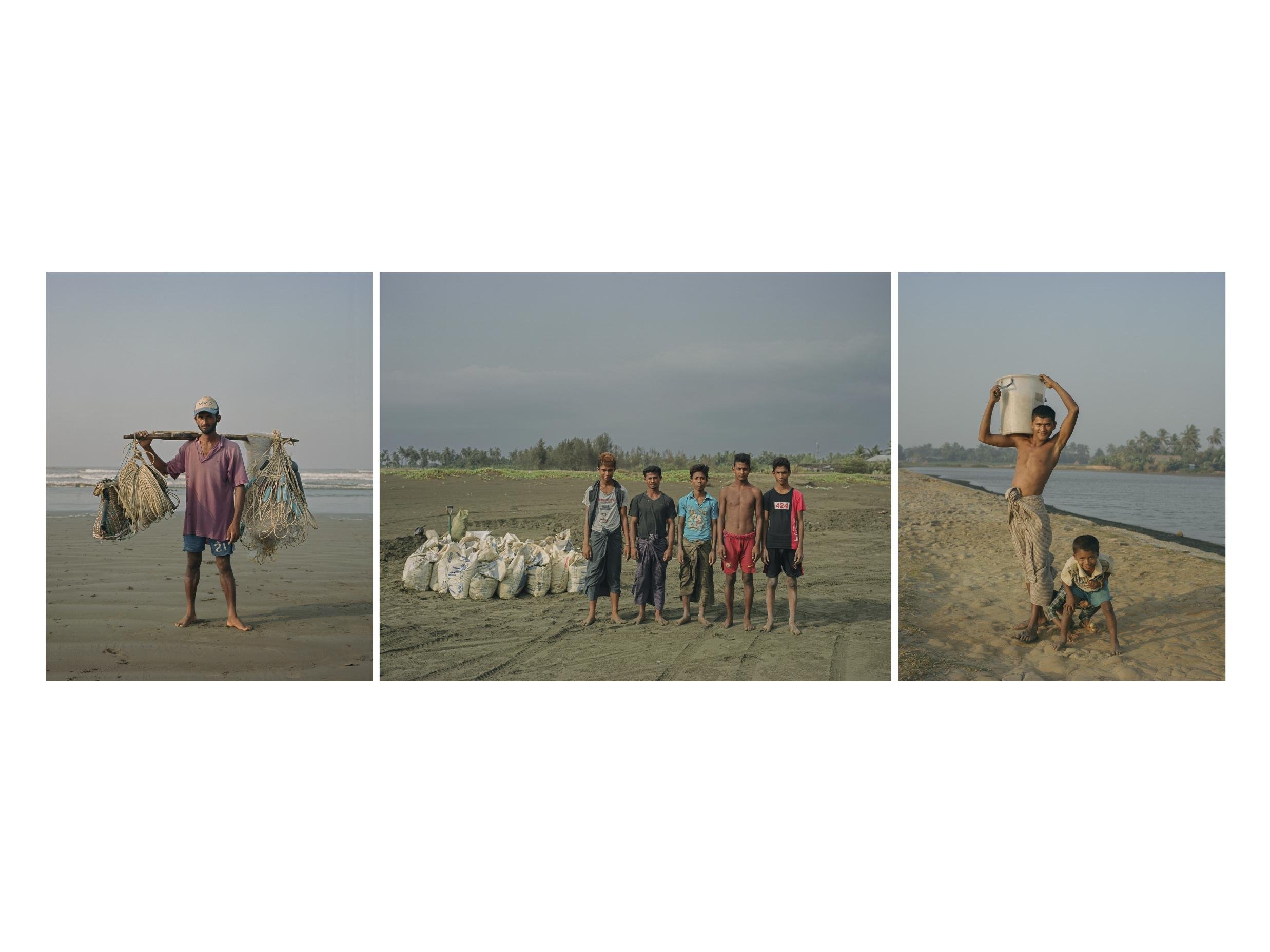
Rohingya Portraits Left: Mamorobi, a Rohingya fisherman with his fishing equipment. May 7 2019. Middle: Young Rohingya collect bags of beach sand that will be used for construction. Badly rinsed of the salt water, the cement made from this sand only holds for a couple of years before breaking up, affecting the constructions made from it. May 15 2019. Right: A young Rohingya carries a bucket of potatoes he collected at a vegetable garden nearby, on the road to his village. February 21 2019.
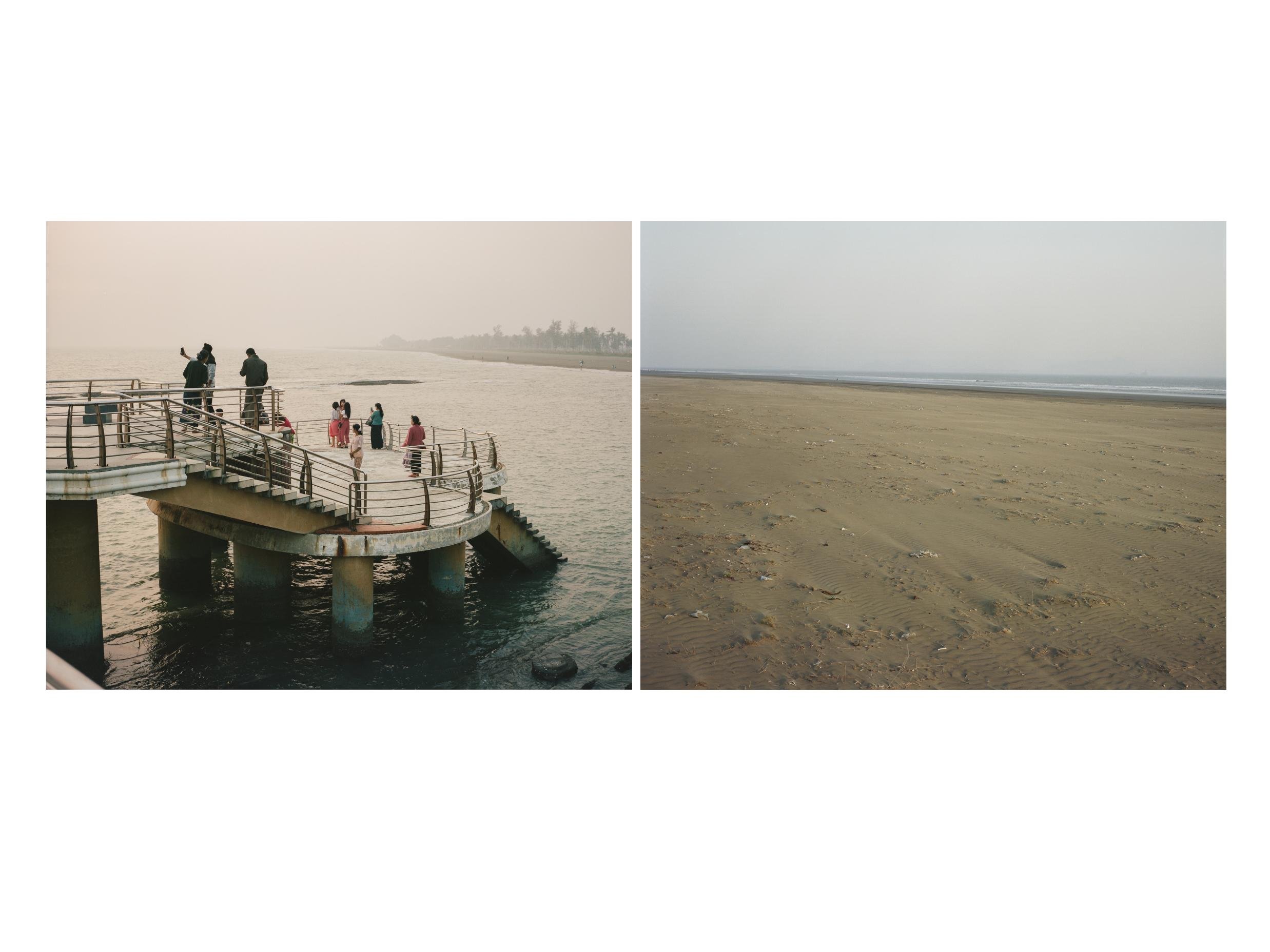
Left: A concrete jetty known locally as "The Viewpoint" overlooks the Buddhist side of the beach. On weekends, the Viewpoint is a prized destination for sunset photos and selfies. January 27 2019. Right: The Rohingya side of the beach, on the other hand, has no such infrastructures. March 13 2019.
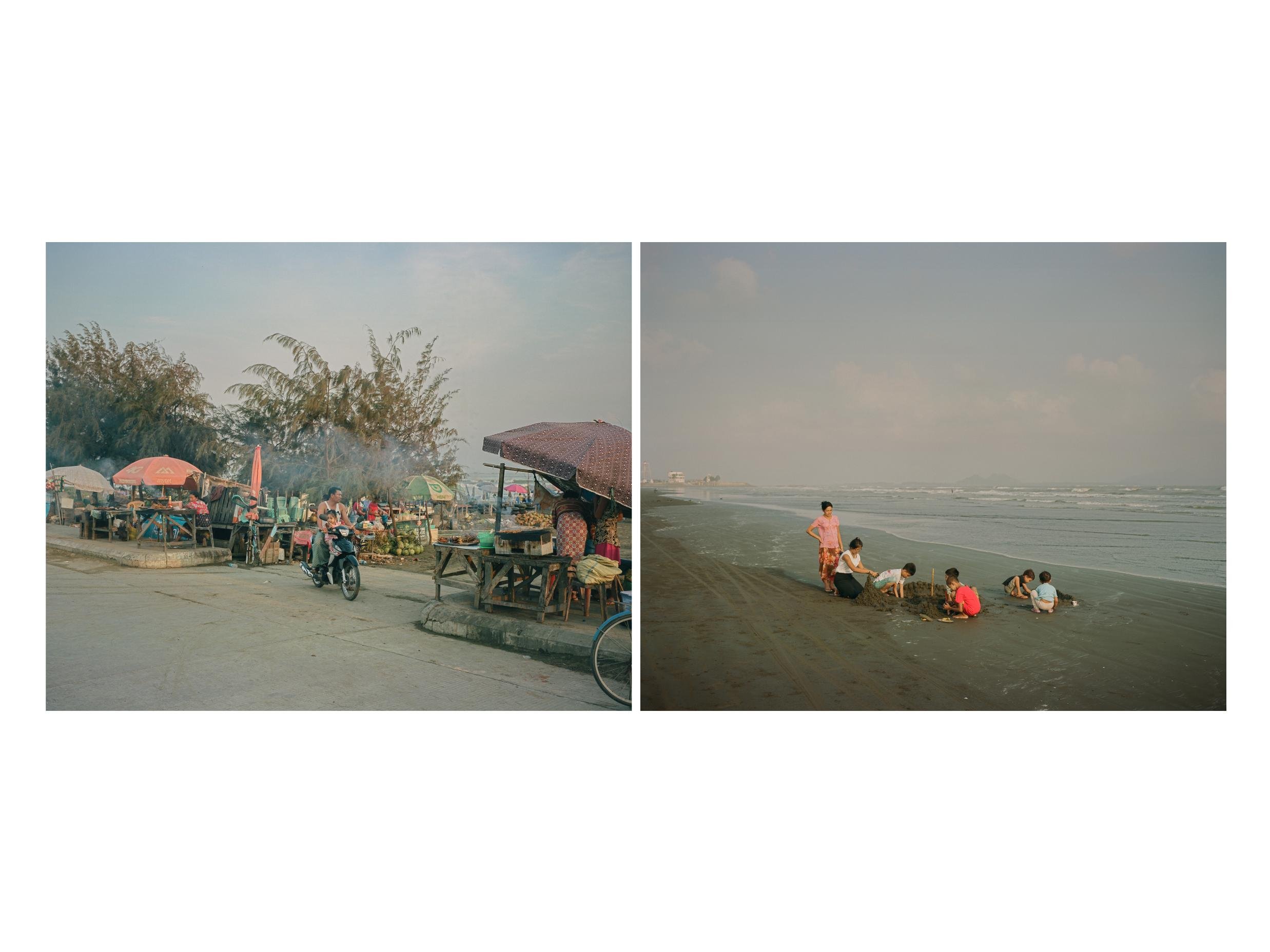
Left: A man waits for his take-away food at a stall by the beach. Food and drink stalls are plenty on the Buddhist side. May 15 2019. Right: Children build sand pagodas on the Buddhist side of the beach. May 7 2019
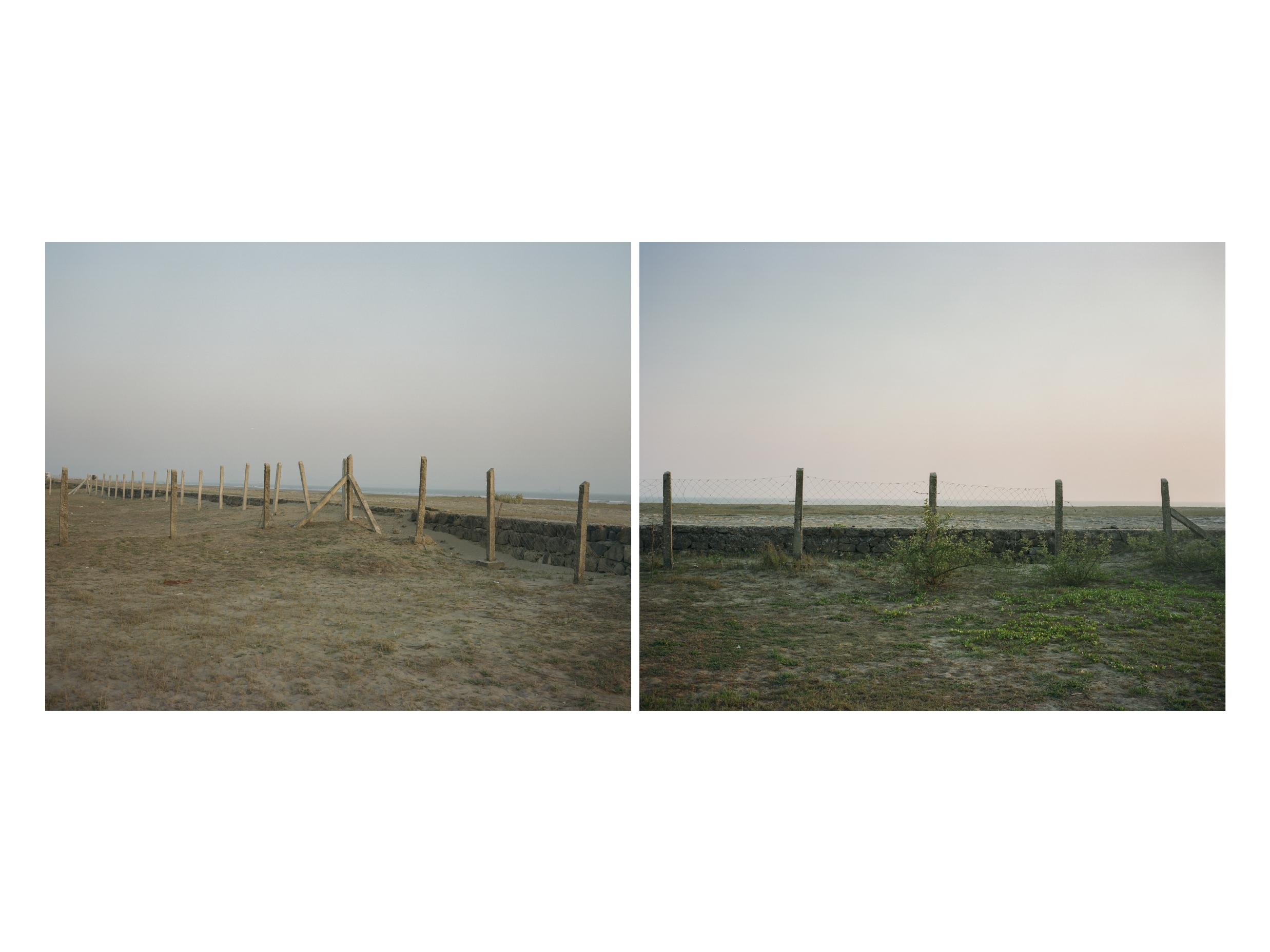
A metal fence runs all along the beach on the Rohingya side. Built by the local authorities, the fence serves as a strong deterrent both to keep strangers out, as much as people inside. Rohingya from nearby villages have to take advantage of the holes through the fence in order to gain access to the beach. March 13 2019
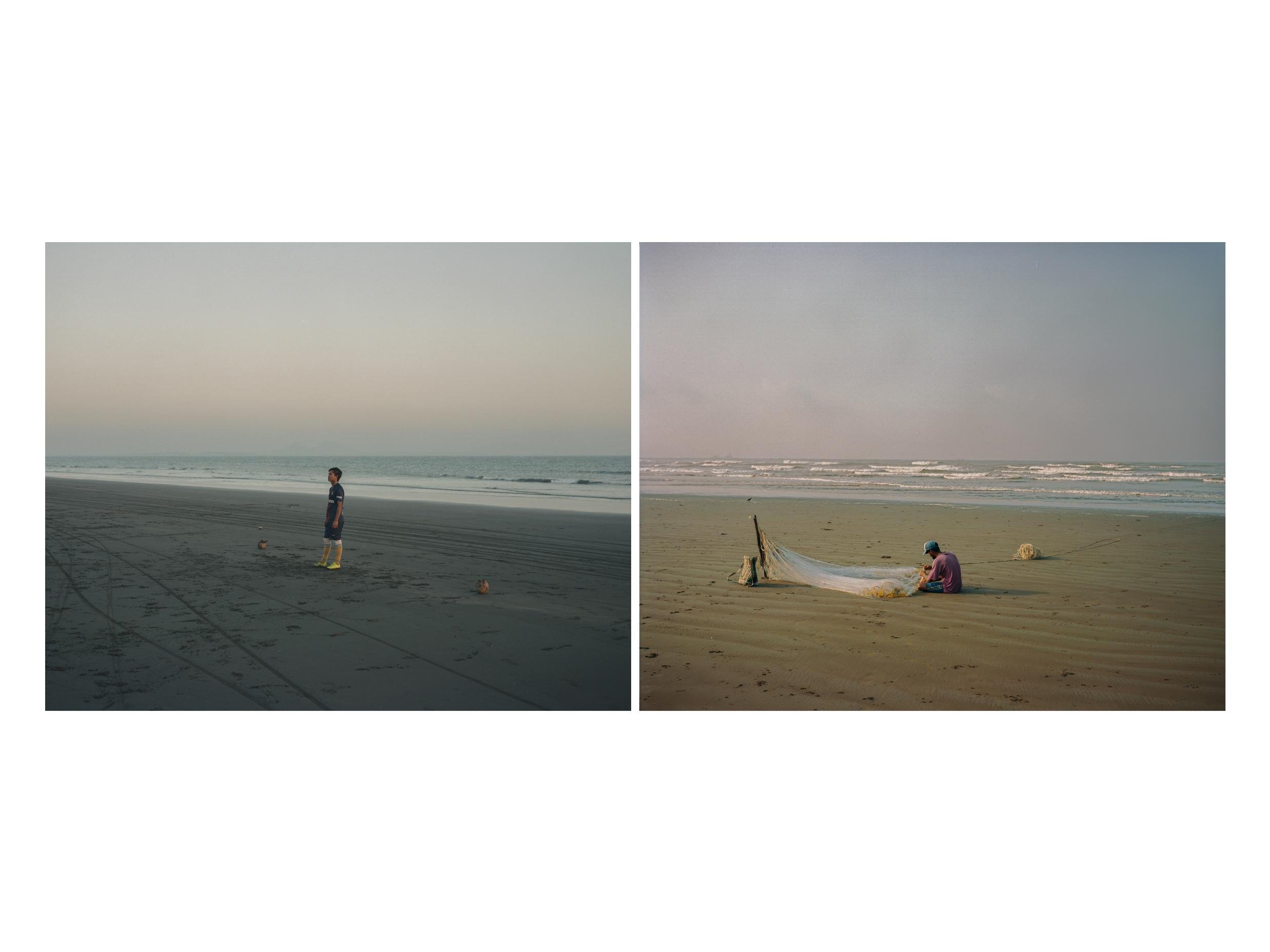
Left: A young boy in full football gear plays goalkeeper during a game on the Buddhist side of the beach. February 13 2019 Right: Mamorobi, a Rohingya fisherman, untangles and fixes the holes in his net before heading back to his village. May 7 2019
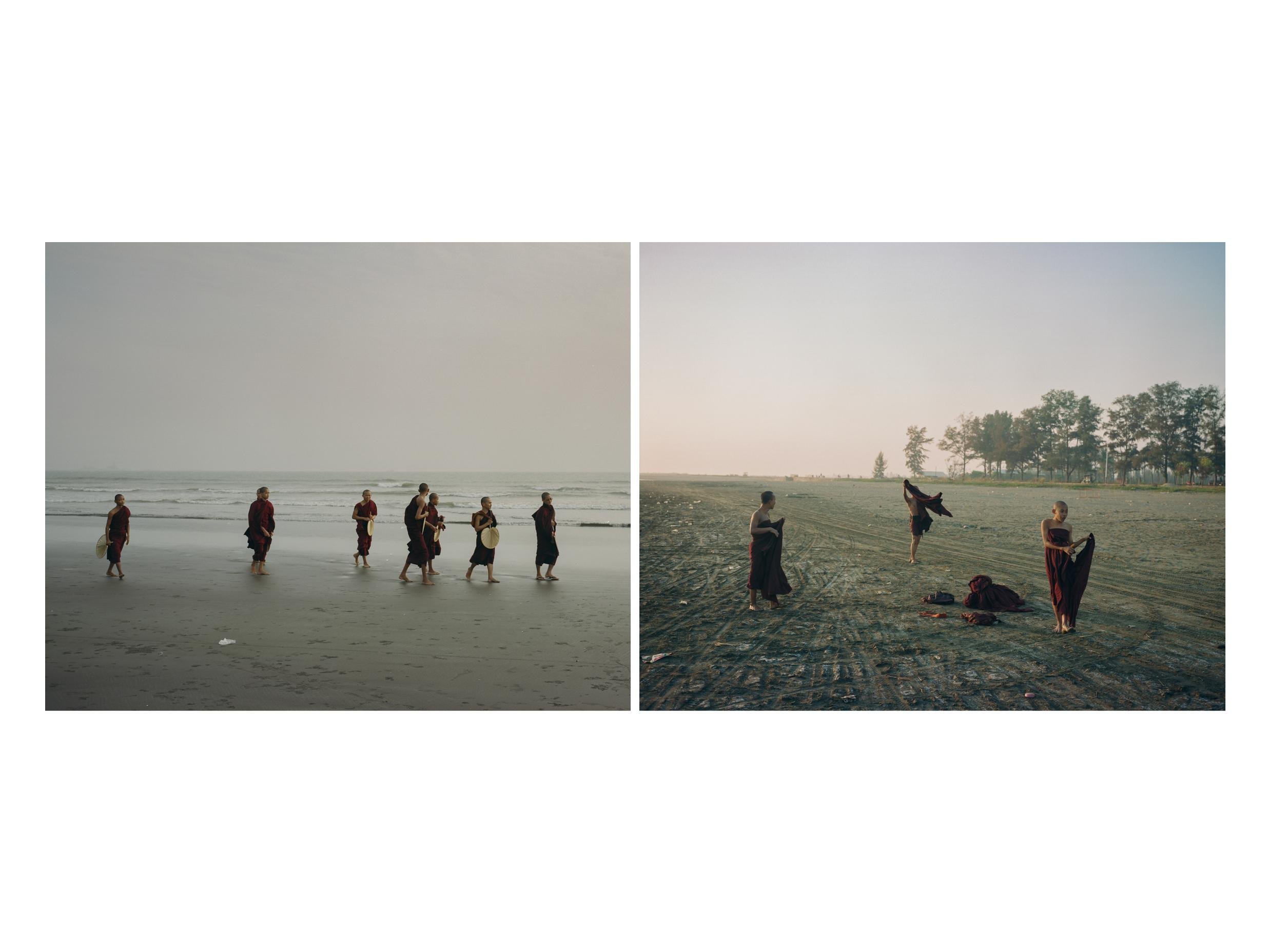
Left: Young Buddhist monks take a stroll on the beach before heading back to their monastery. February 12 2019 Right: Young Buddhist novices get dressed after a short swim in the sea. February 14 2019
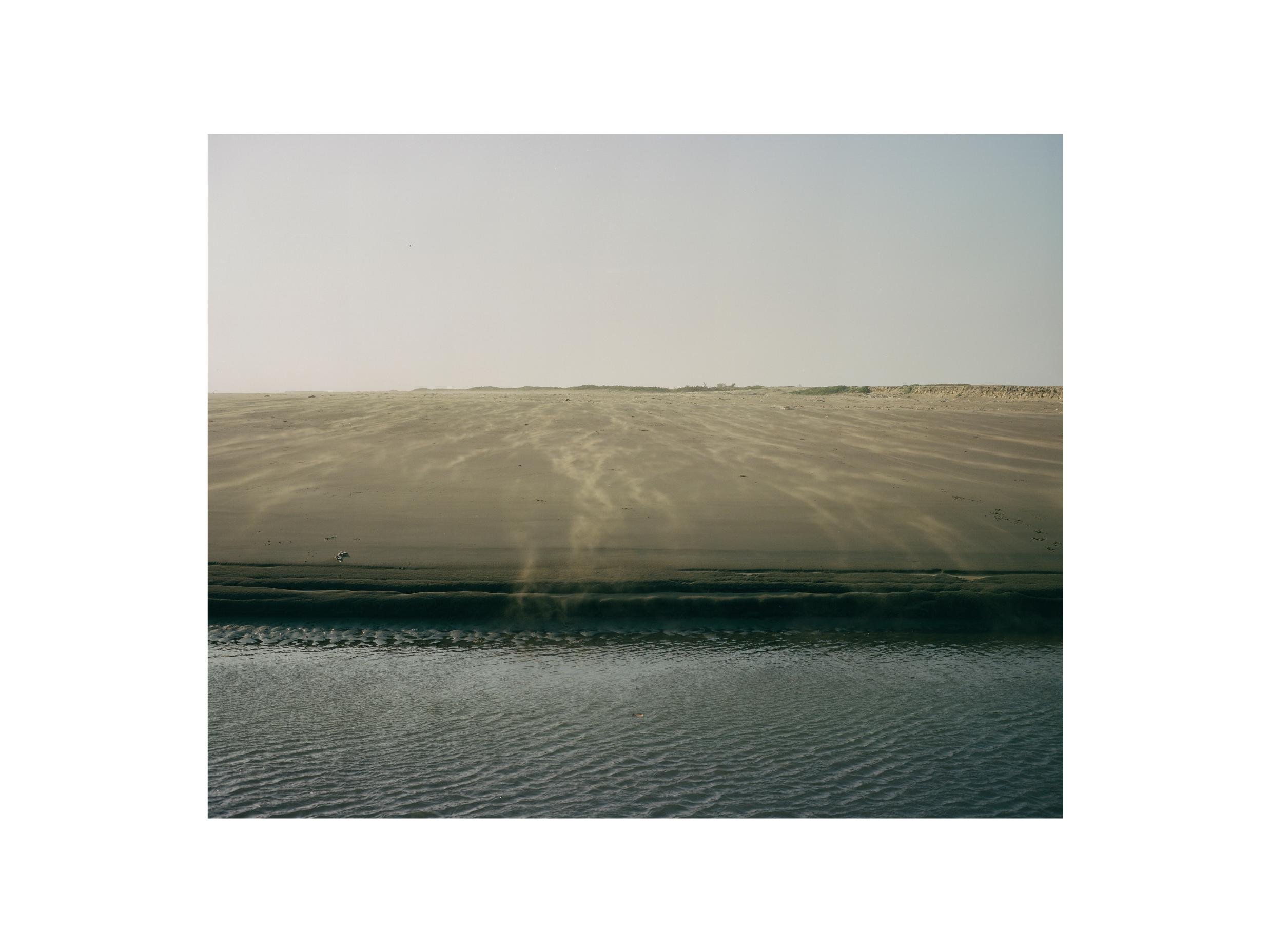
A view of the Rohingya side of the beach. February 21 2019.
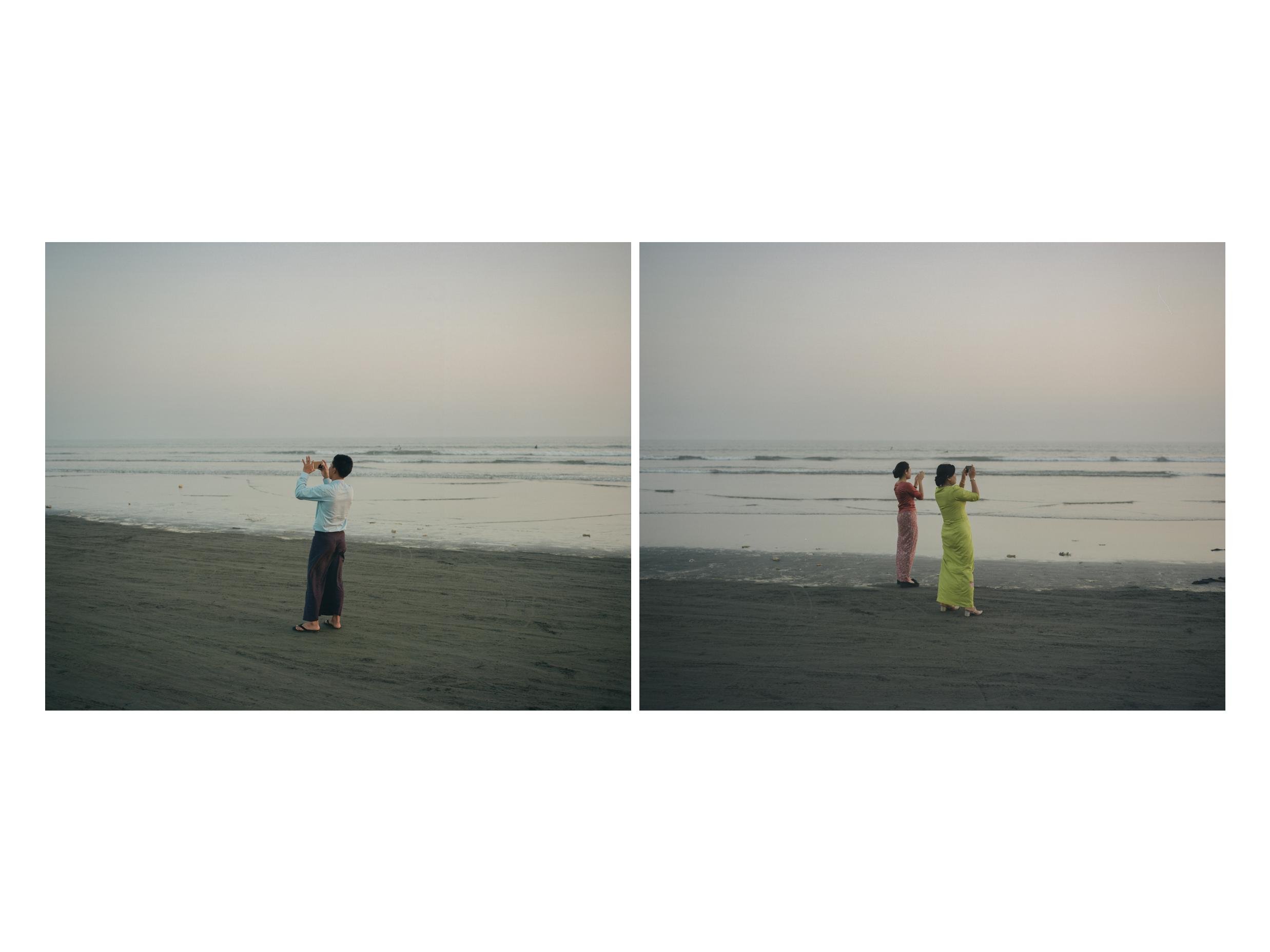
Rakhine Buddhists in their Sunday's best take pictures of sunset over the horizon. February 17 2019
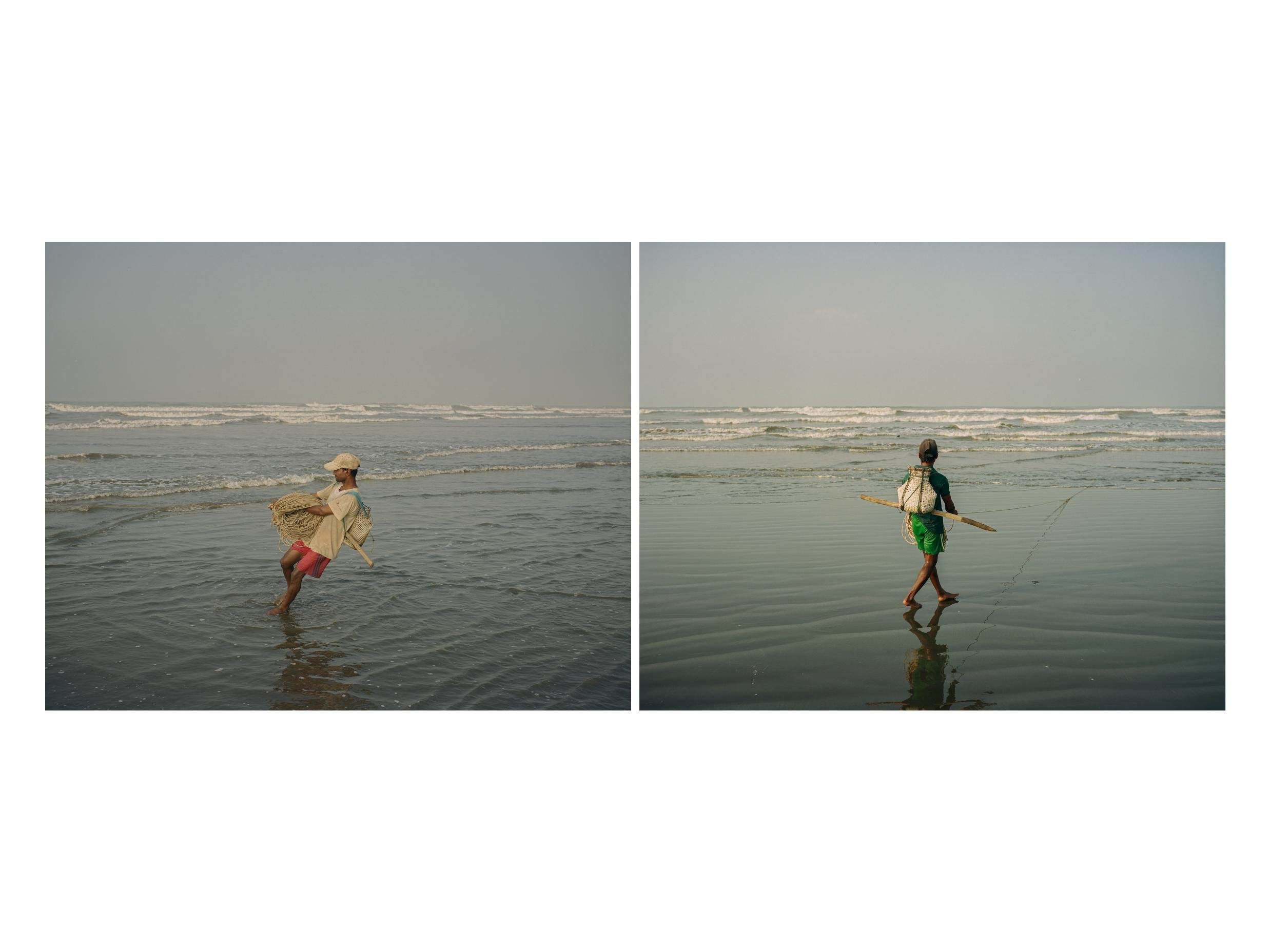
Rohingya fishermen work their nets. Forbidden from going out to sea and careful never to trespass to the other side, the fishermen from nearby Rohingya villages rely solely on the nets they can cast from their part of the beach to catch fish. May 7 2019
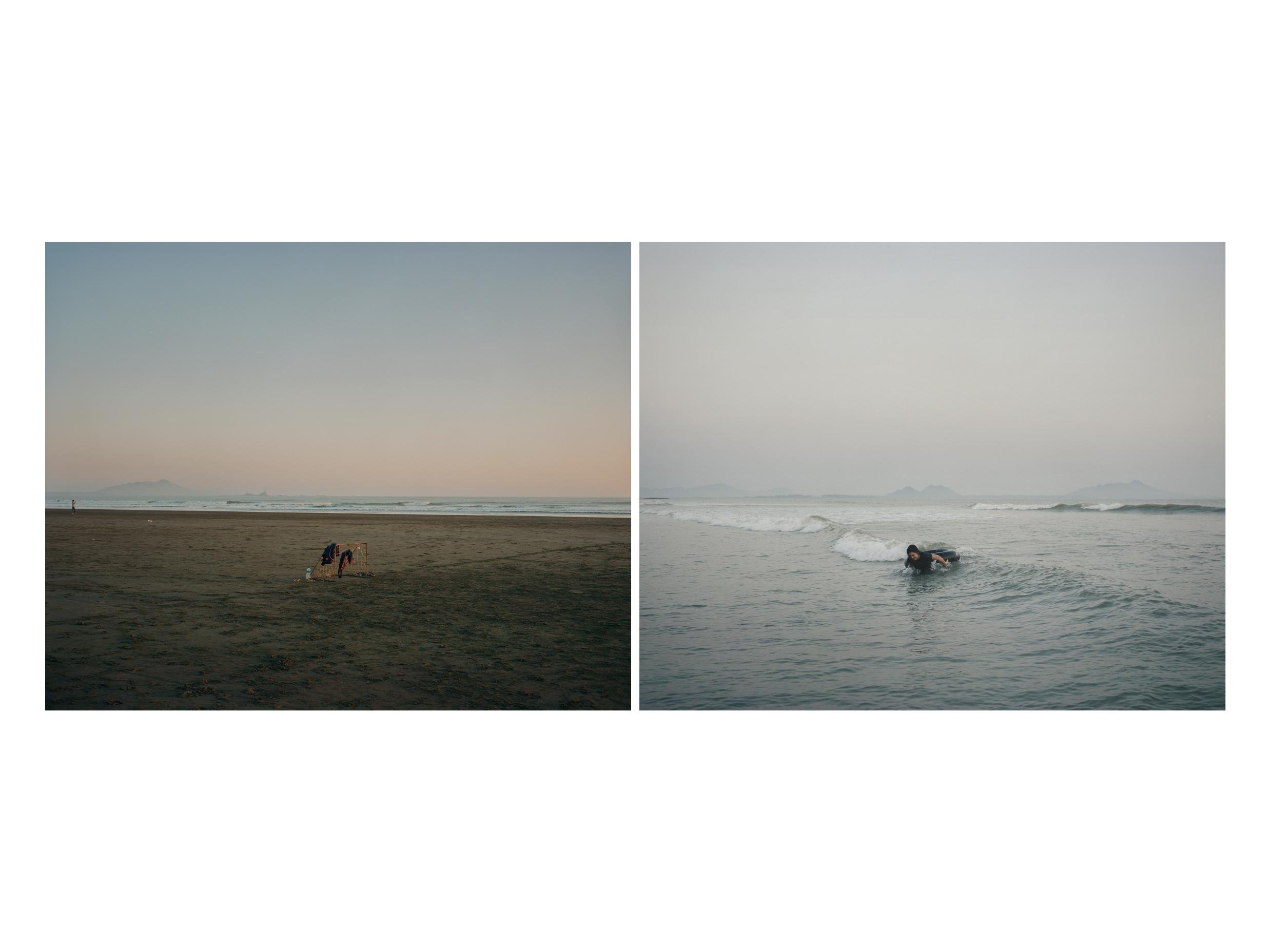
Rakhine buddhist side
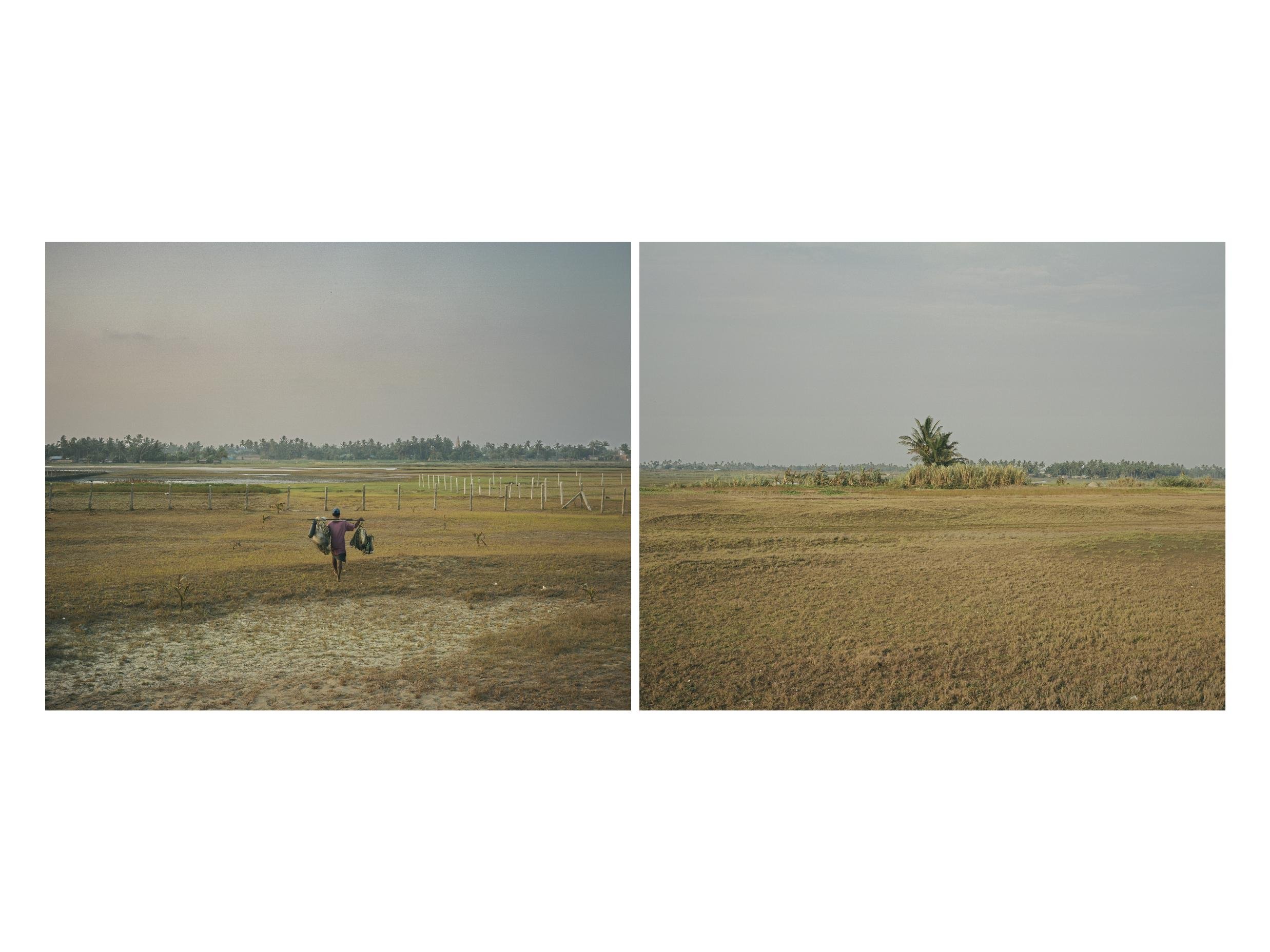
Rohingya side
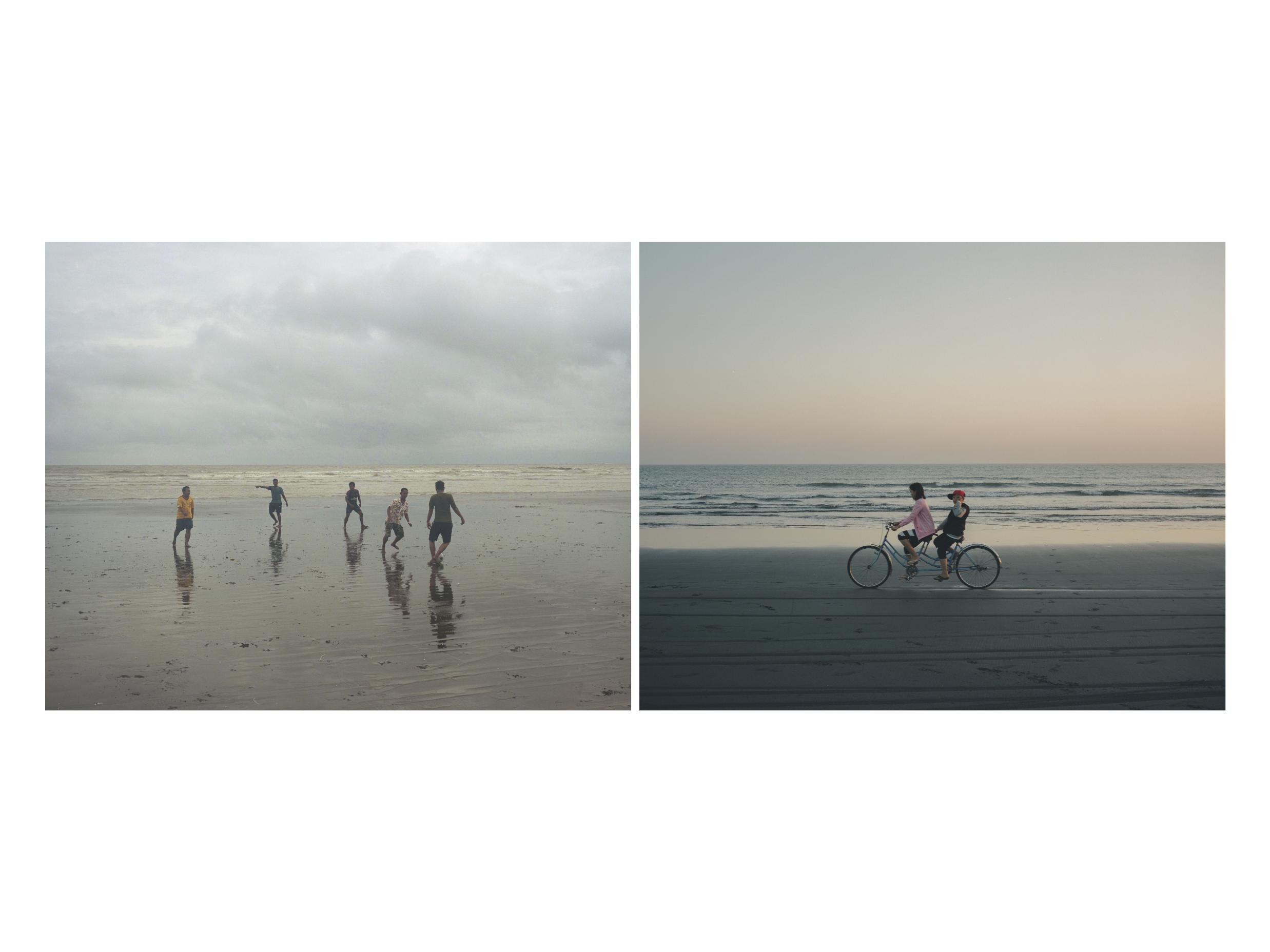
Left: A football game on the Buddhist side of the beach July 29 2018 Right: Rakhine Buddhist children ride a tandem they rented at one of the beach stalls. February 13 2019
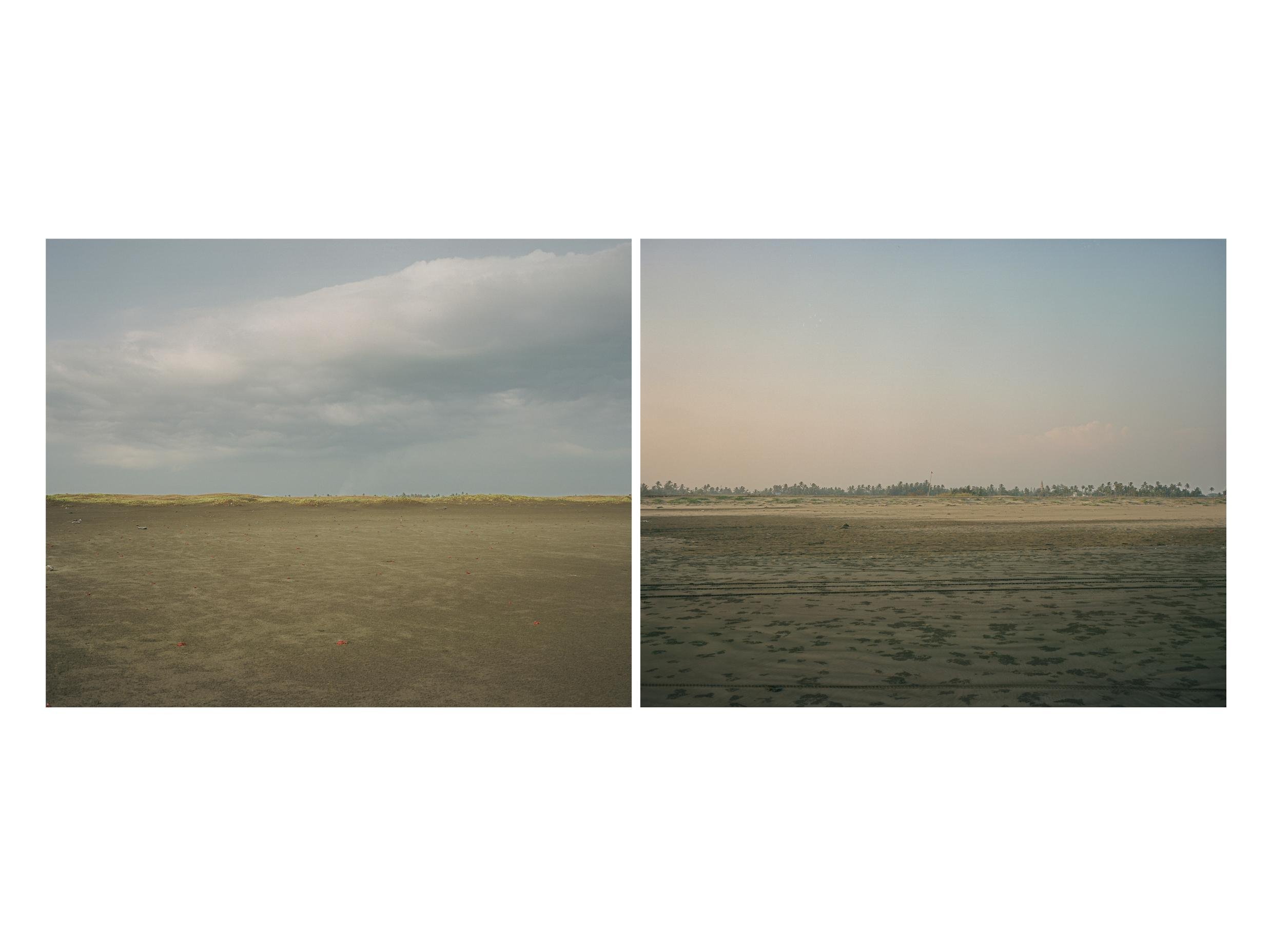
Rohingya side of the beach. Left: May 15 2019 Right: The tire tracks are made by Rakhine Buddhists taking their jeeps for test drives, driving full speed on the beach. May 16 2019
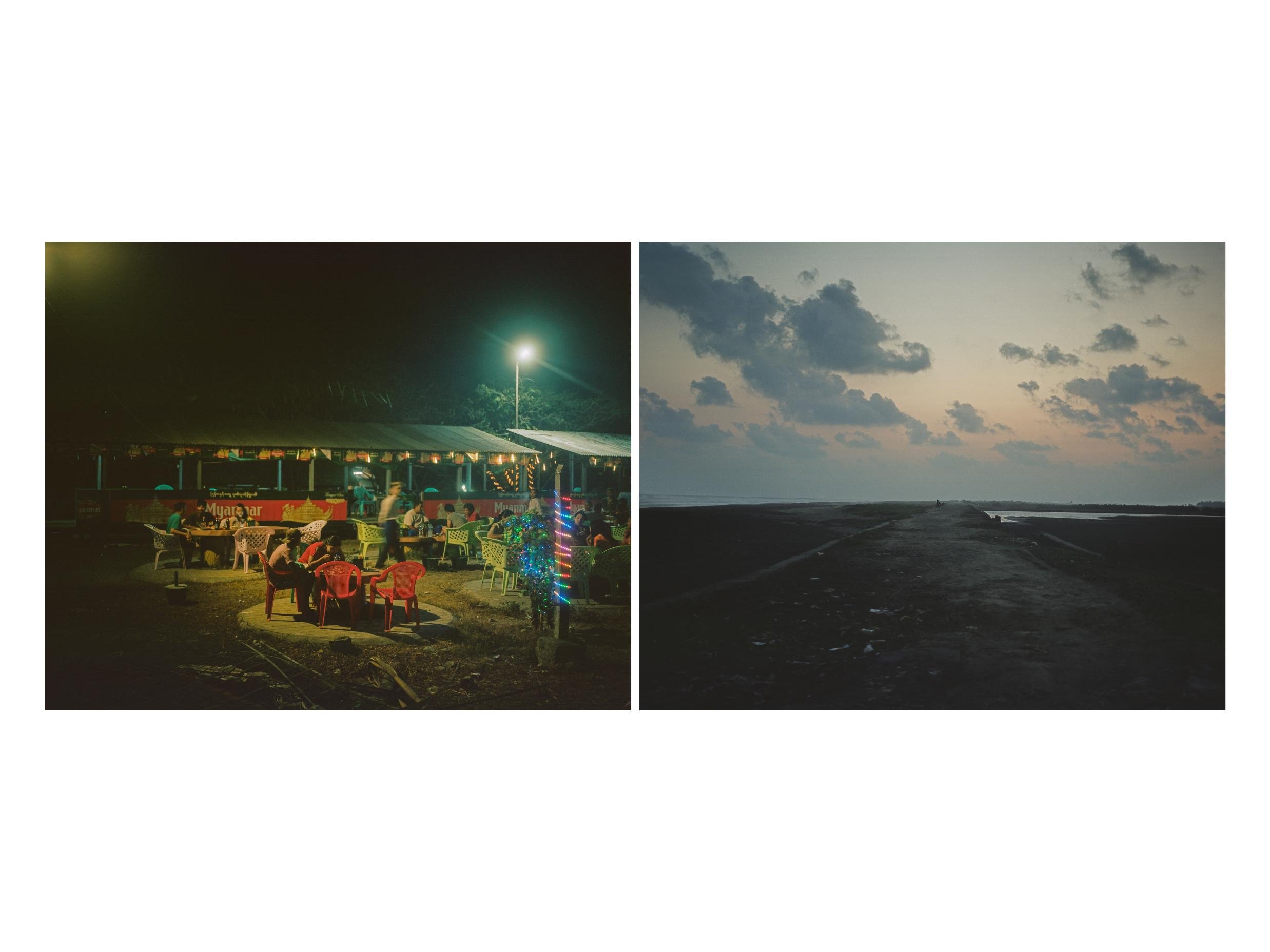
Left: Patrons enjoy loud music, food and drinks at the "Lucky Point" restaurant on the Buddhist side of the beach. The beach is a popular place for late night food and drinks, with restaurants open until late. May 16 2019 Right: View of the Rohingya side of the beach taken from the bridge separating the two parts. With no public lighting and rarely electricity in Rohingya villages, this side of the beach quickly turns pitch black as night falls. May 16 2019
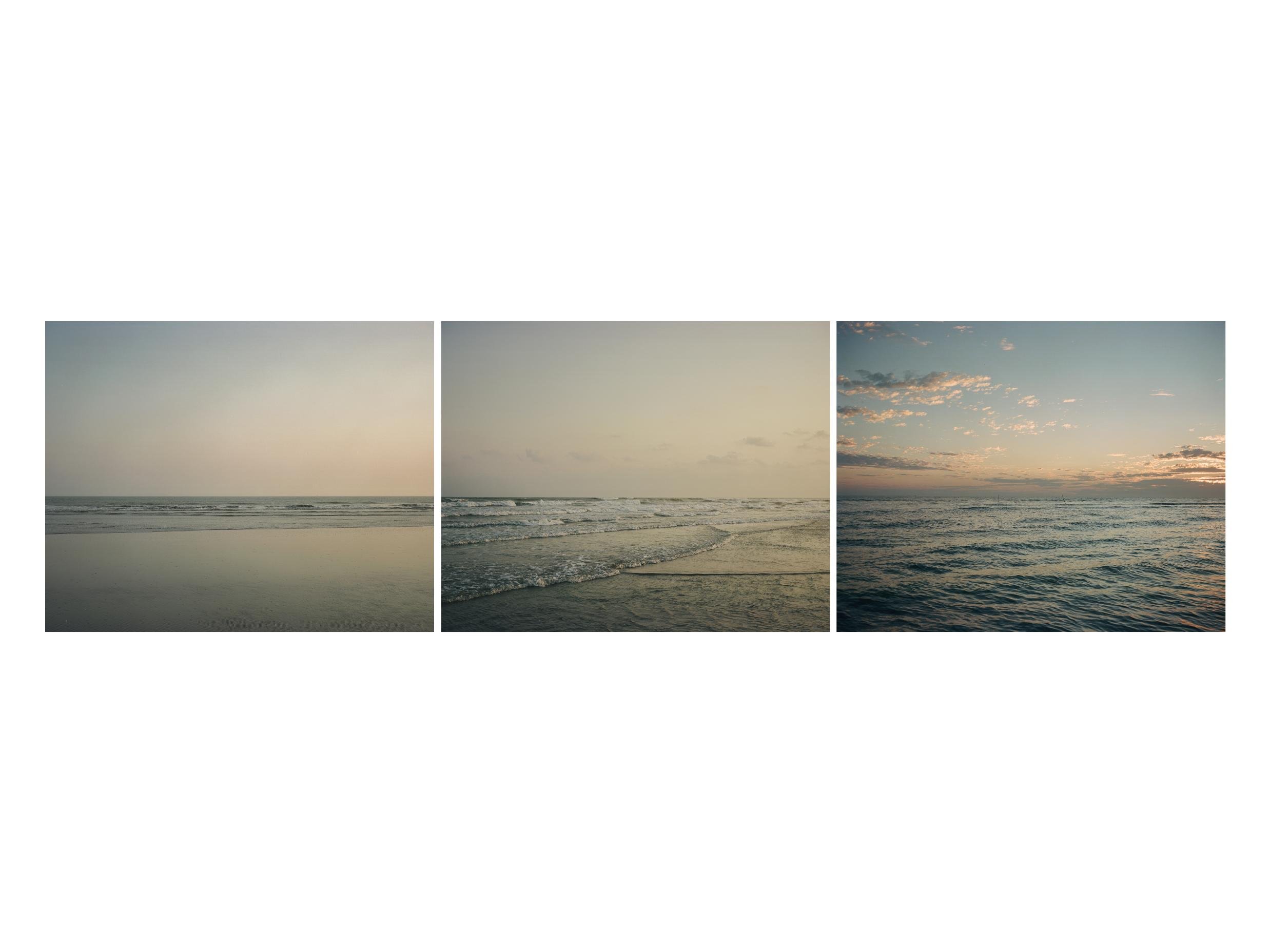
Horizon over the Bay of Bengal from Sittwe beach.