Fil Mishmish - المشمش في -

When the apricots bloom
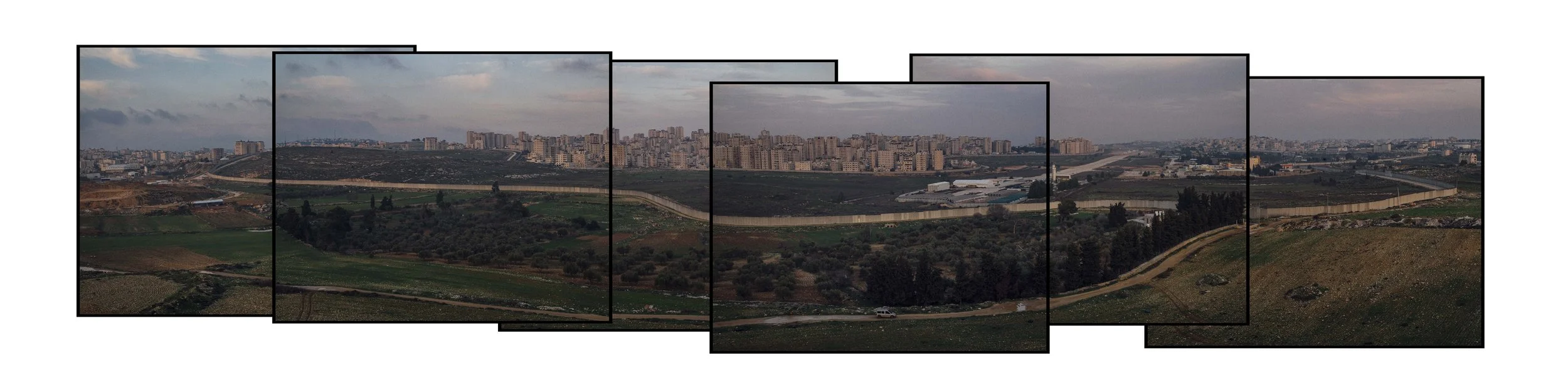
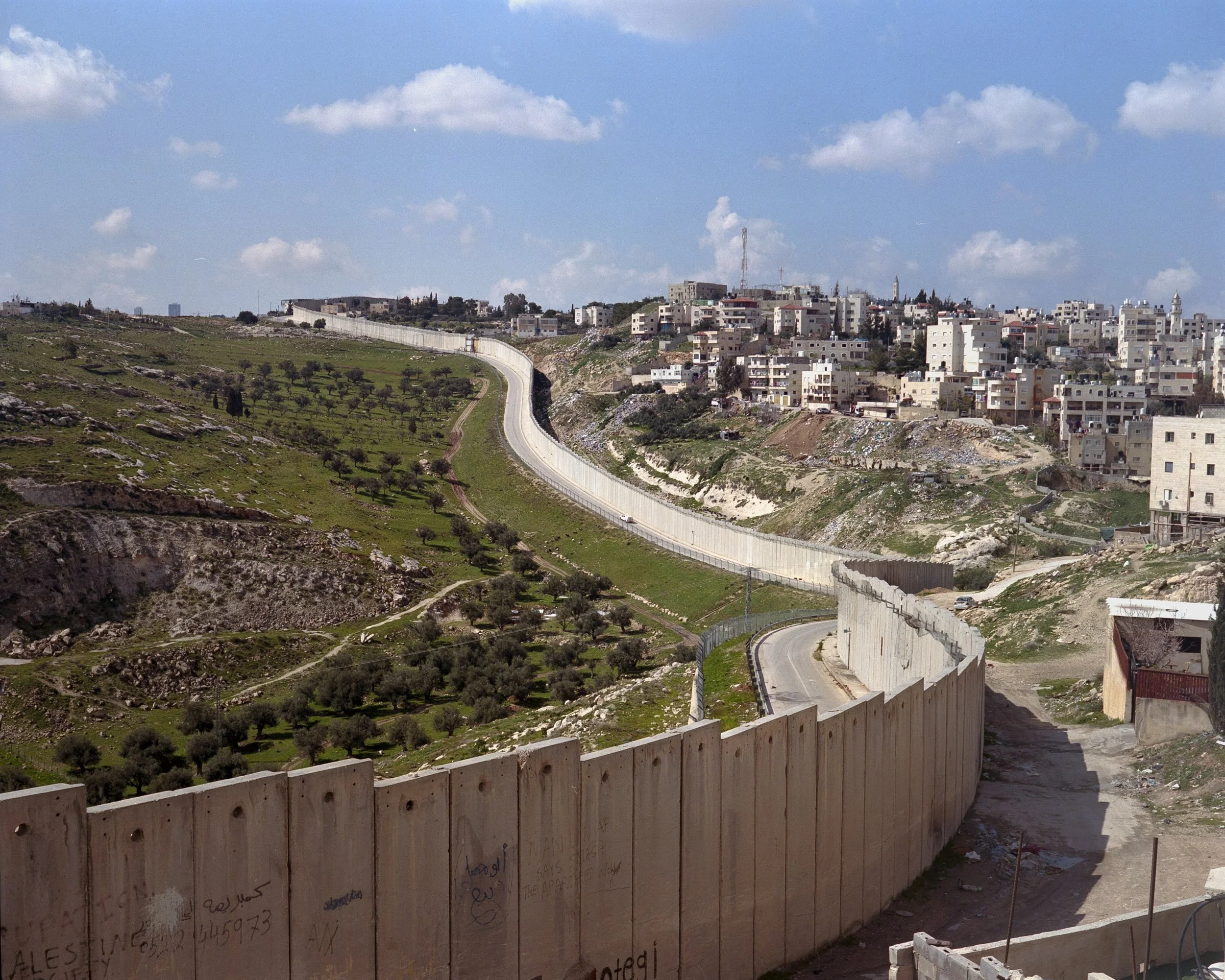
View over former Jerusalem airport, behind the separation wall. In the back, Kufr Akab and Qalandia, in the West Bank.

"Fil Mishmish" documents the state of the occupation today in the Palestinian territories and the evolution of the conflict, exactly 30 years after the signing of the Oslo Accords (September 1993).

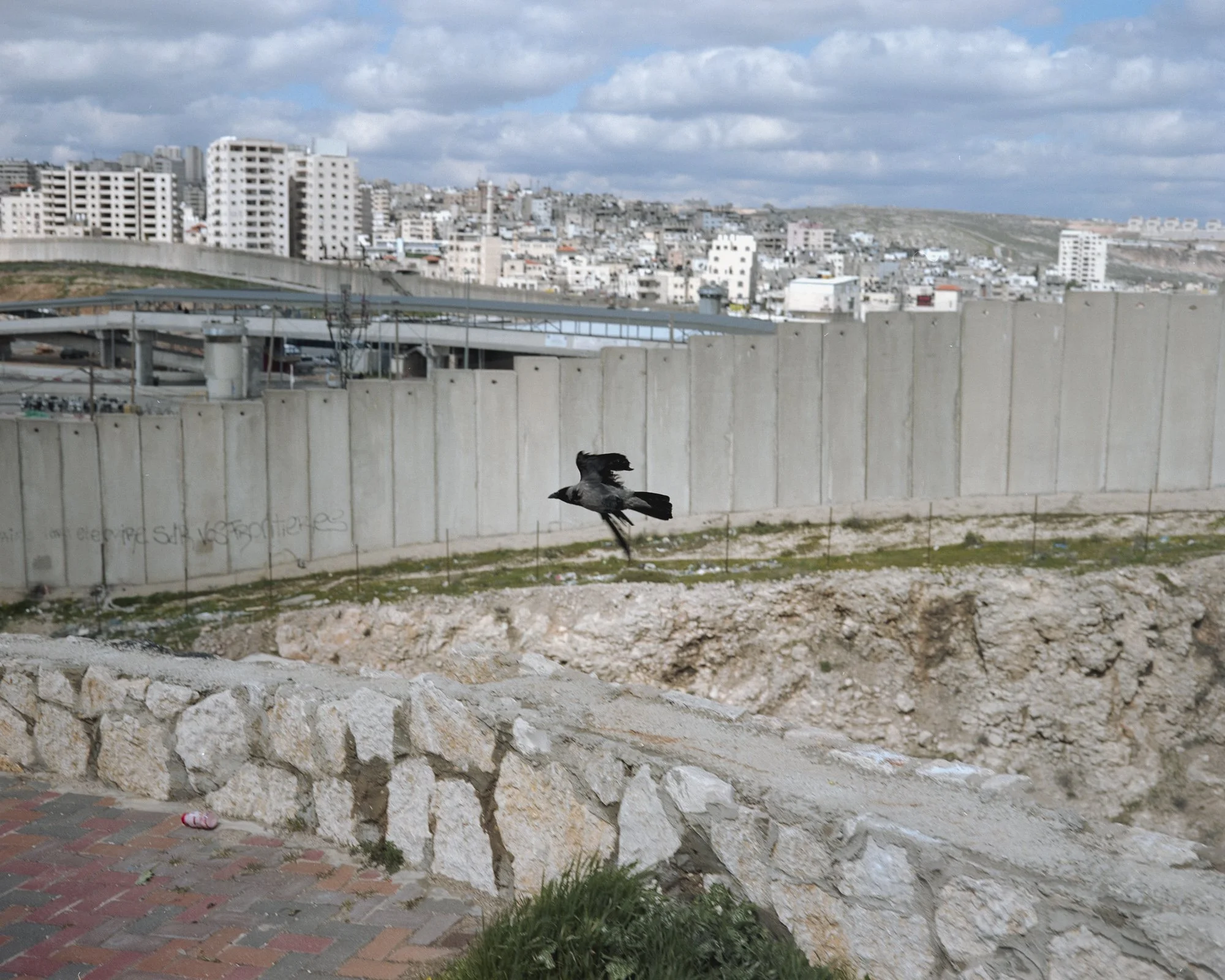
If political speeches continue to push the idea of a "two-state solution"- which the Oslo accords were suppose to make happen -, on the ground, far from the talk, the hatched colored maps, and the endless peace process announcements, the reality of a full-fledged Palestinian state is nothing more than an illusion.

The West Bank, surrounded by a concrete wall of over 700 km, has become a fragmented territory, crossed by settlements and roads under Israeli military control, an archipelago of separate islets bending under the weight and grayness of all the cement. Half a million settlers live in the West Bank today, five times more than when the Oslo Accords were signed. Walls, fences, checkpoints, cameras and surveillance towers, settlements – from outposts made of odds and ends to real cities with shopping centers and amusement parks – are the many faces of the architecture of occupation that has taken hold.
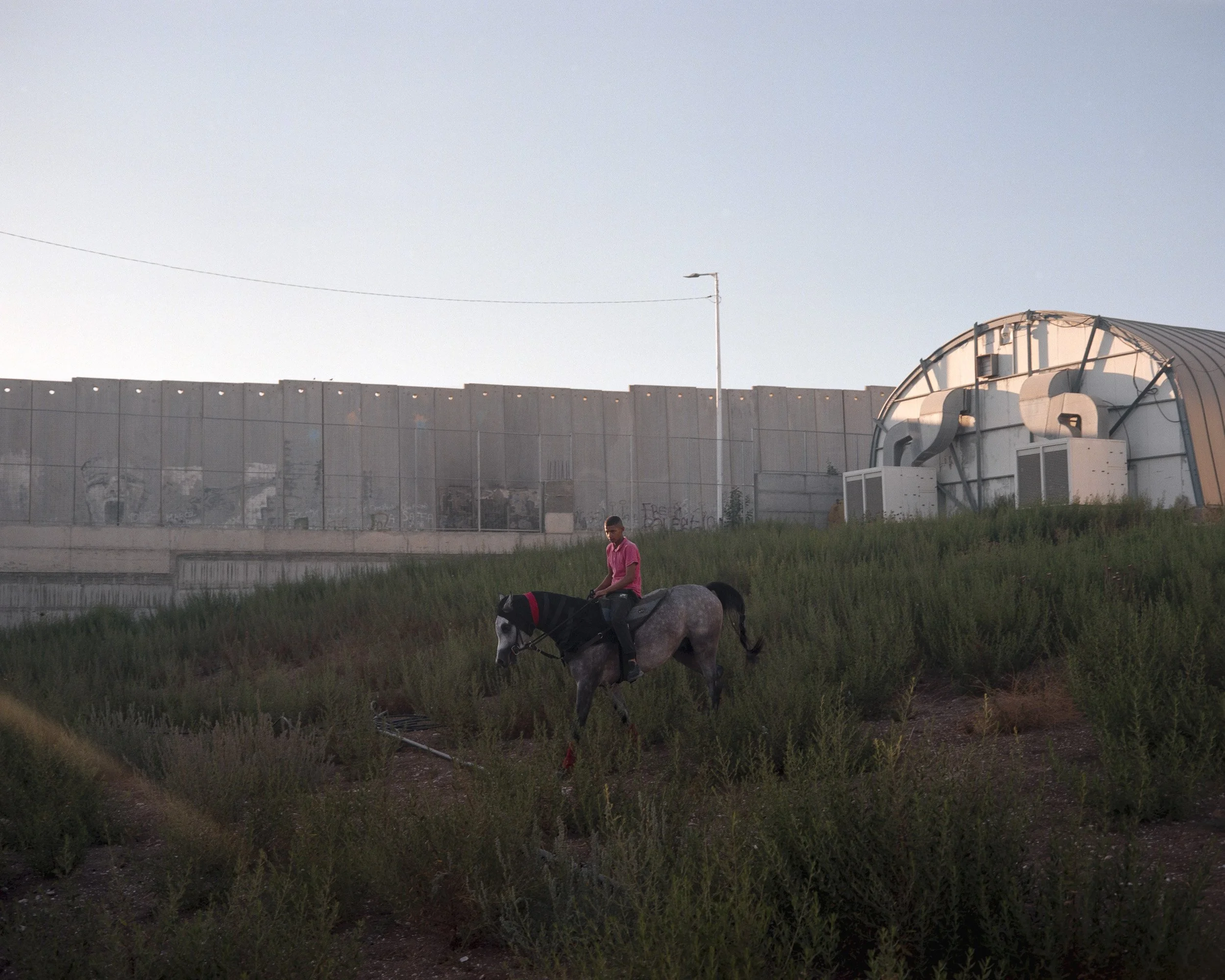
Ahmed trains his horse, Sultan, at the foot of the wall in Abu Dis, in one of the few spaces that remain green and available at the foot of the wall. “You have to keep training your horse,” he explains.
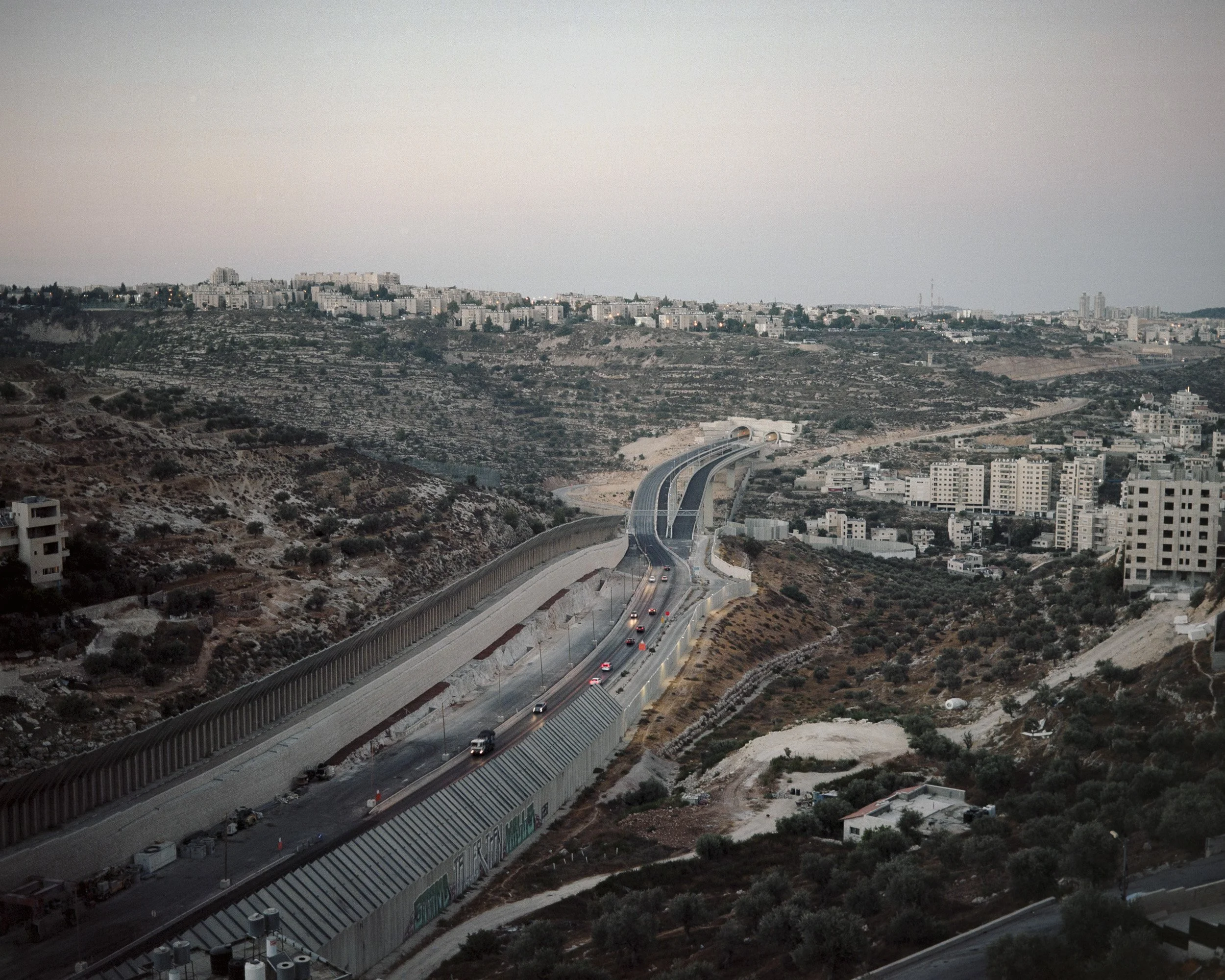
Route 60, also known as the “tunnel road,” runs north to south through the West Bank. The section seen here, near Bethlehem (West Bank), is off-limits to Palestinians.
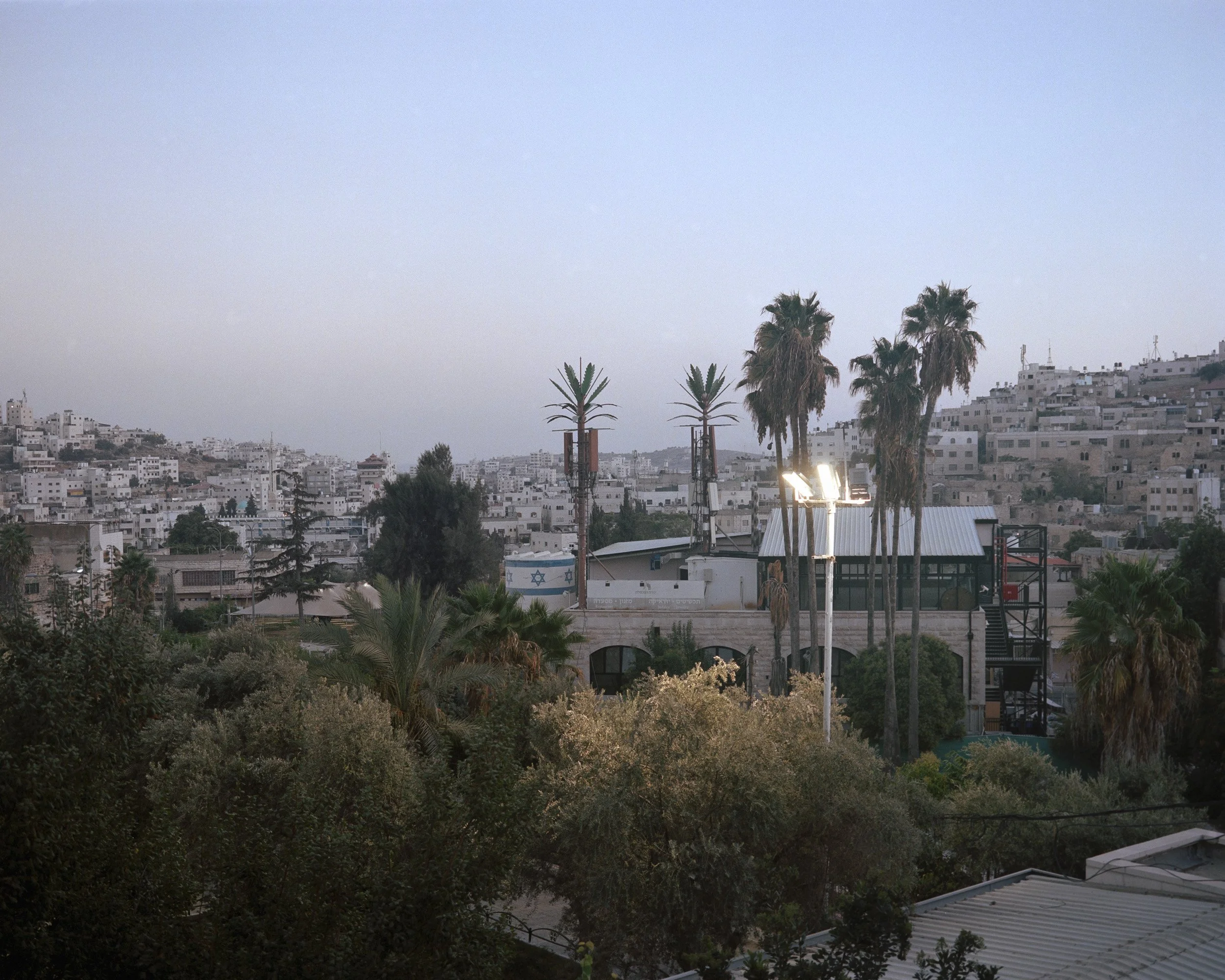
Israeli army surveillance palm antennas in downtown Hebron, opposite the Tomb of the Patriarchs/Ibrahim Mosque.
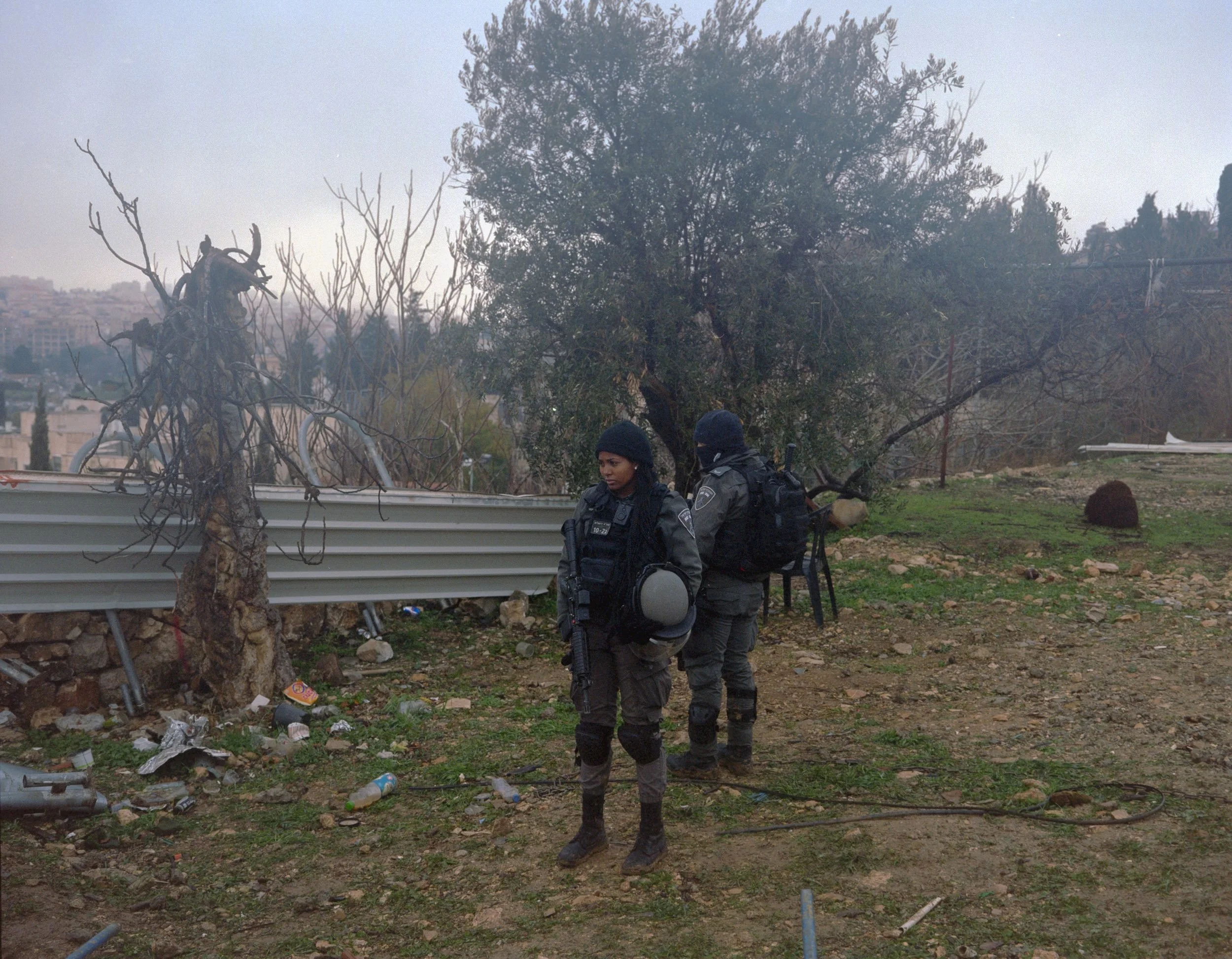
Israeli Border Police officers monitor the demolition of the home of the Salhiyeh family, who were evicted from their plot of land in the predominantly Palestinian neighborhood of Sheikh Jarrah in East Jerusalem.
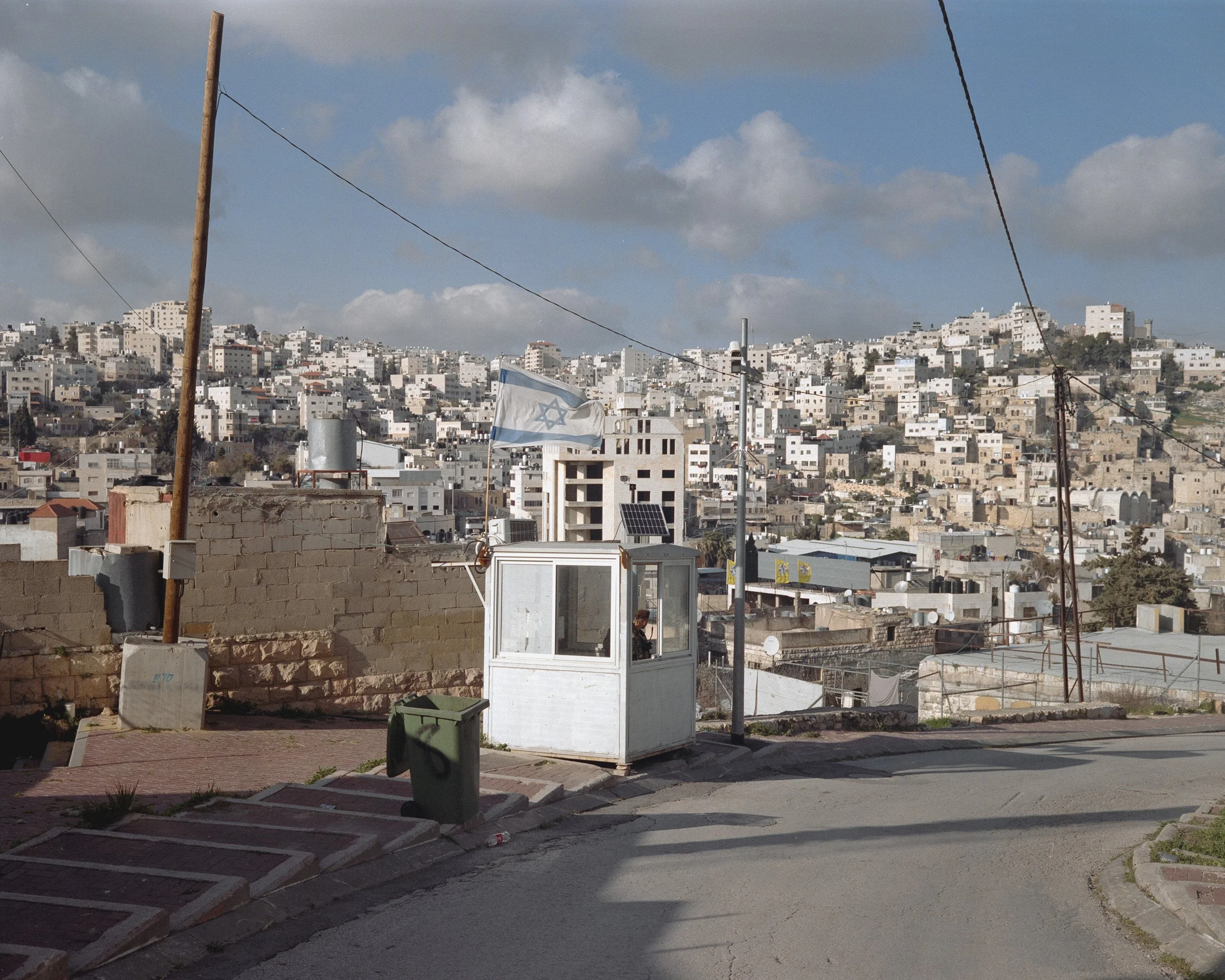
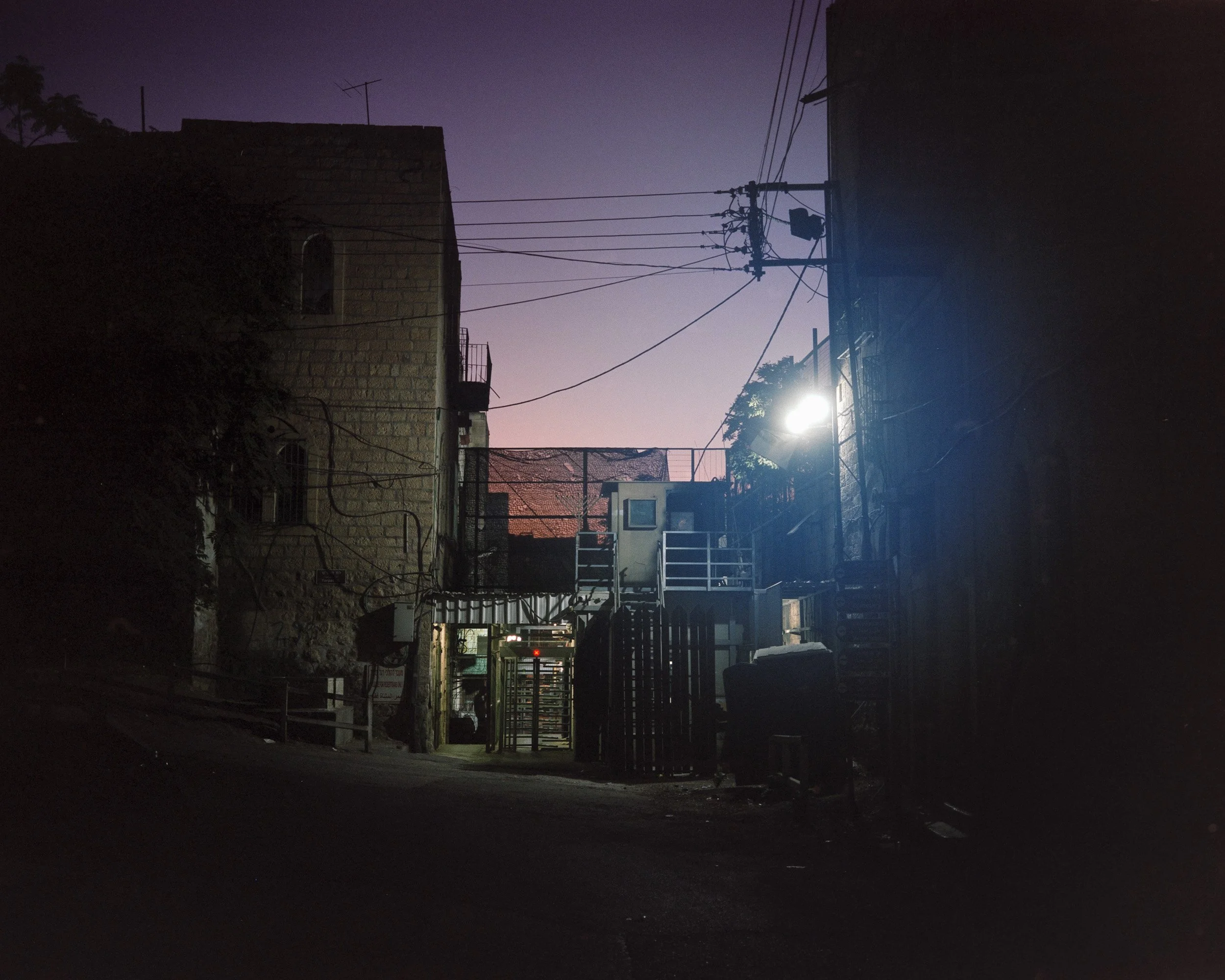
Security post on Tel Rumeida Street in Hebron, in area H2. The 500 settlers who live in downtown Hebron are protected by 2,000 Israeli soldiers, a ratio of 4 to 1.  H2 has 21 checkpoints. March 27, 2022.
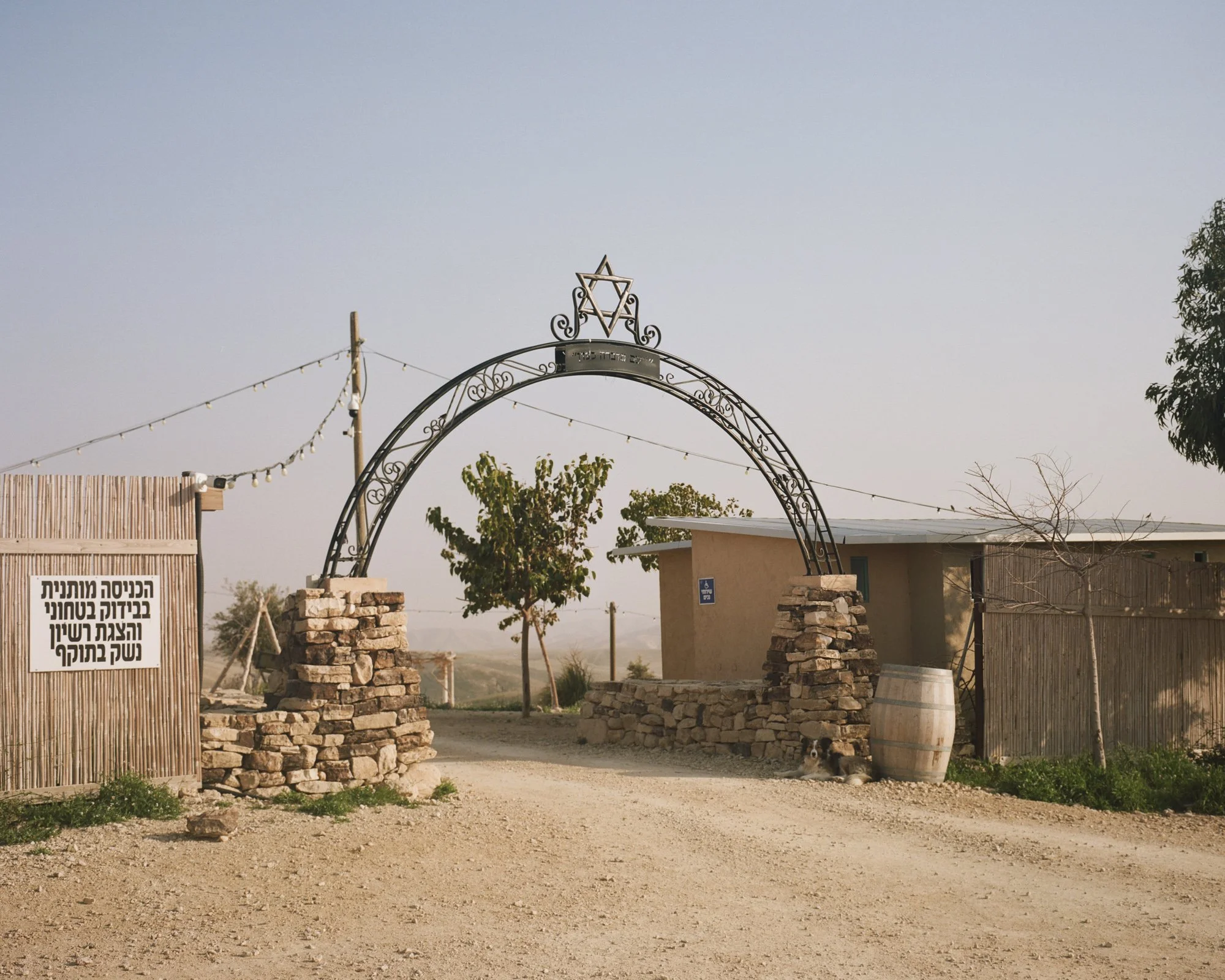
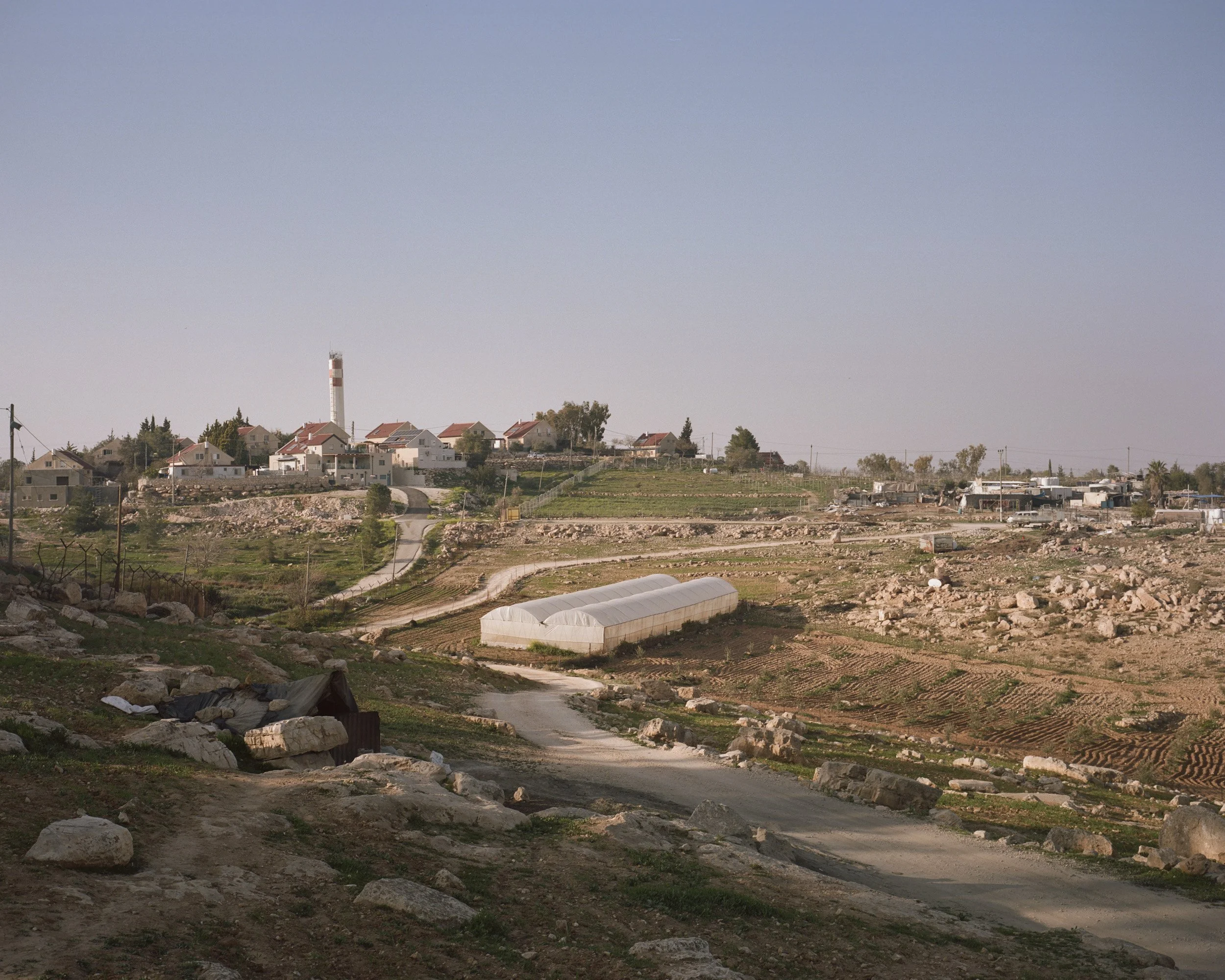
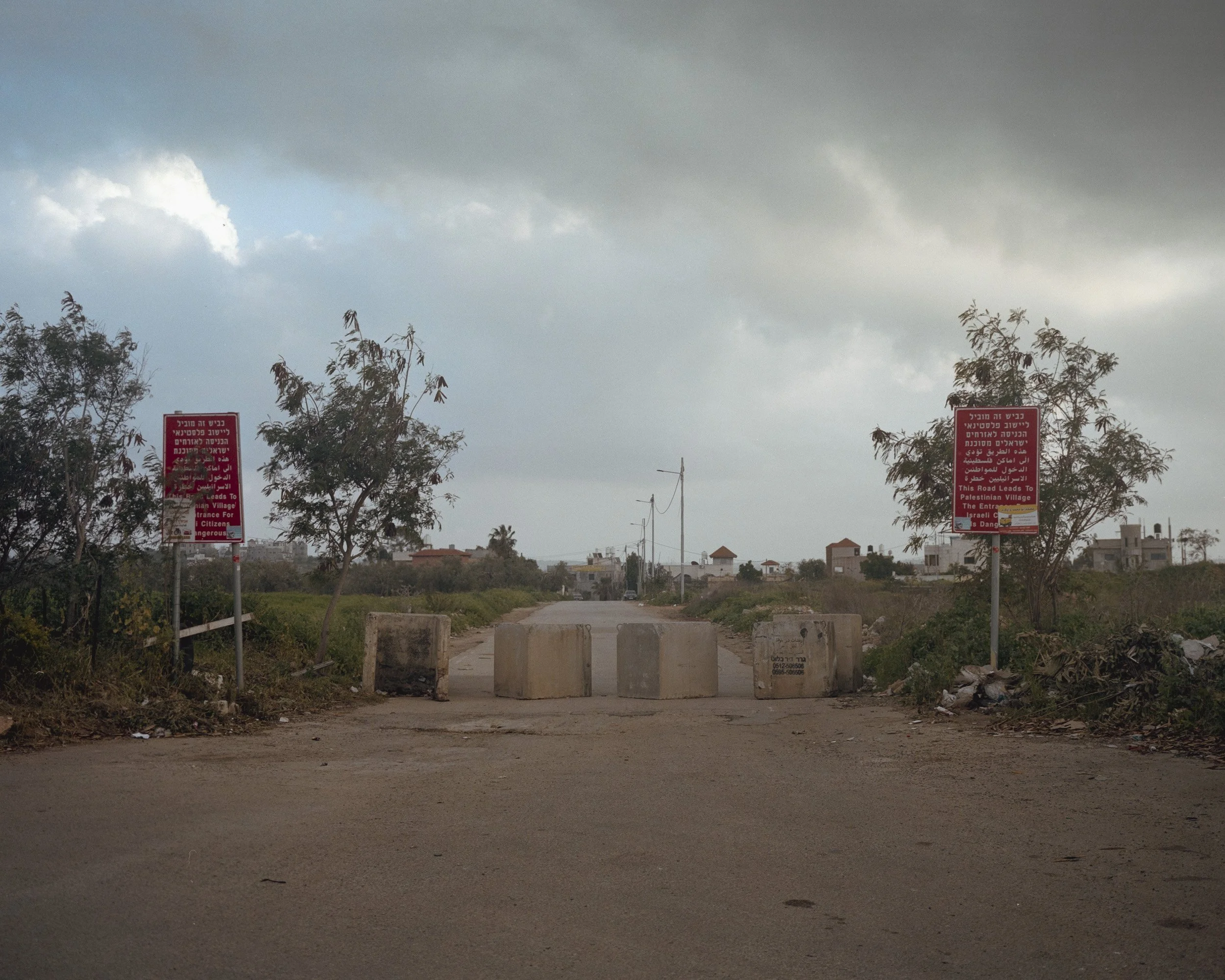
Entrance to Kedar outpost settlement
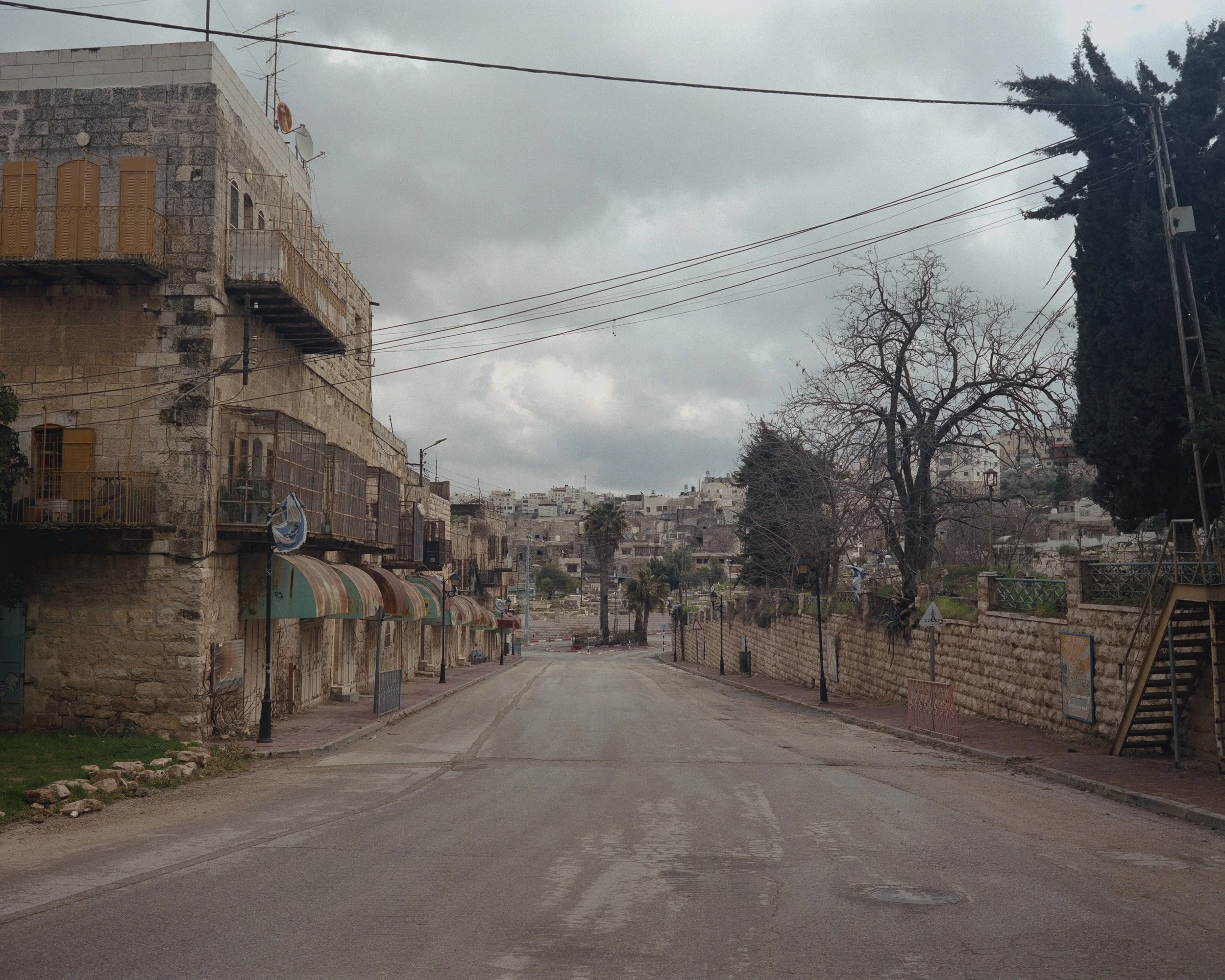
Hajez Bab A-Zawiya checkpoint, regulating entry and exit from the H2 area of Hebron, on Shuhada Street. West Bank, September 5, 2022.
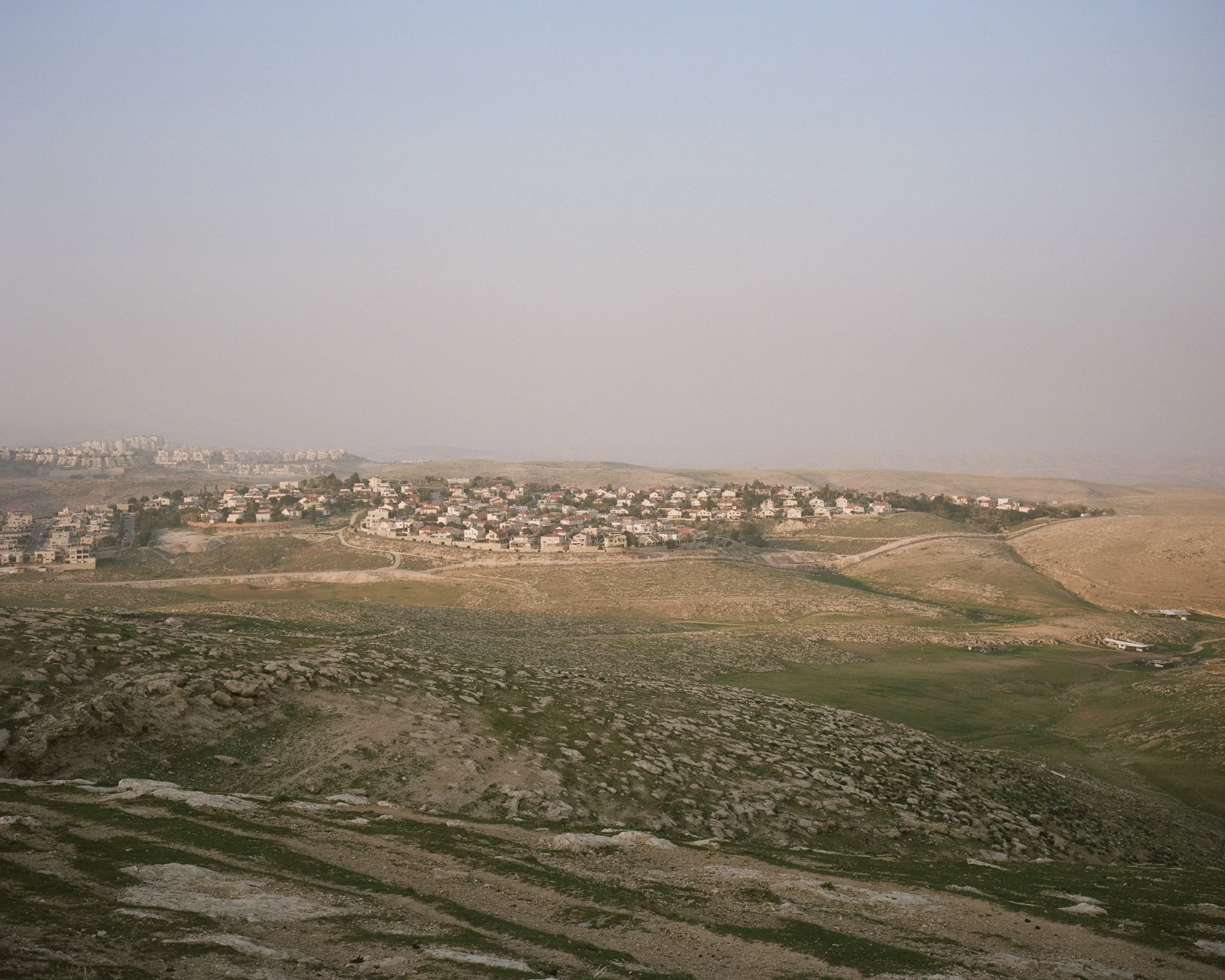
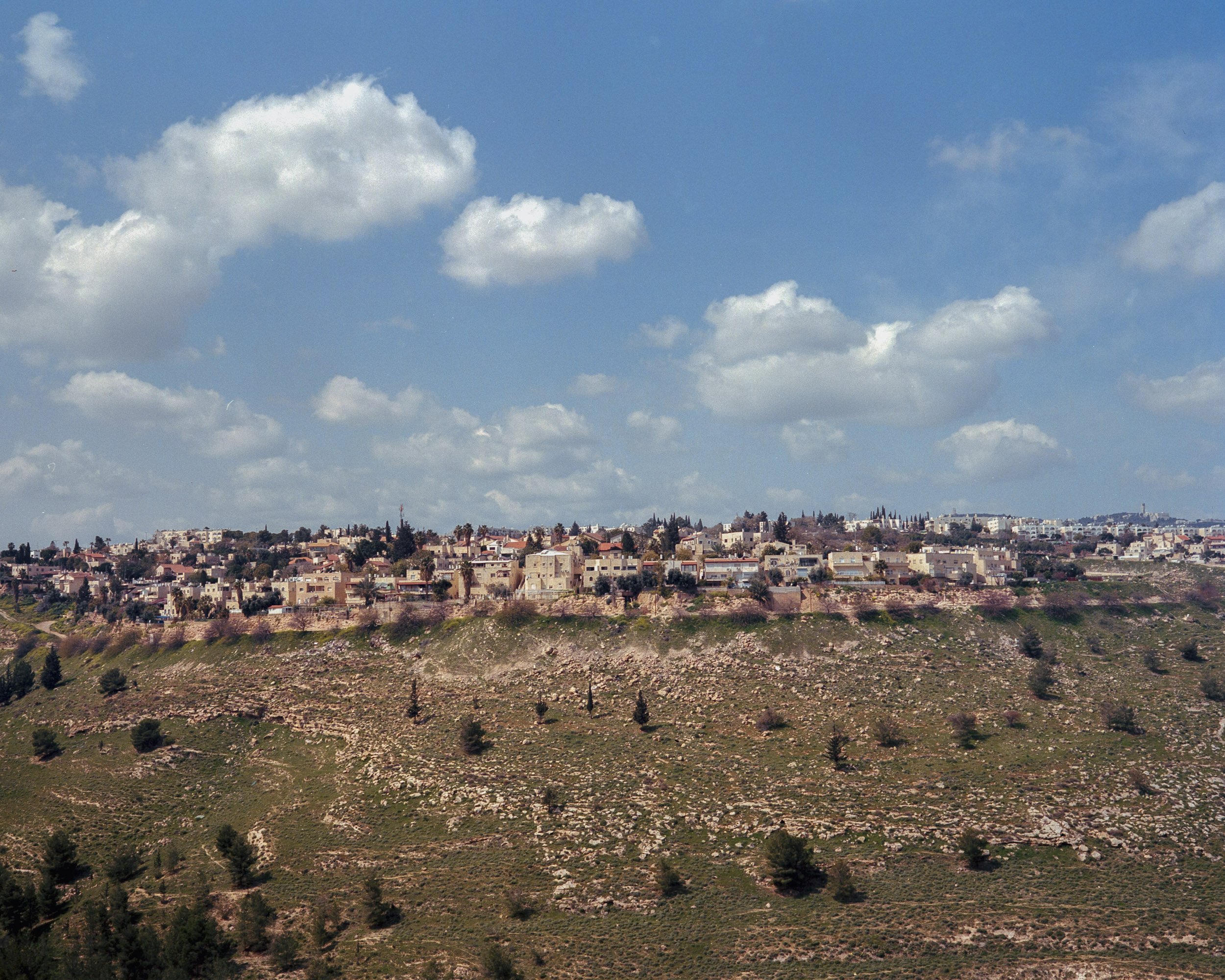
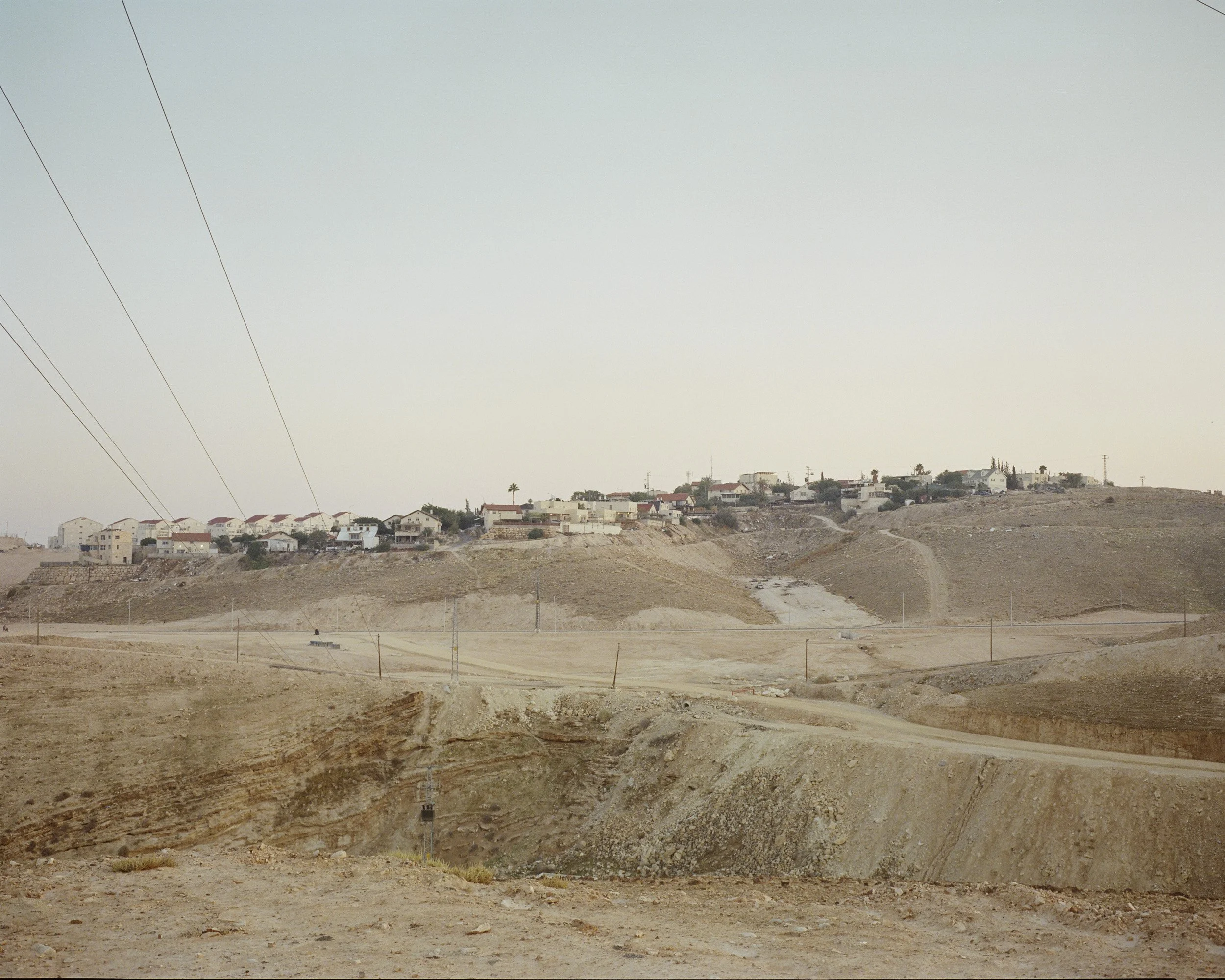
Kedar settlement, February 27, 2023. In the background, the settlement of Ma'ale Adumim.
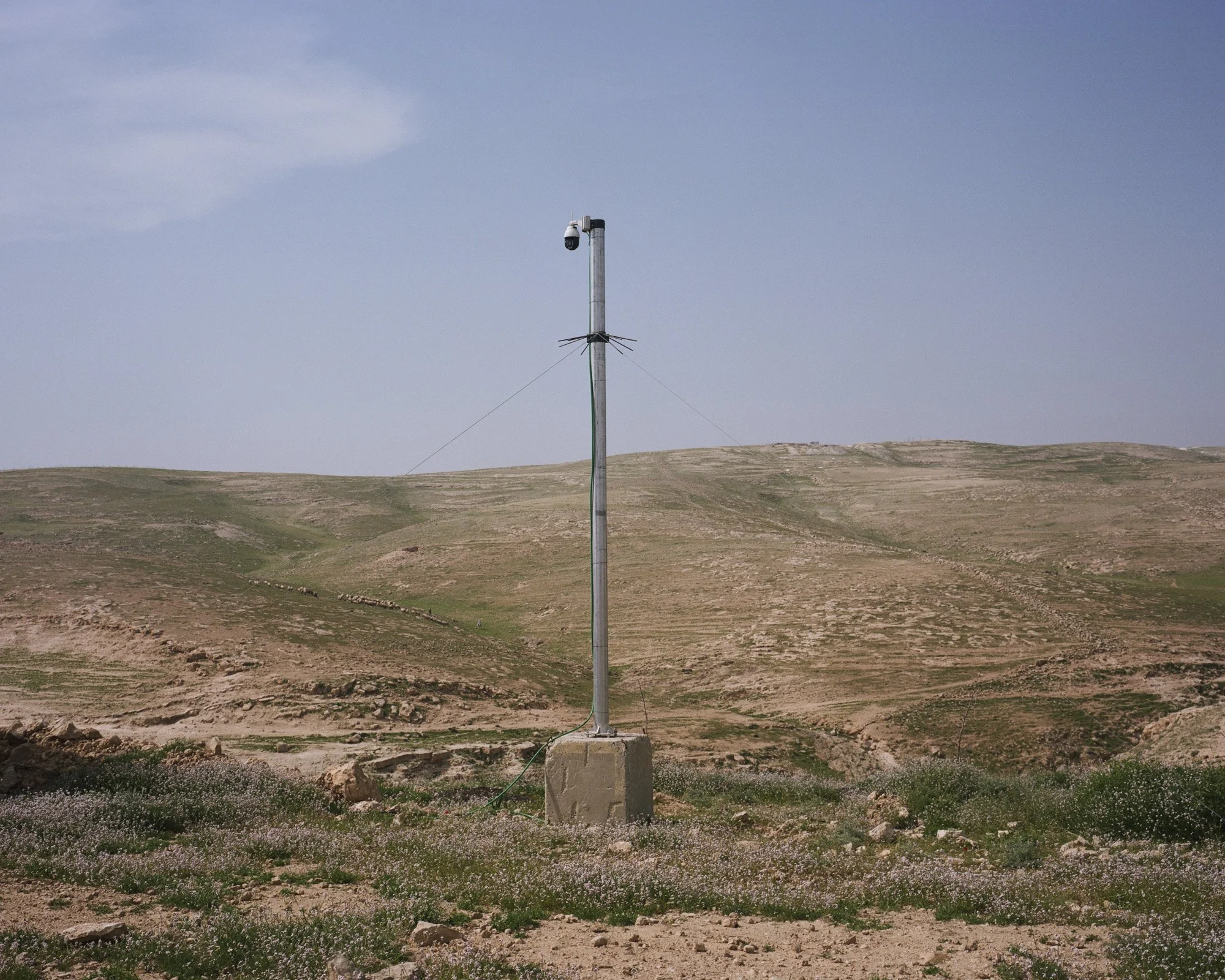
A camera films the surroundings of Kedar outpost settlement.
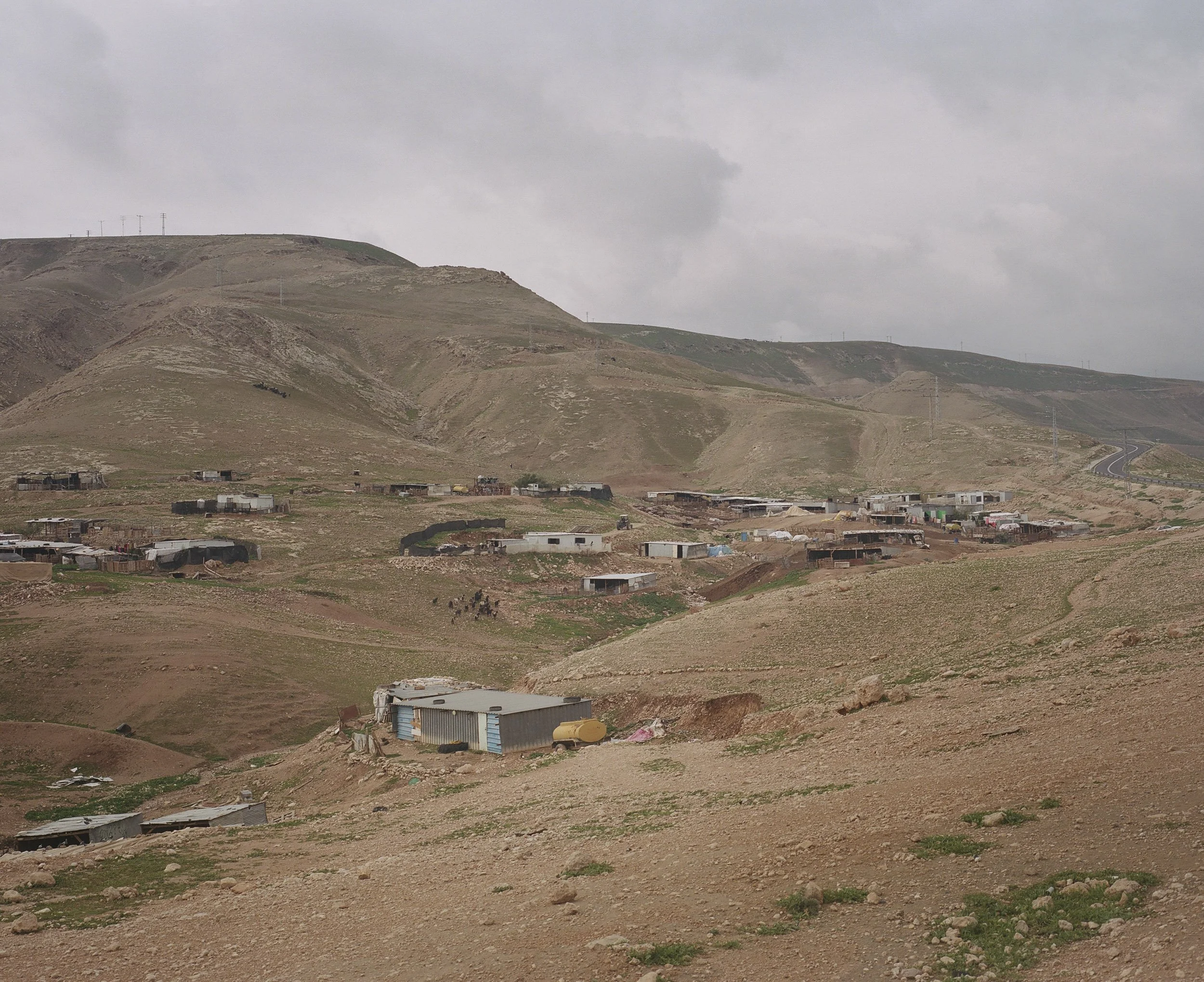
The Bedouin village of Mu'arrajat, in the Jordan Valley, is regularly threatened and attacked by the settlers living in the nearby farm outpost.
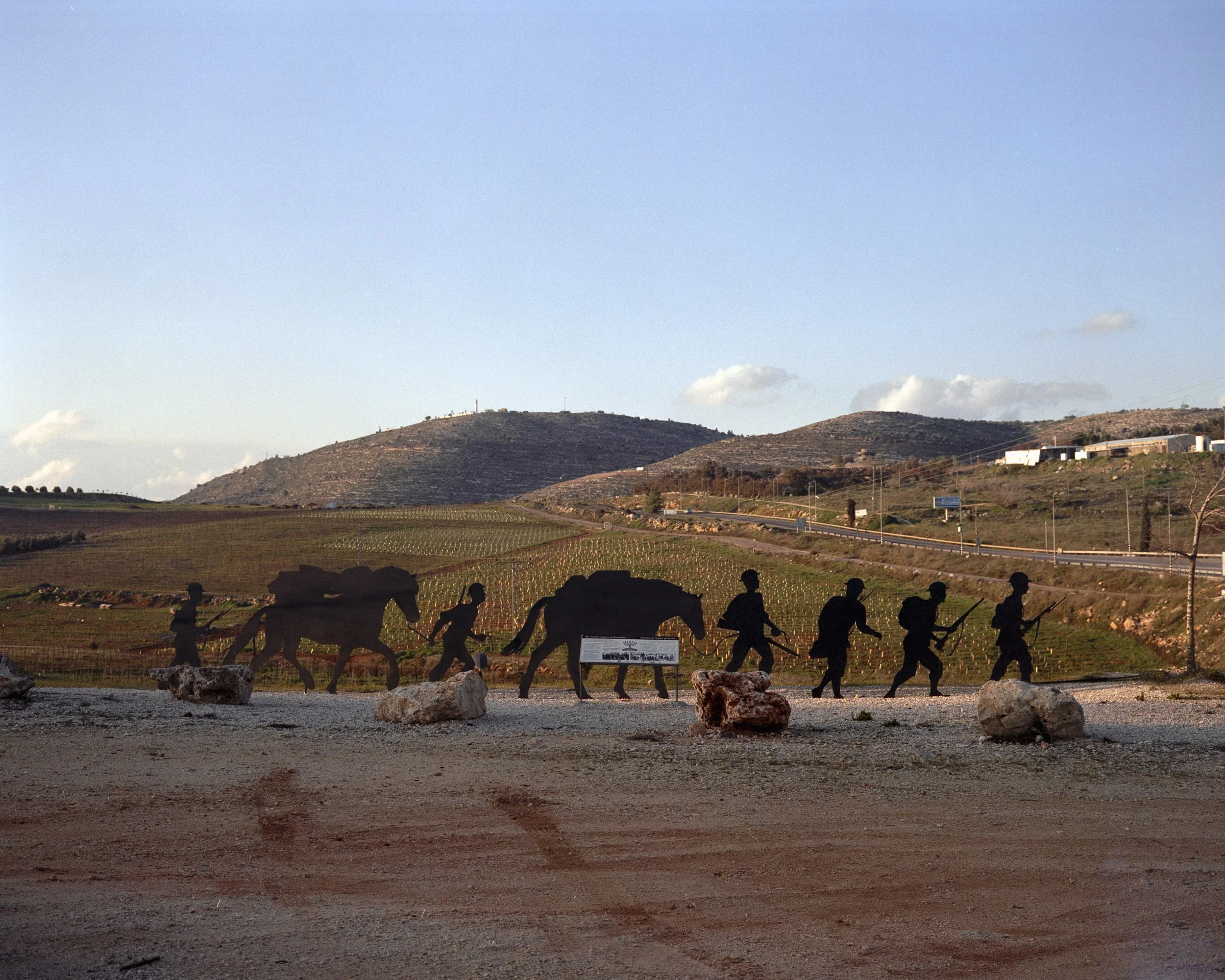
Silhouettes representing the 'Jewish Legion', on the side of Route 60, between the Palestinian village of Turmus Ayya and the Jewish settlement of Shilo.
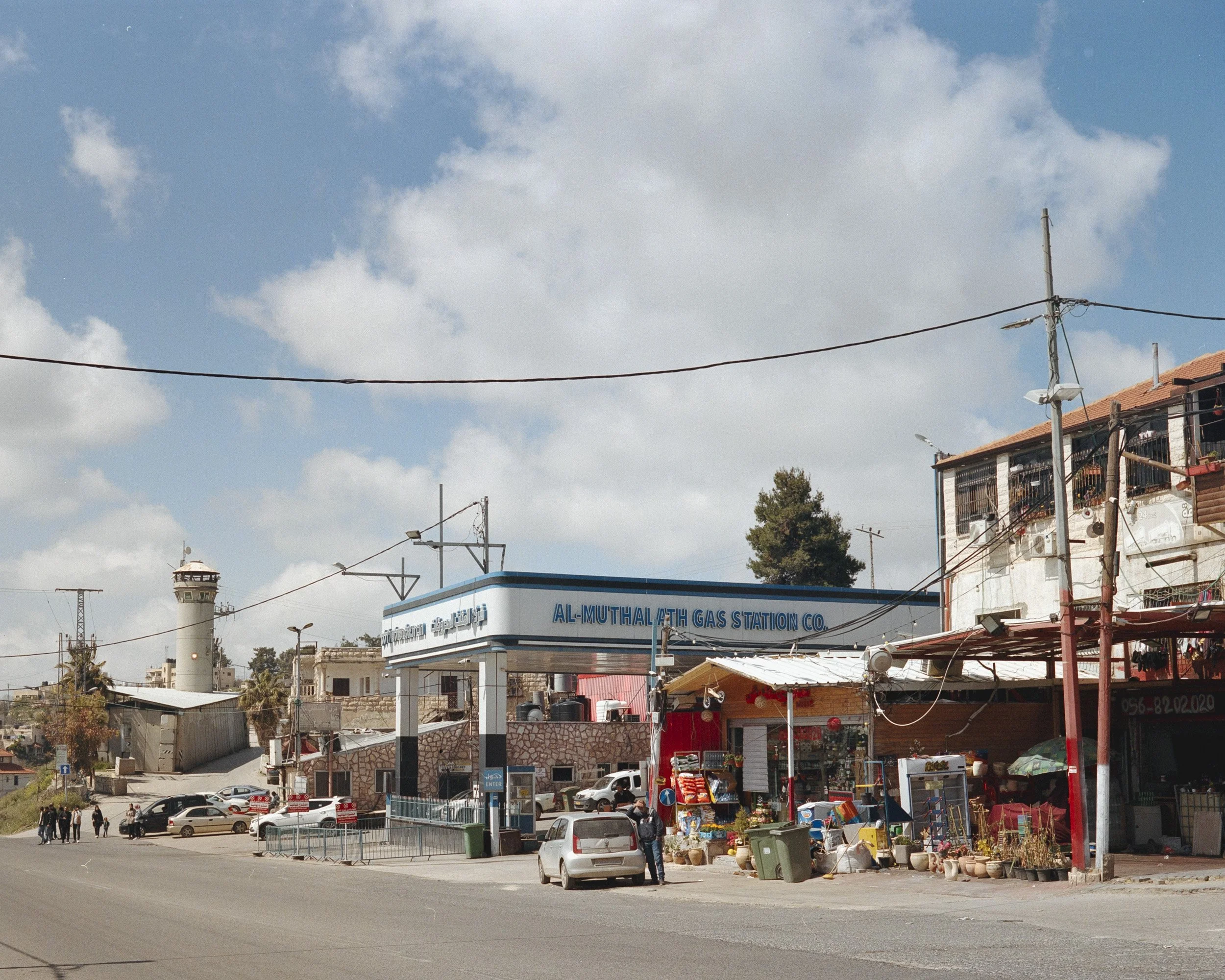
Entrance to the Palestinian village of Beit Ummar. Each exit from a village in the West Bank has a watchtower and a barrier that the military can close at any time in the event of an operation, isolating the inhabitants for an indefinite period.
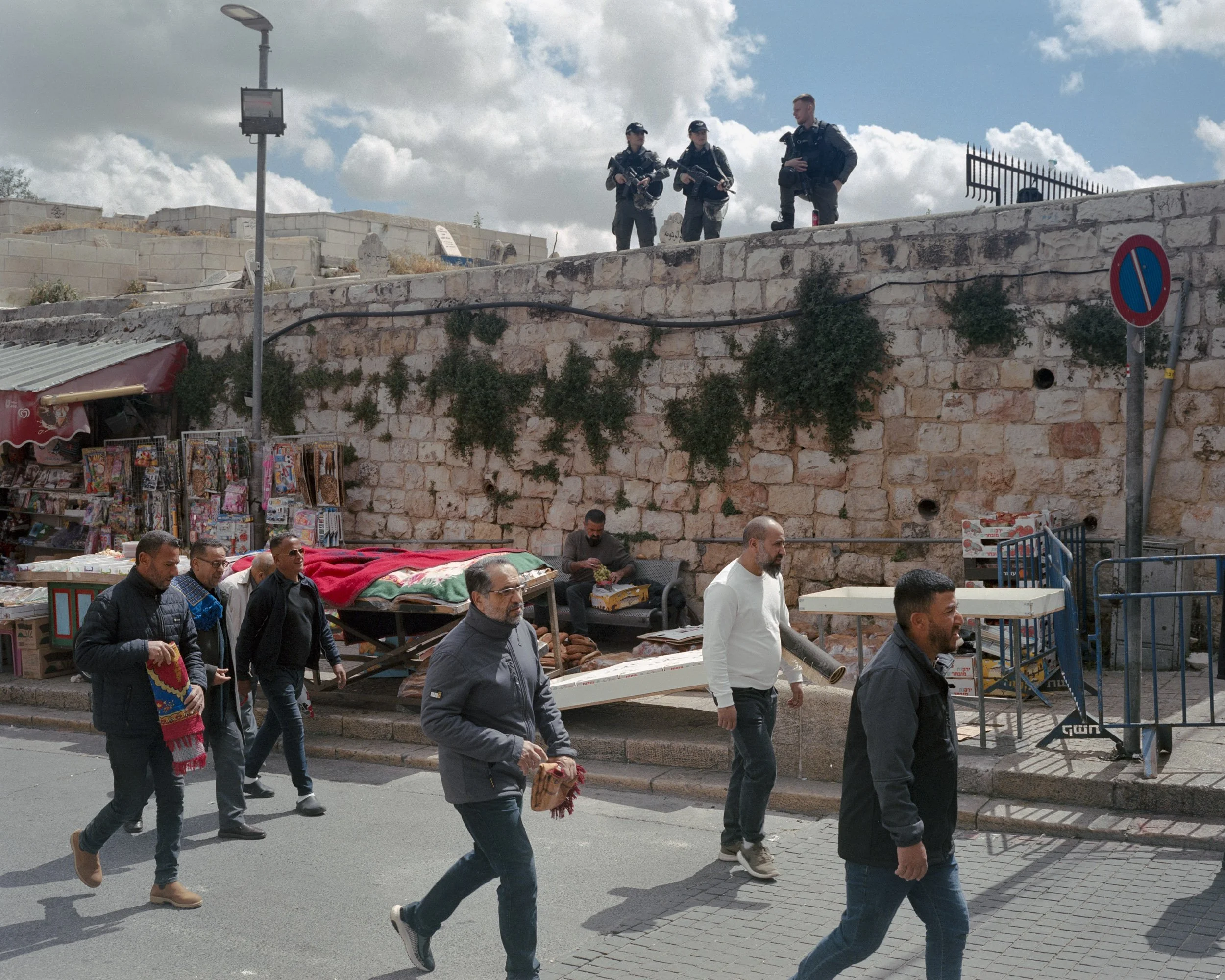
Palestinians from East Jerusalem approach Al-Aqsa Mosque through the Lions Gate for prayers on the first Friday of Ramadan. This year, given the context, more than 3,000 Israeli police officers have been mobilized and are guarding the entrances.
Umm Al-Khair (right) and the settlement of Carmel. The Bedouin village, built mainly of iron houses, contrasts with the equipped country houses of the colony. West Bank.
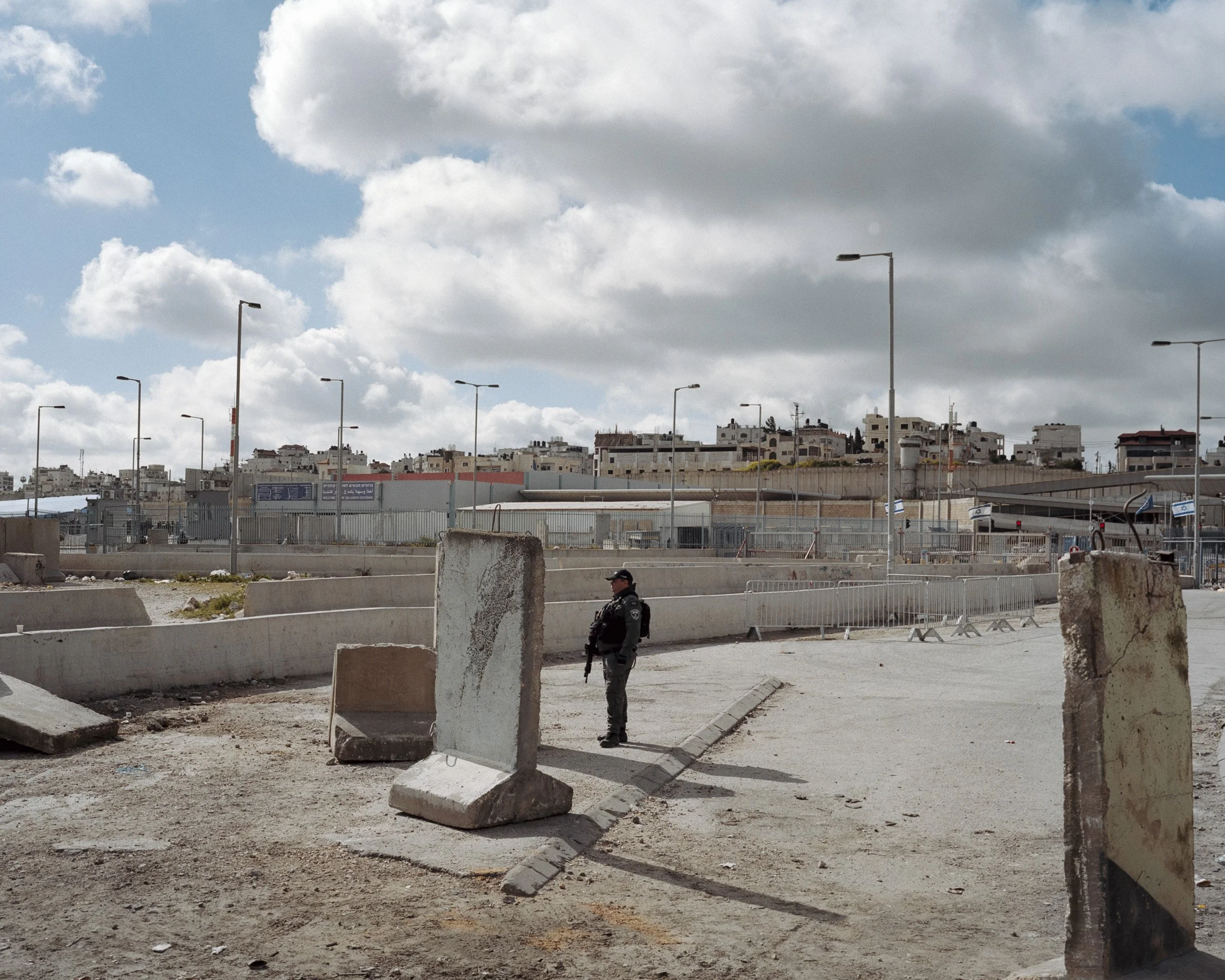
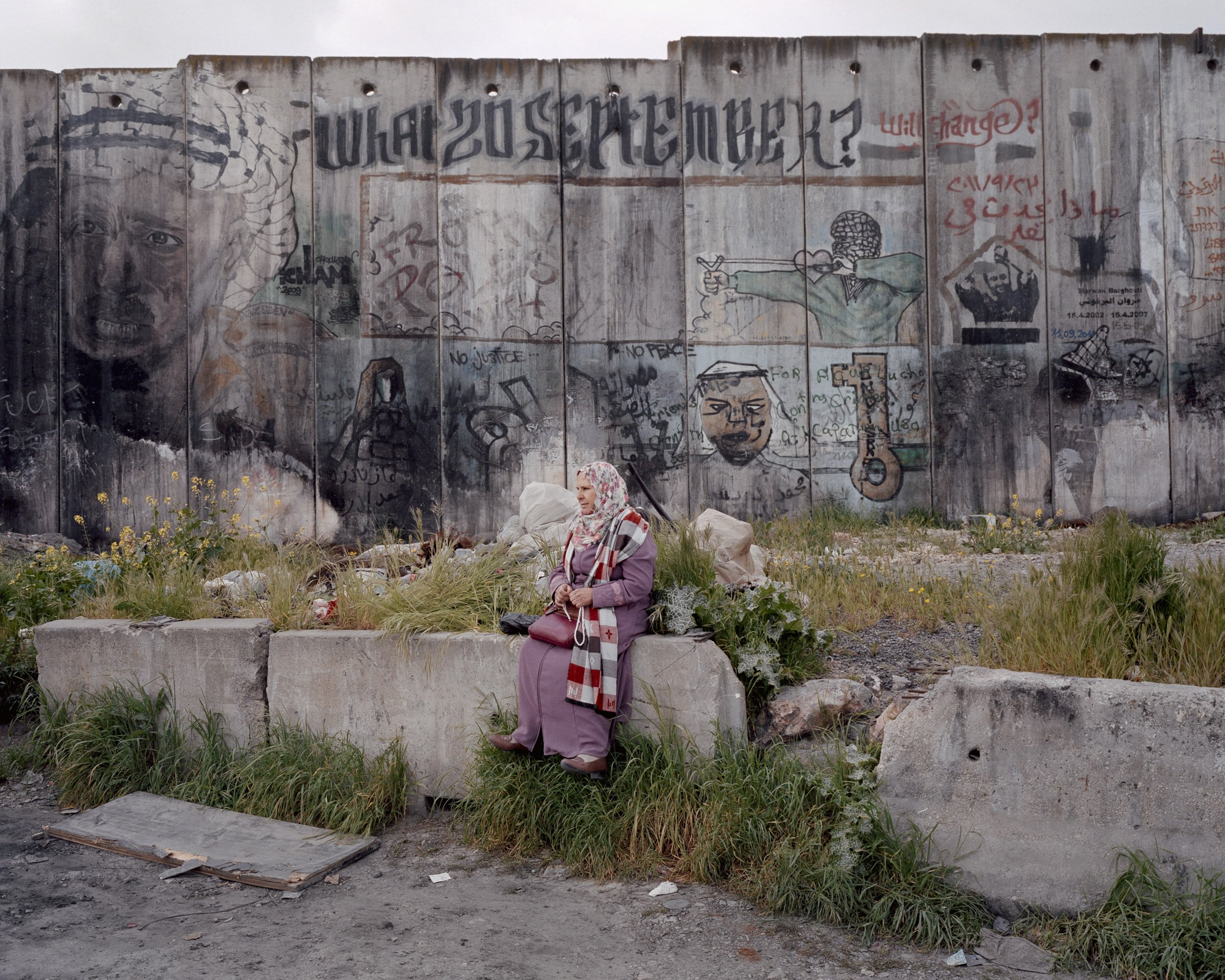
An Israeli border police officer guards the Qalandiya checkpoint, which is closed to traffic for the first Friday of Ramadan. March 15, 2024.
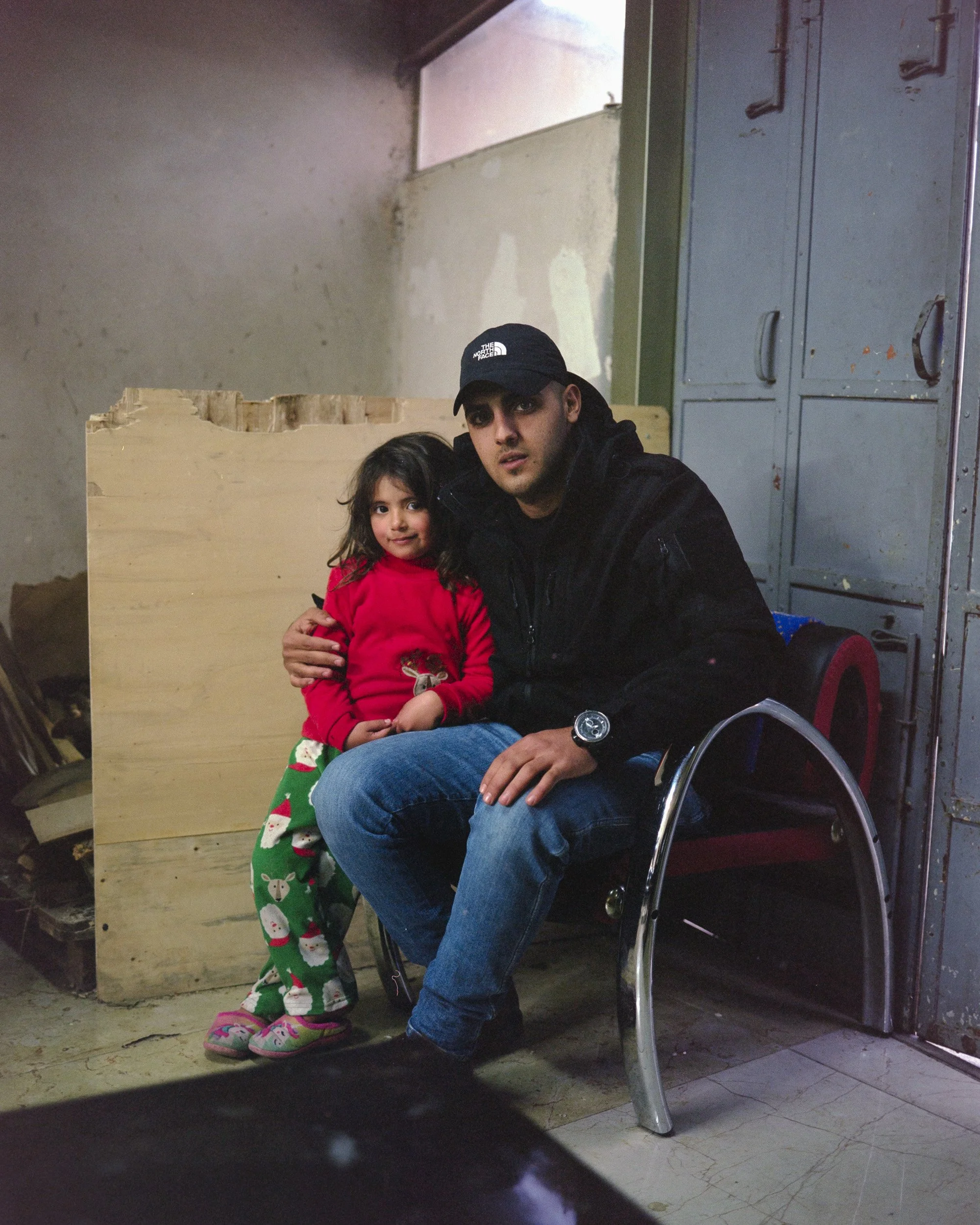
Ehab, a firefighter in Ramallah, with his sister Mariam. The Madani family lives at the foot of the Israeli colony of Beit El, next to Ramallah.
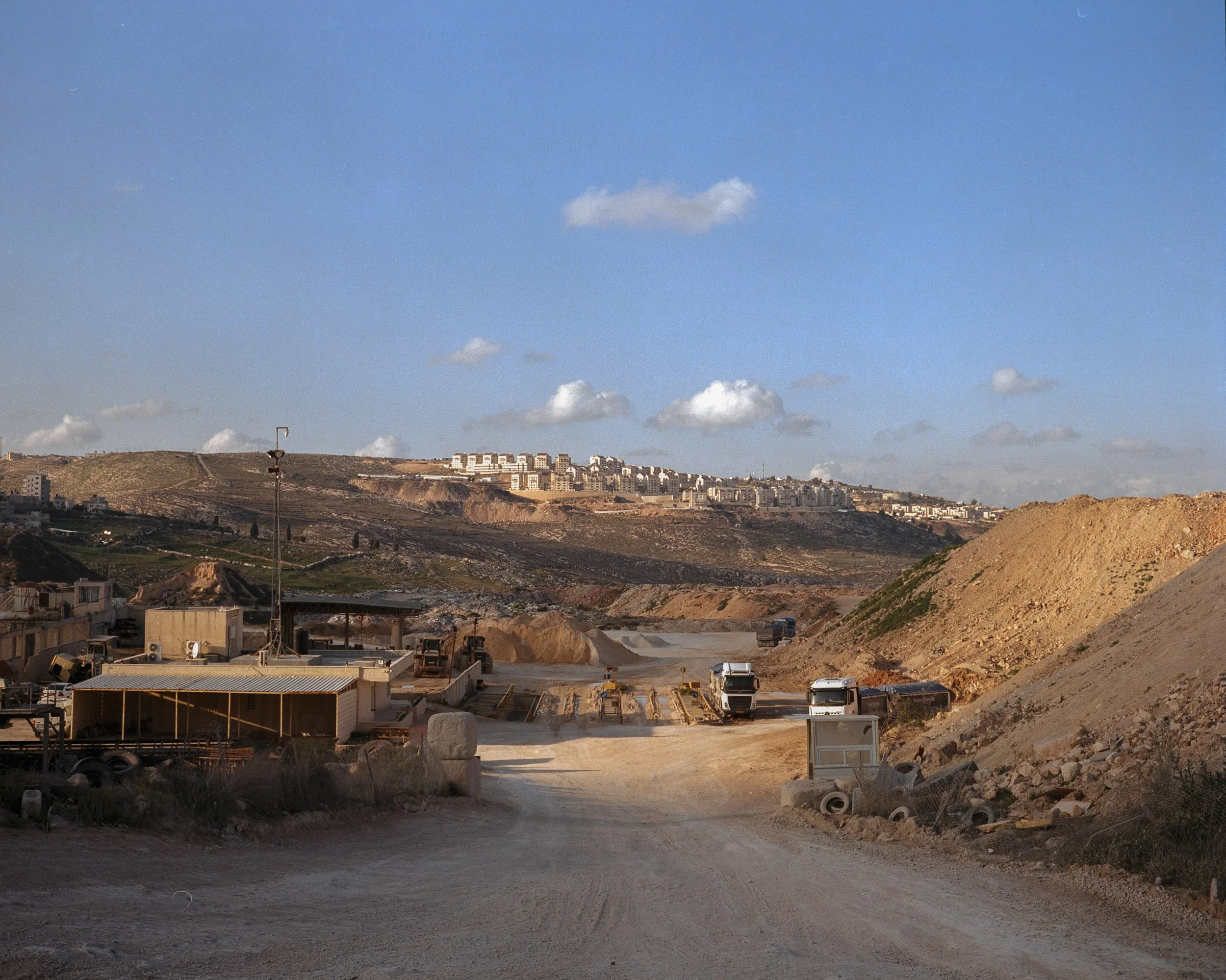
Buildings under construction in the Israeli settlement of Kokhav Ya'akov, located a few kilometers from Ramallah.
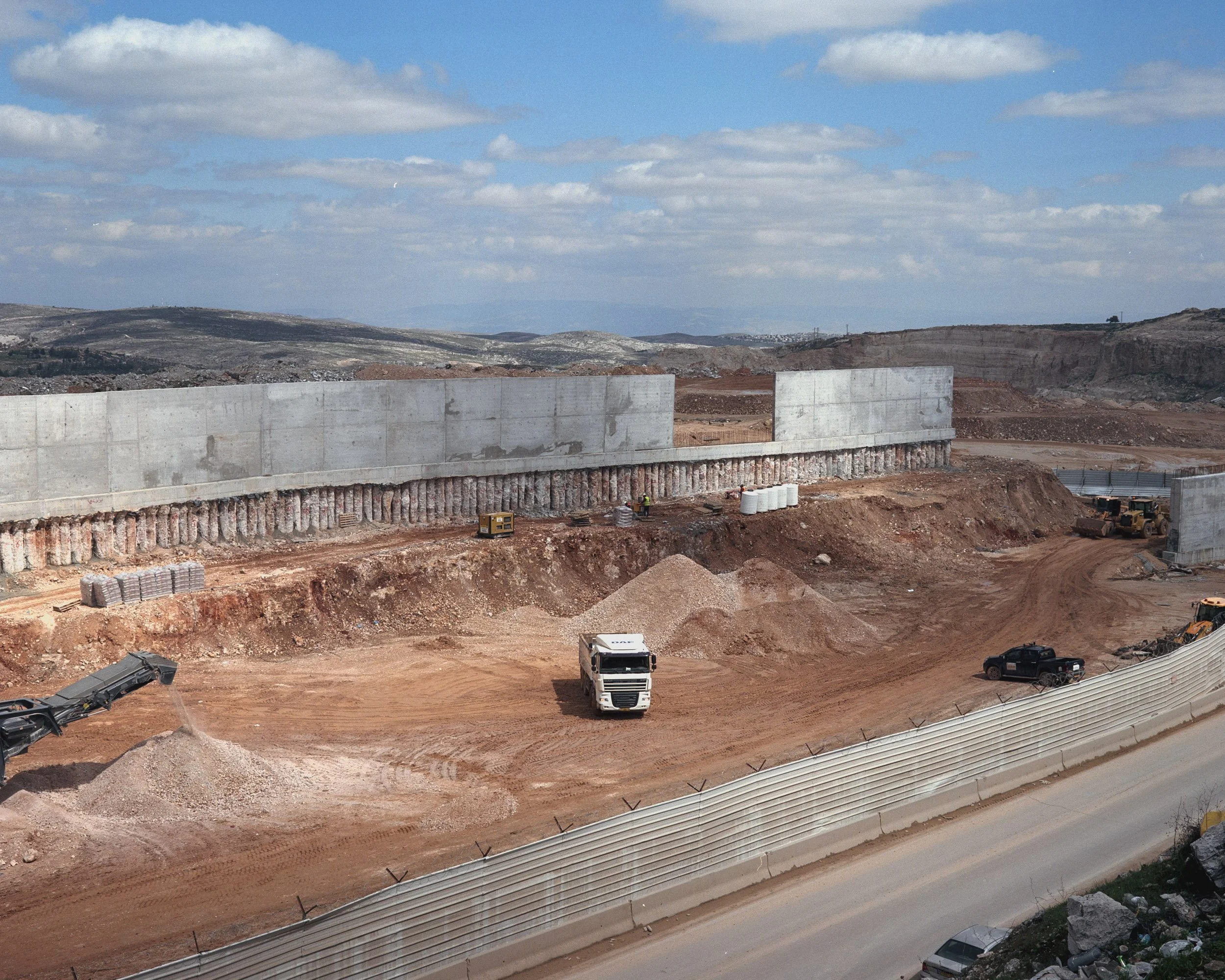
Construction of a new section of the wall, in Qalandiya, between Ramallah and Jerusalem.
Entrance road to the Palestinian village of Rantis, from Route 465, used by Palestinians and Israelis in the West Bank. The road has been cut off by the Israeli military following October 7 2023.
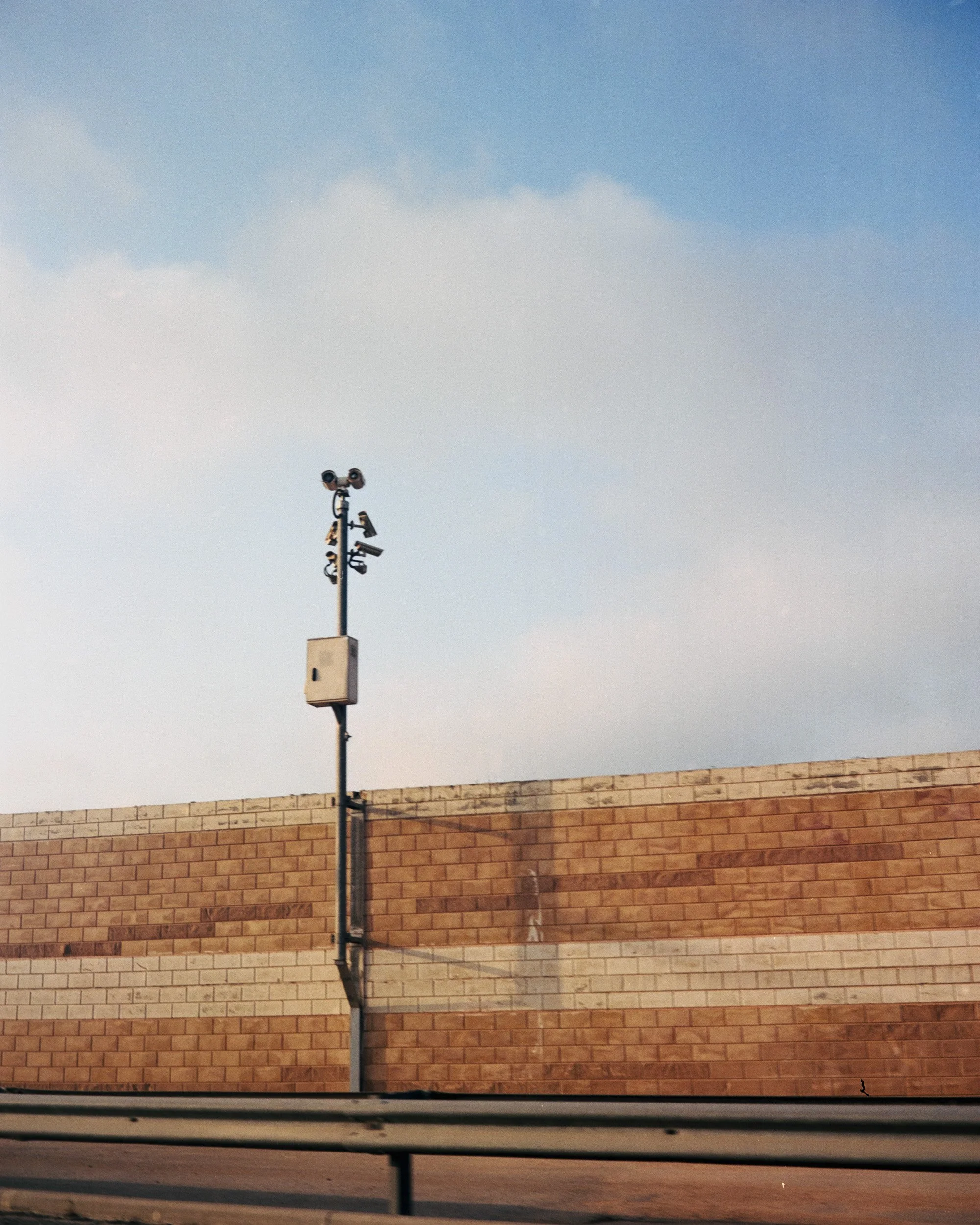
CCTV surveillance cameras pointing out of road 443, on the other side of the wall surrounding the freeway. . Only accessible to Israelis, the road is surrounded by walls and crosses part of the West Bank. September 5 2022.
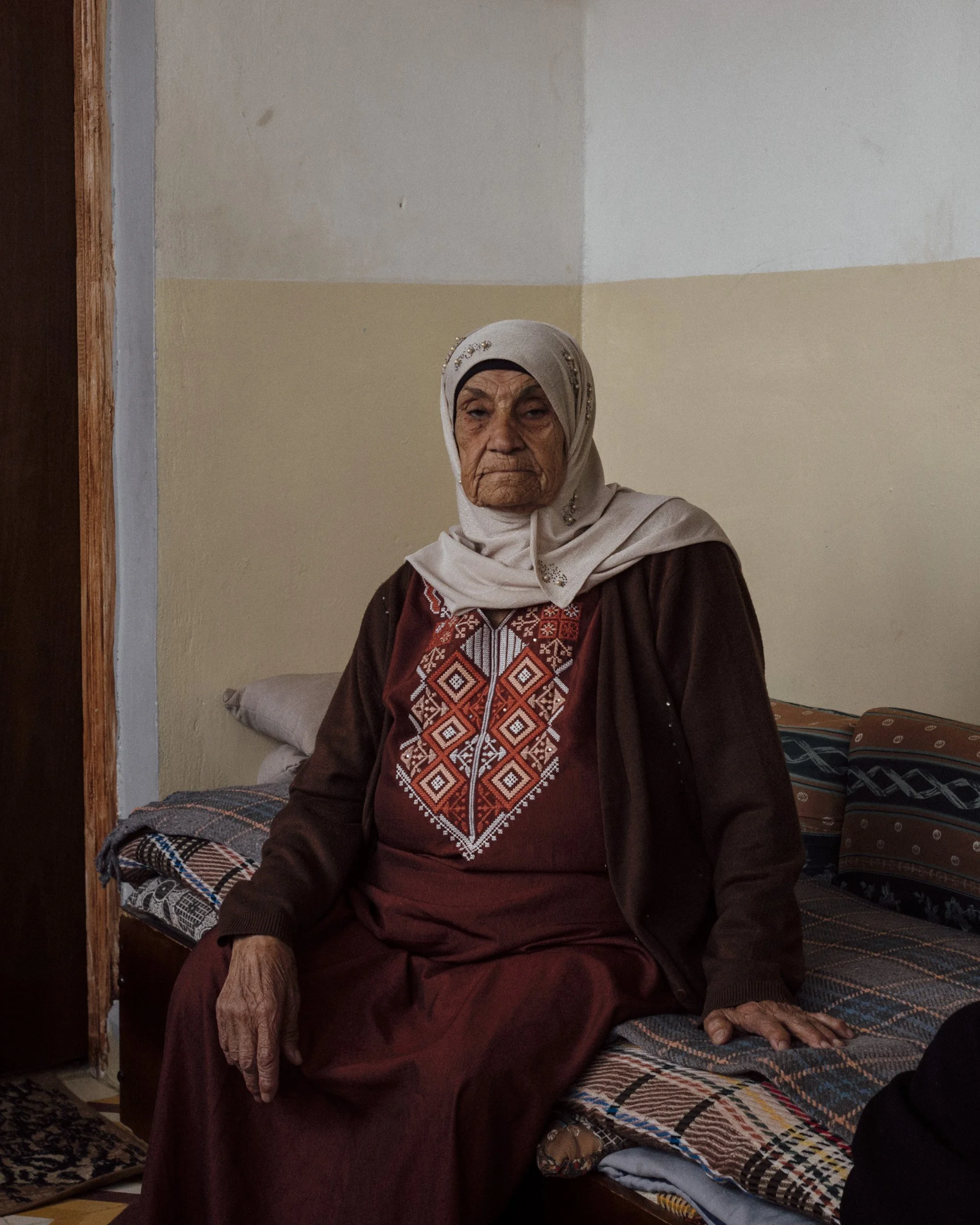
Hafiza (Oum Jaber), 81, at her home in Qaryut, West Bank.  As she went to tend to her fields near the village, Hafiza was threatened by settlers living nearby and forced to leave her crops.
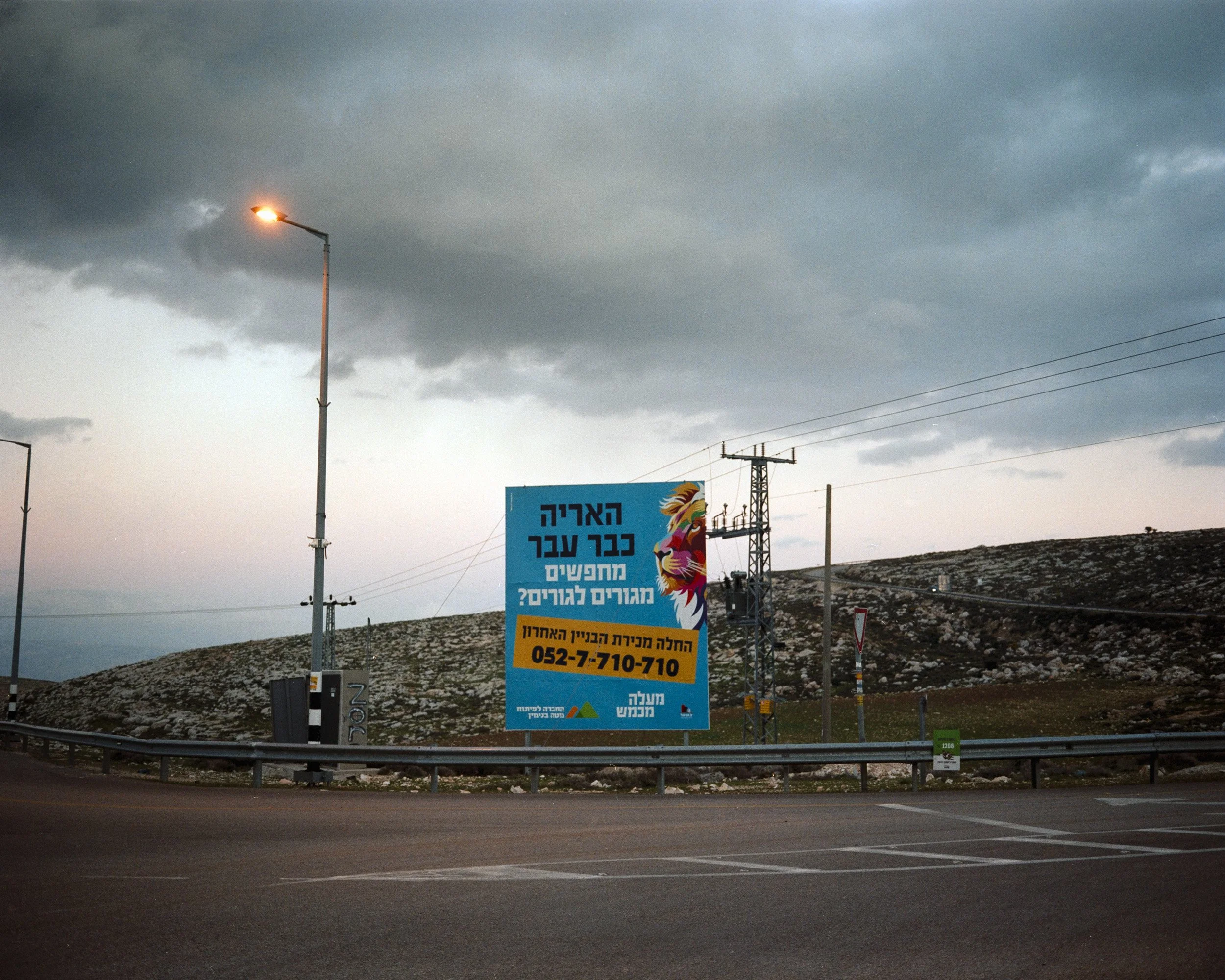
Advertisement for houses in settlements in the hills of Jericho (West Bank).
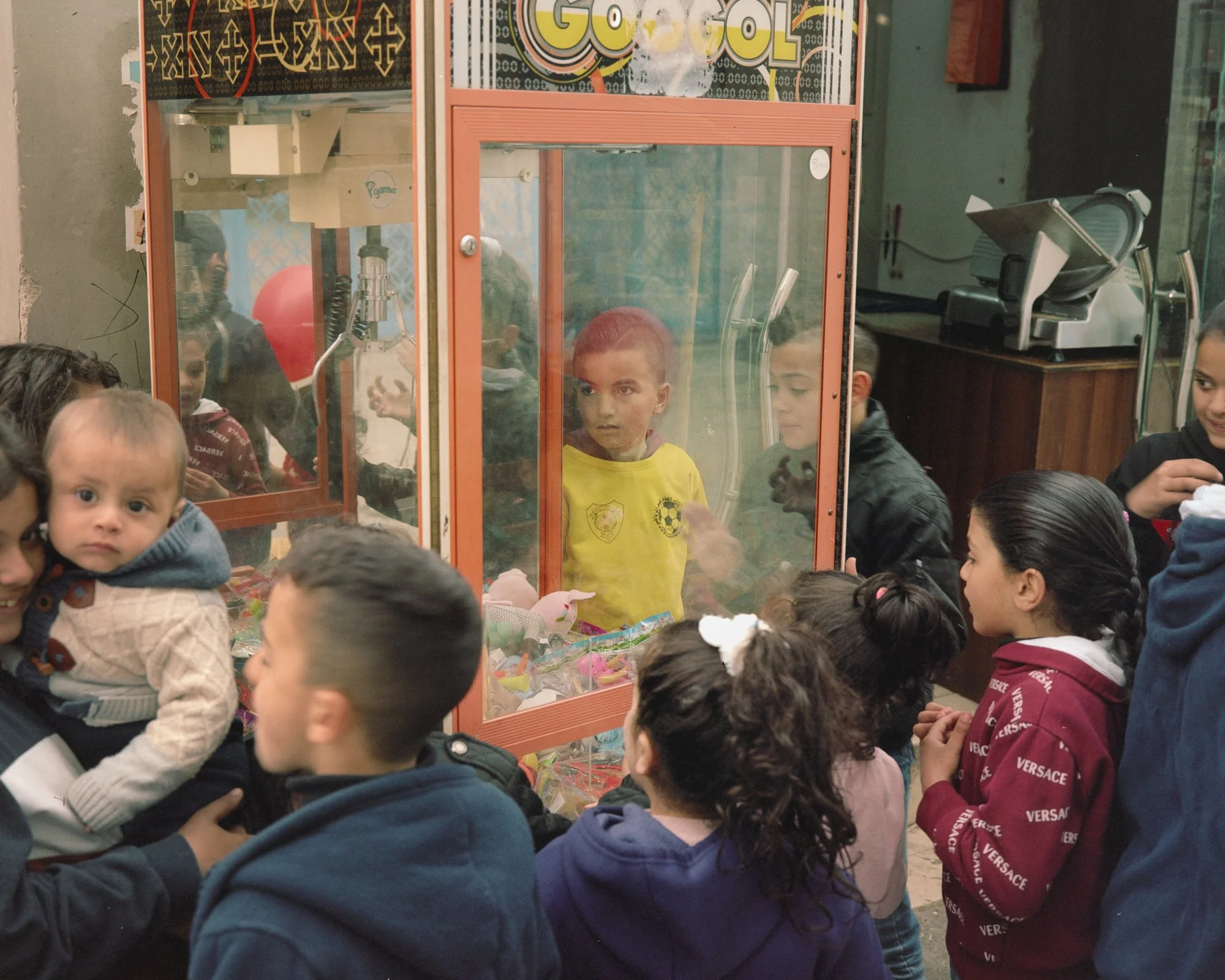
Aida camp children play games. Bethlehem.
The Israeli settlement of Alon in the Jordan Valley, near Jericho. November 2022.
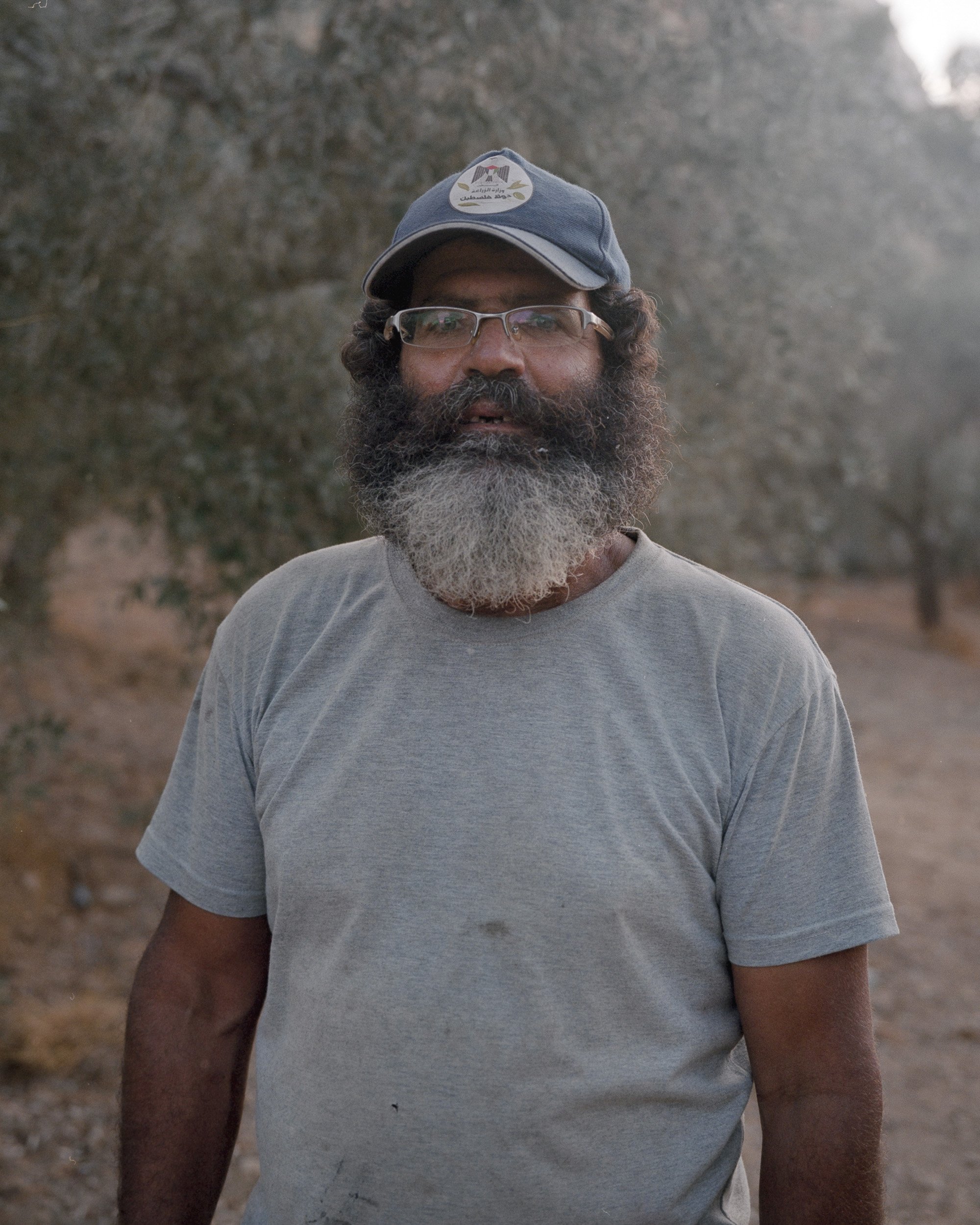
Abu Issa in his olive field, in Walaja, a village on the 'seam line'
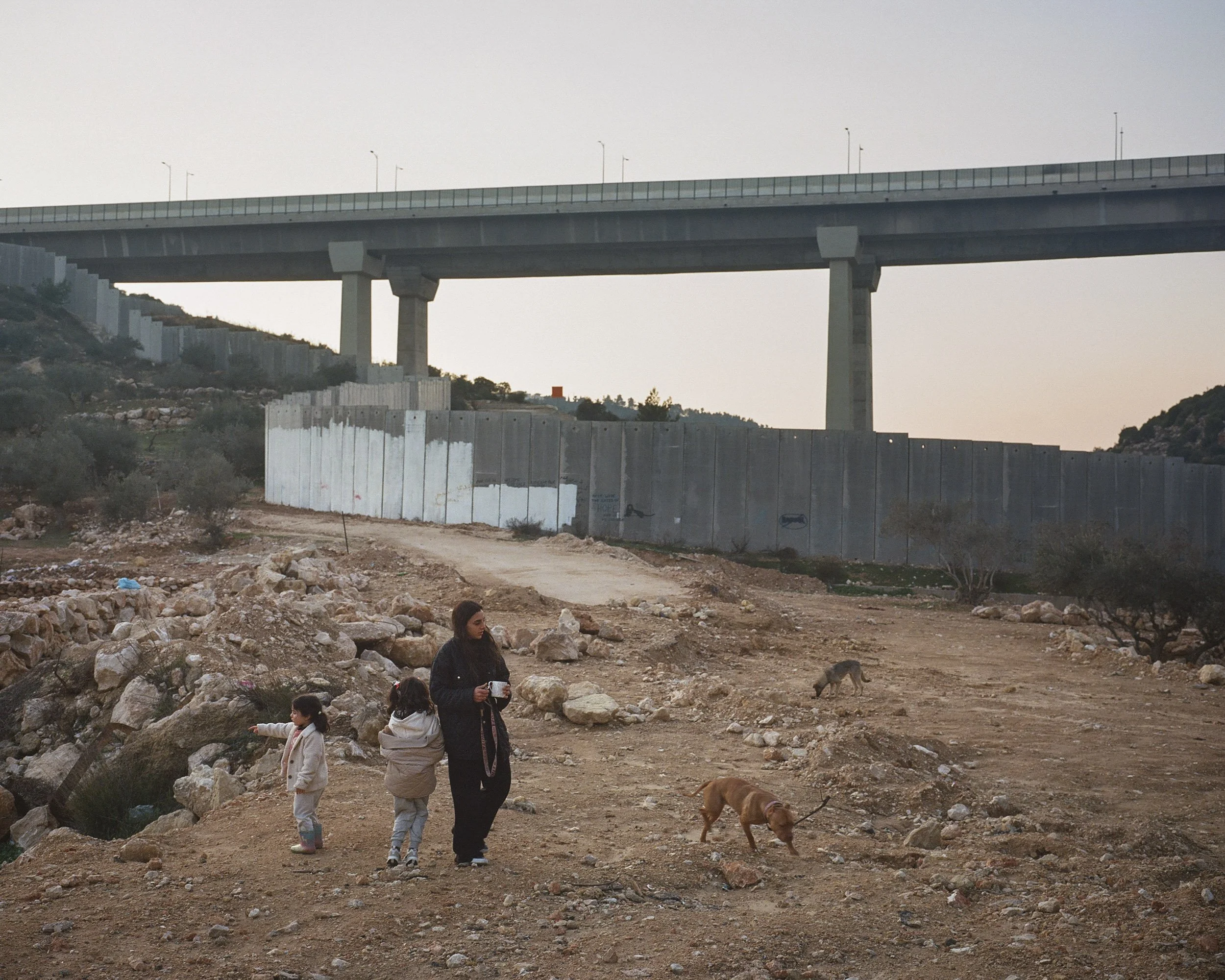
A family walks their dog at the foot of their building, under Route 60 and the separation wall. Beit Jala, February 13 2023.
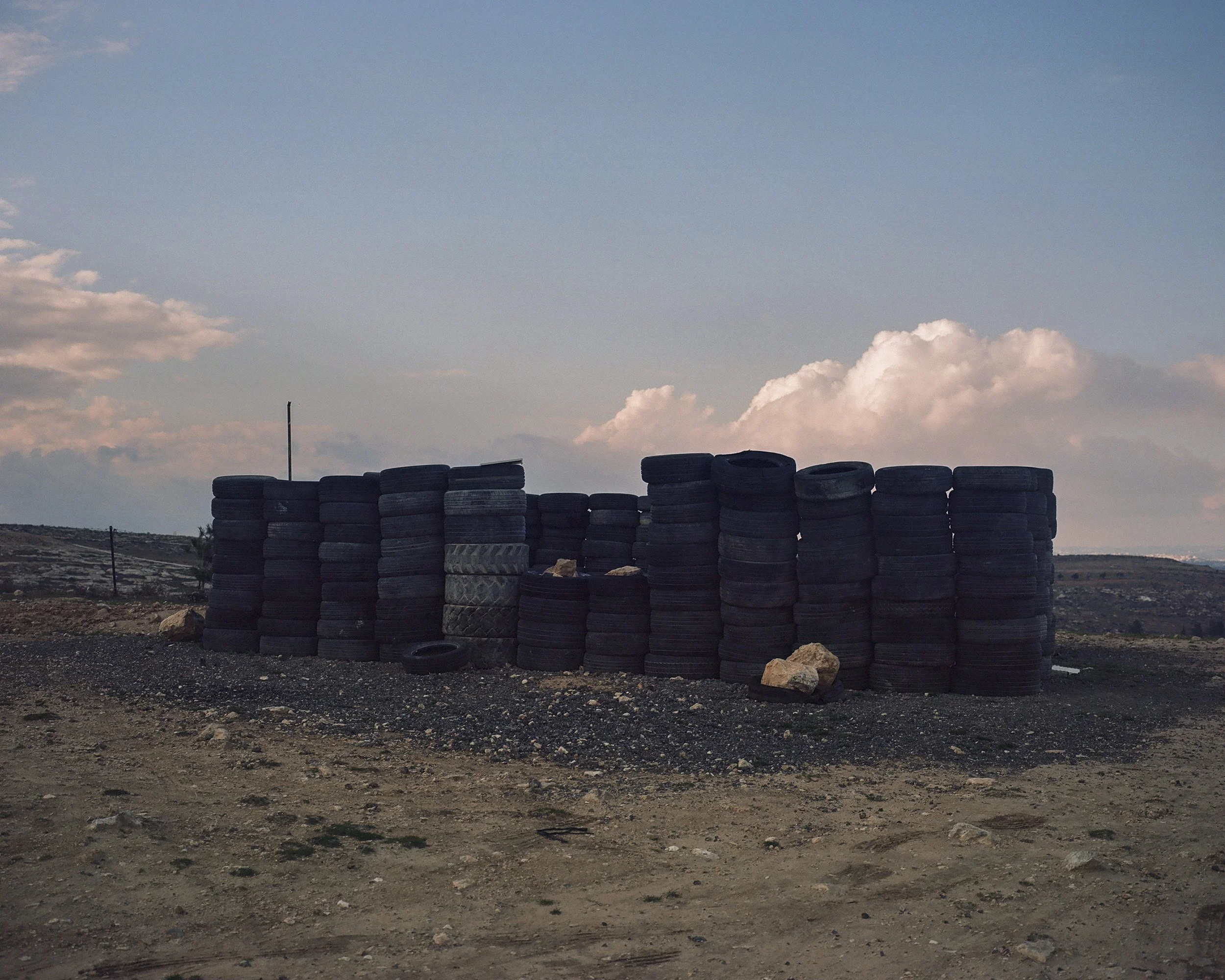
A tire structure used by the Bedouins of the village of Al-Mufaqarah (West Bank) as a meeting space, with a sheet added to form the roof.
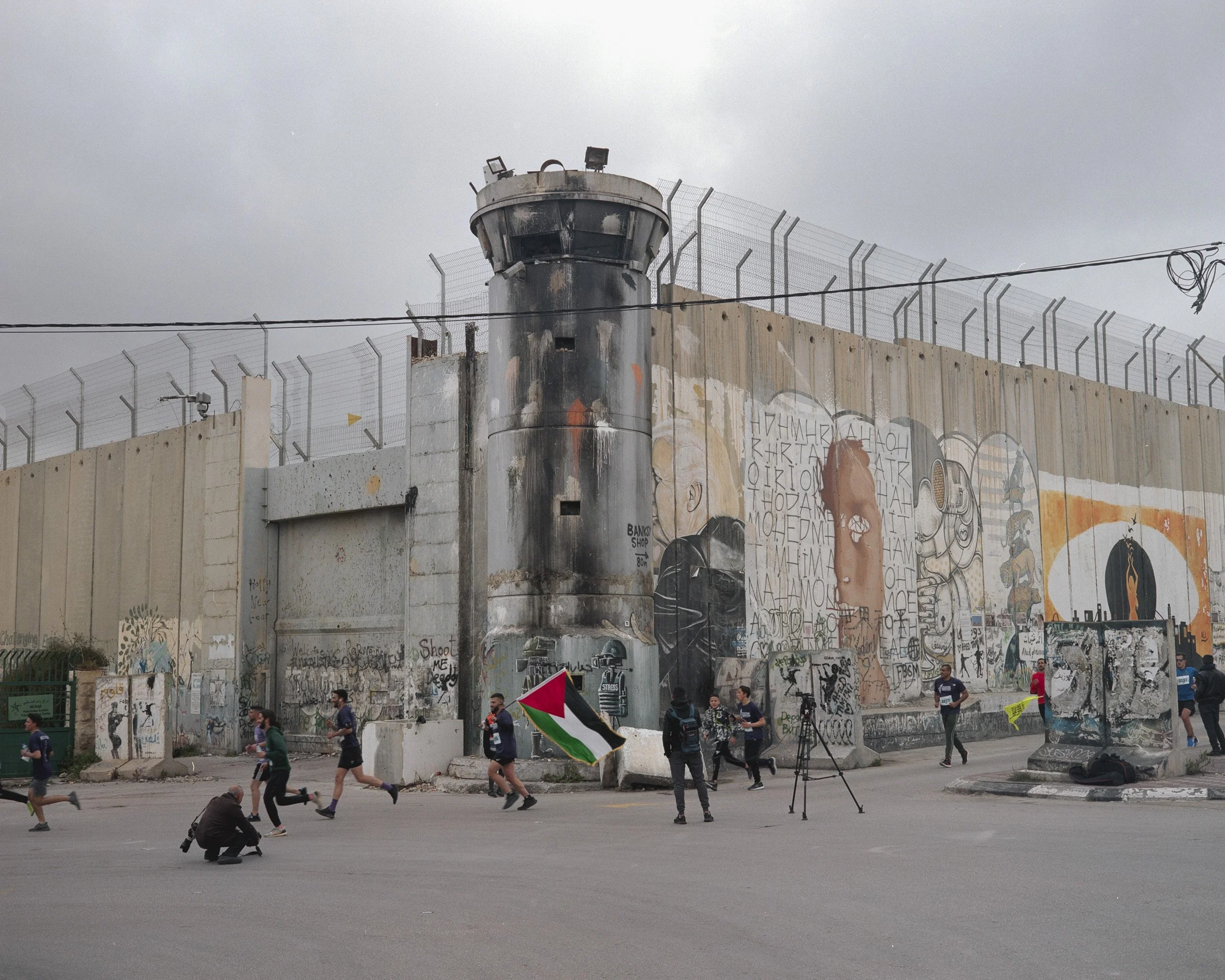
Runners of the Bethlehem Marathon pass in front of the separation wall, Bethlehem, March 18, 2022.
Abu Dis, formerly a neighborhood of Jerusalem, has become a city in its own right, separated from the holy city.
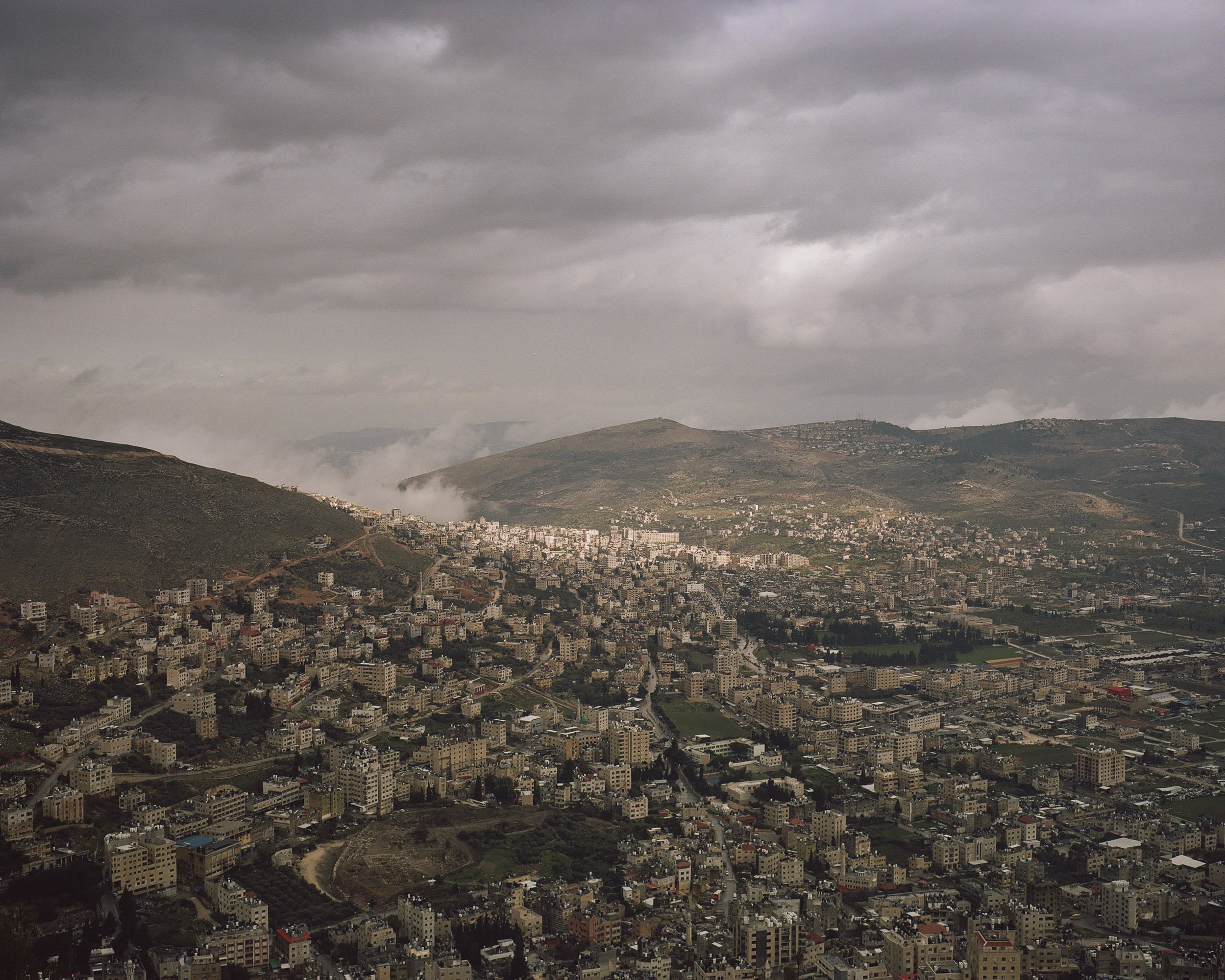
View over Nablus and the Balata refugee camp, February 8, 2022.
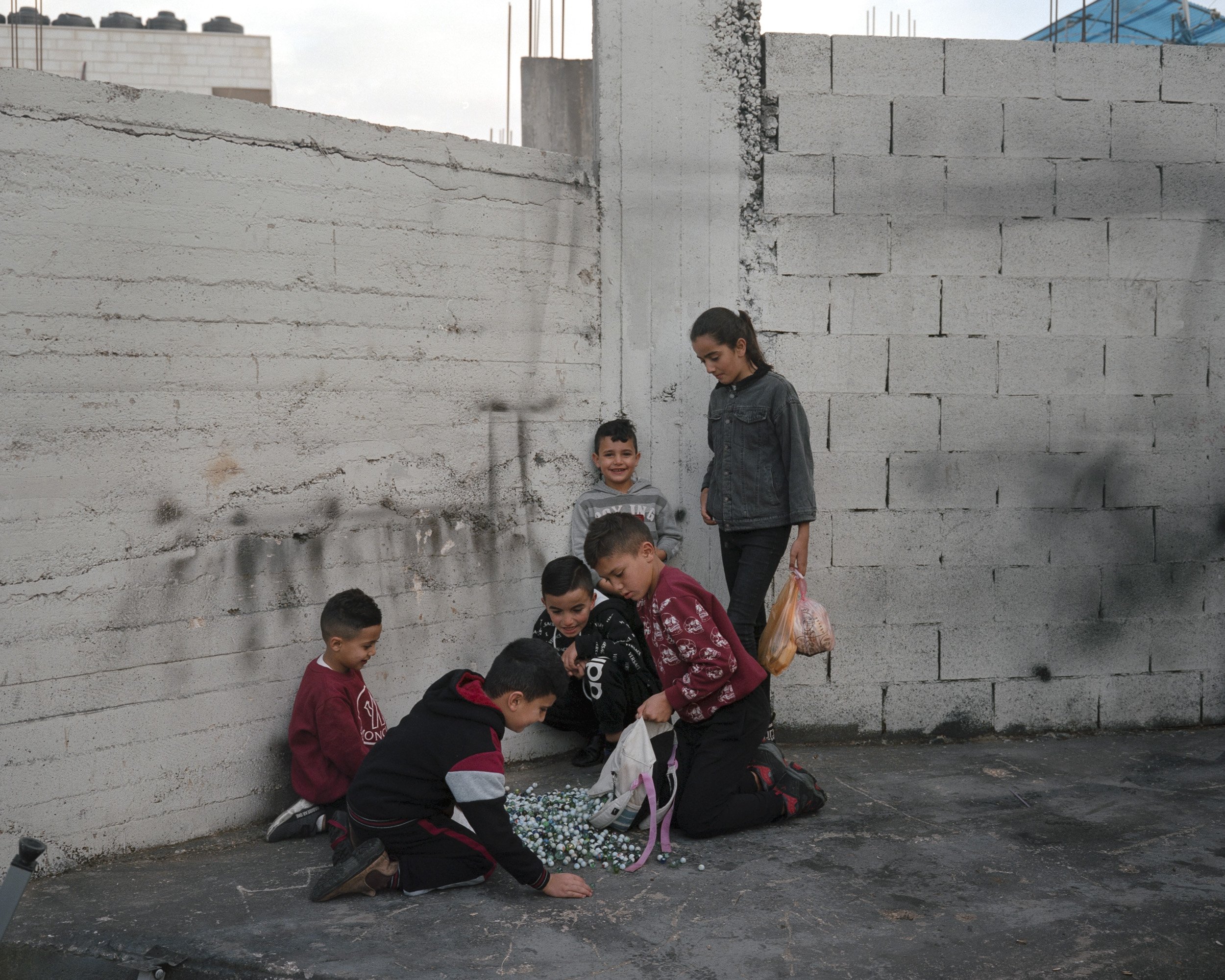
Children from Aida refugee camp playing marbles. Bethlehem, November 2021.
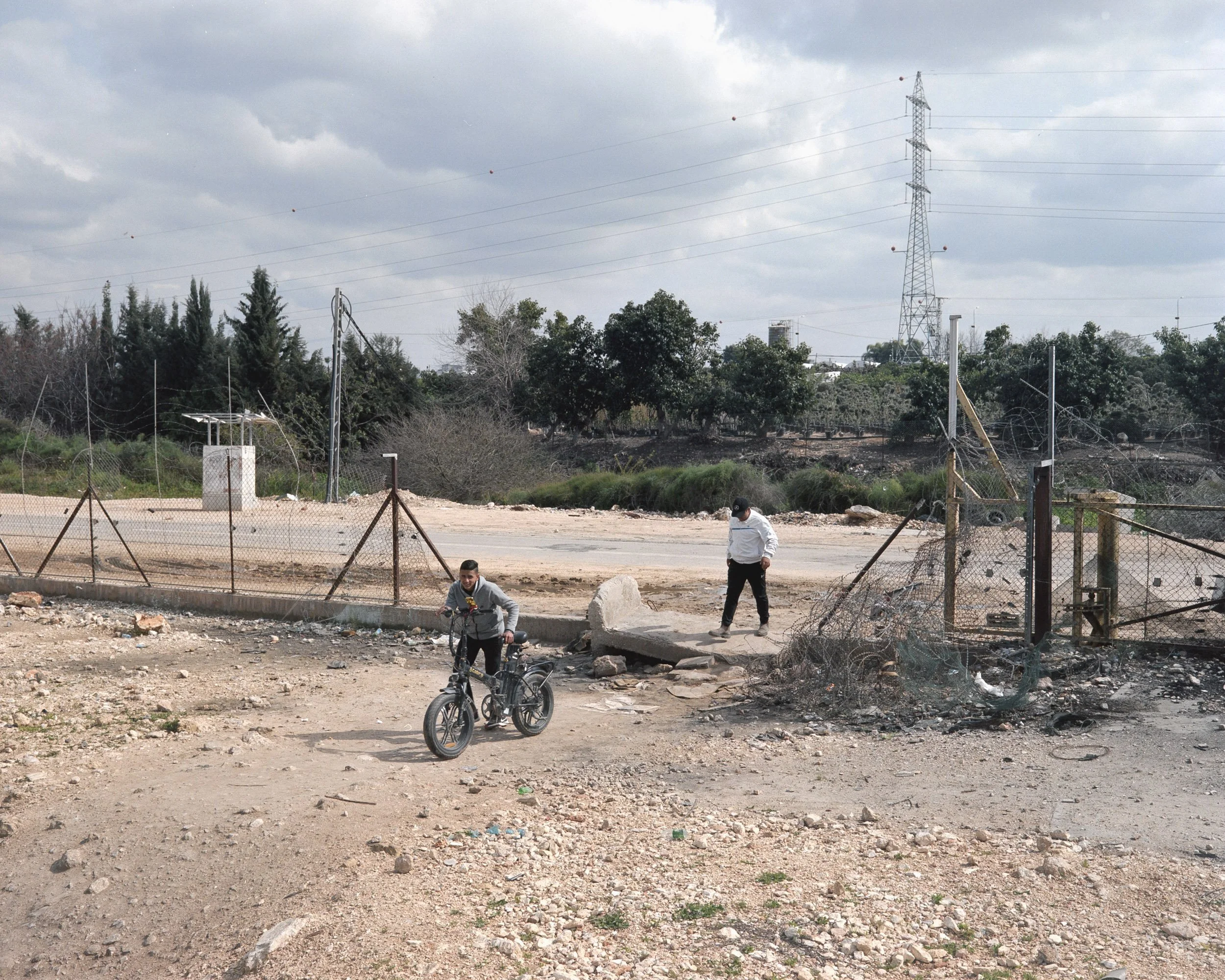
Palestinian workers pass through a gap in the barbed wire section of the separation wall in Qalqiliya, West Bank, used to go to work in Israel.
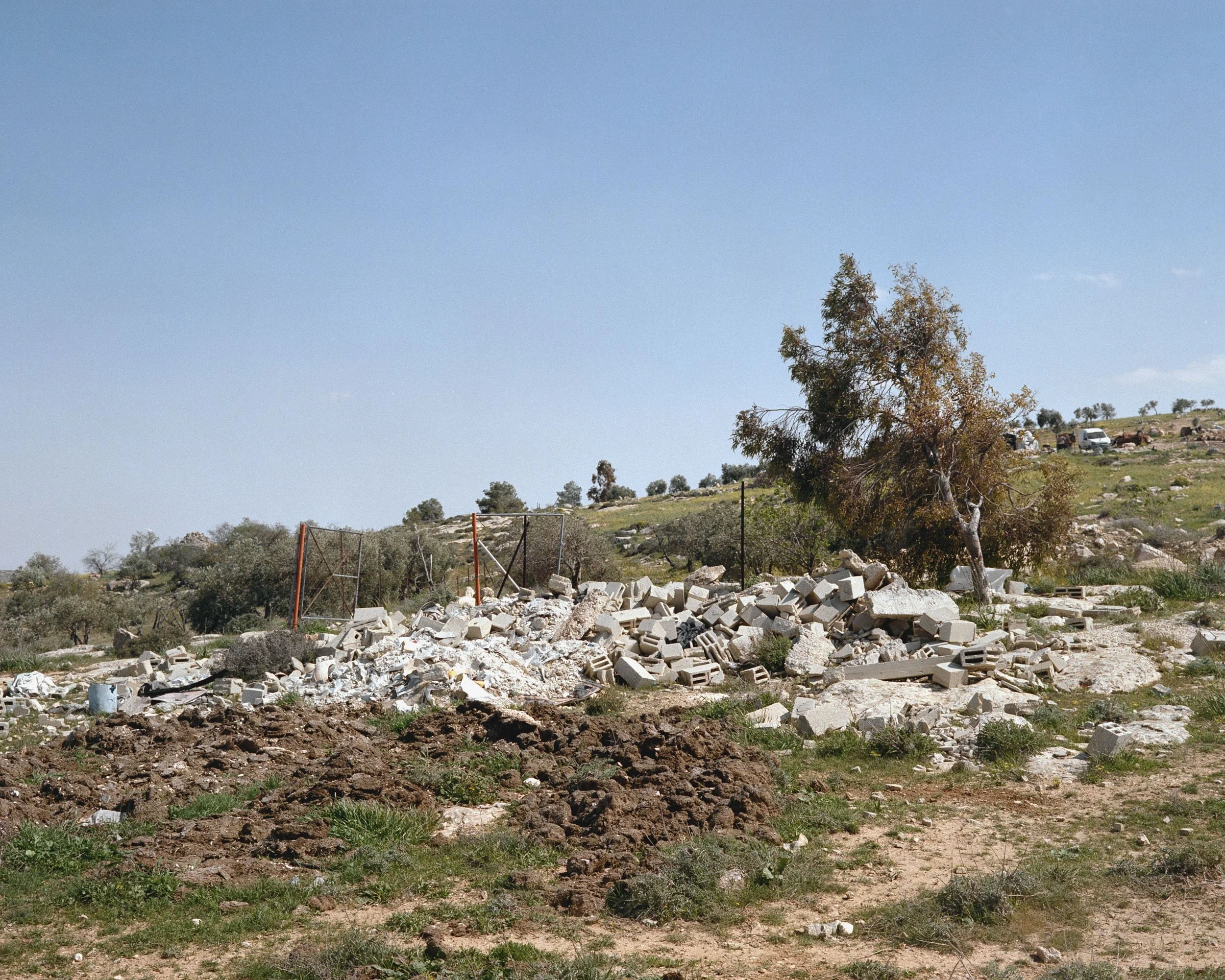
Rubble of a house destroyed following an Israeli army demolition order—issued due to construction without a permit in an army training zone—in the hills above the Palestinian village of Tuwani, Masafer Yatta.
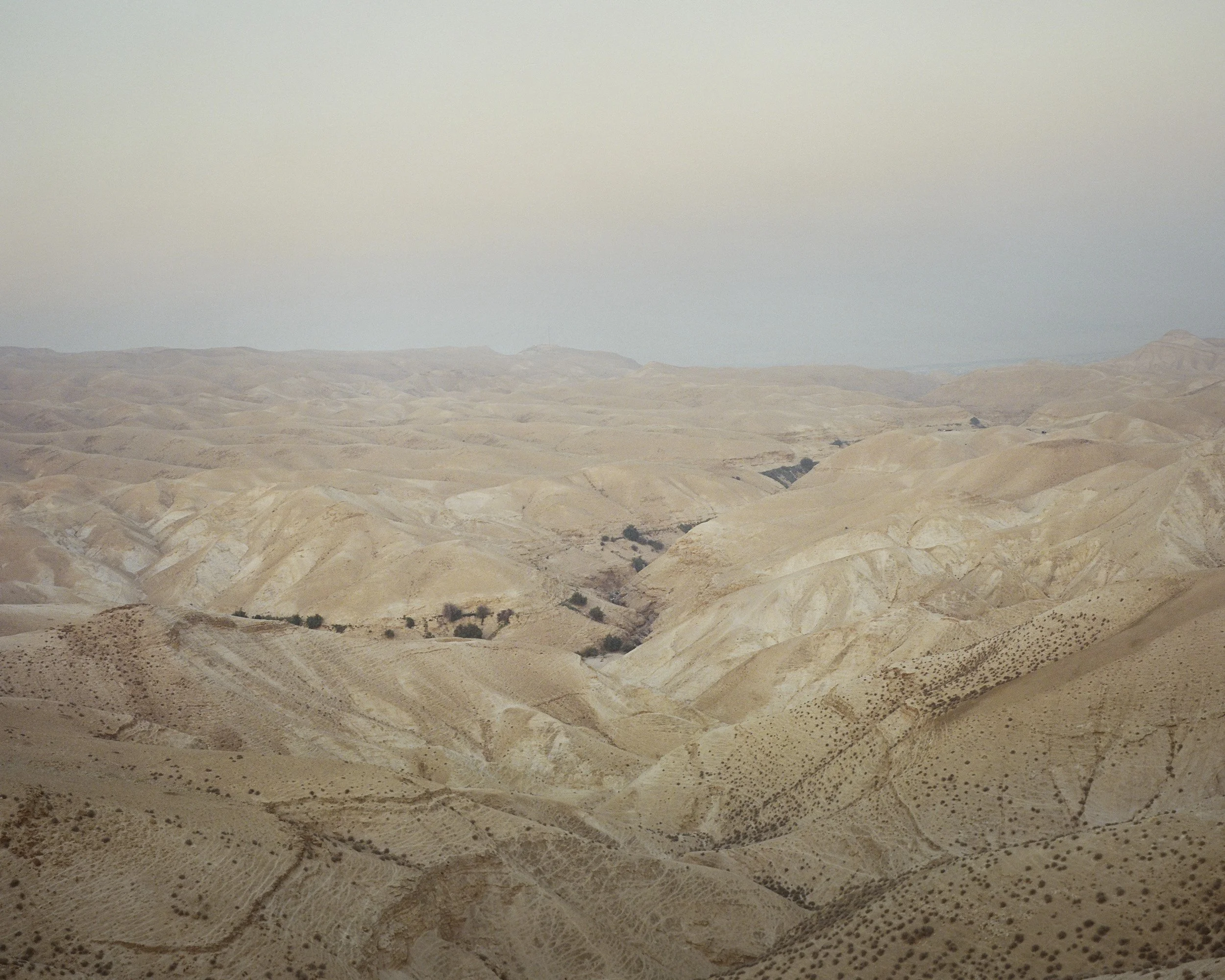
Jordan valley, november 2022.
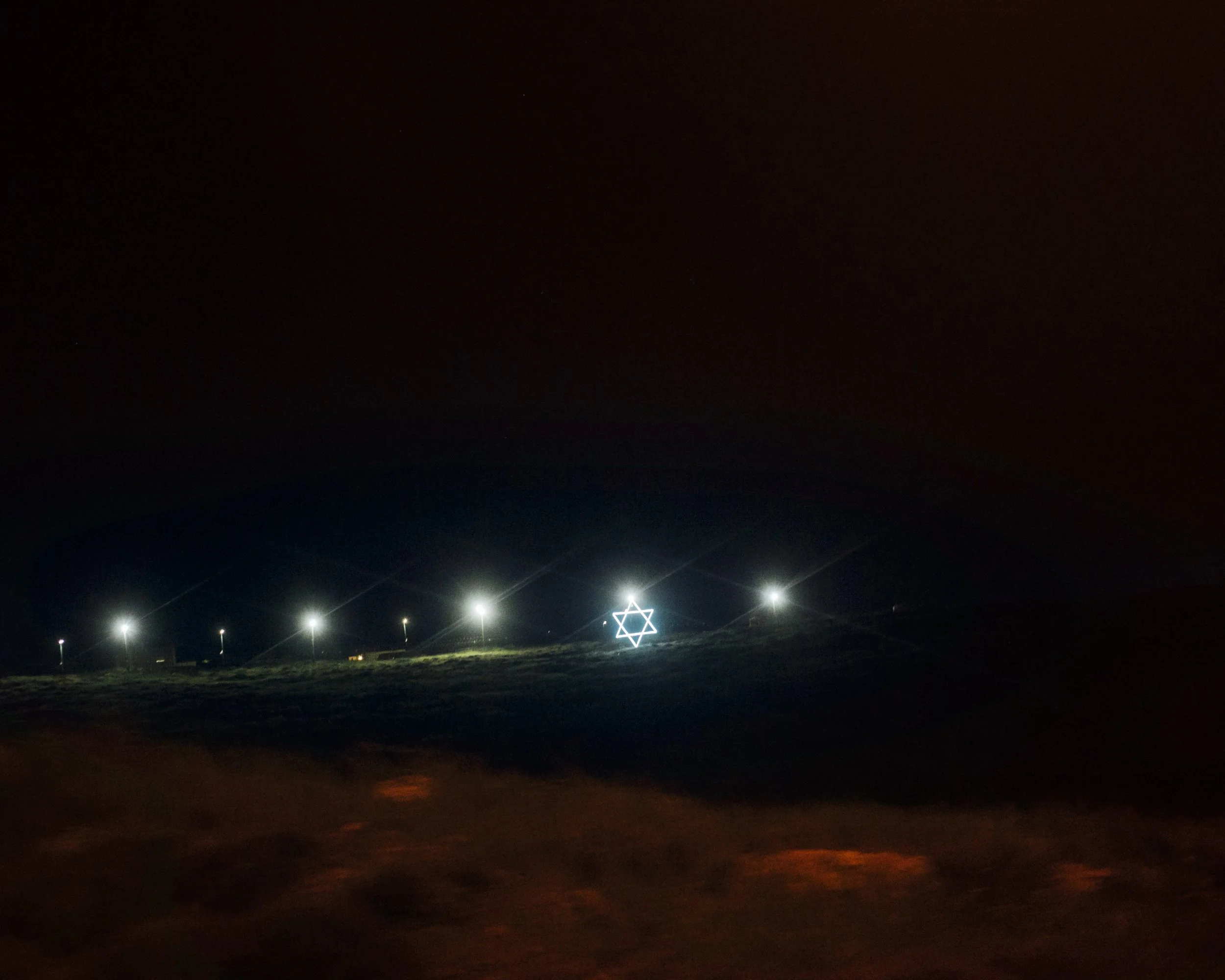
A Star of David installed near the settlement of Maon, next to the Palestinian village of Tuwani. The surrounding Palestinian villages are regularly targeted by Israeli settlers based nearby. Masafer Yatta, West Bank, March 14, 2024.
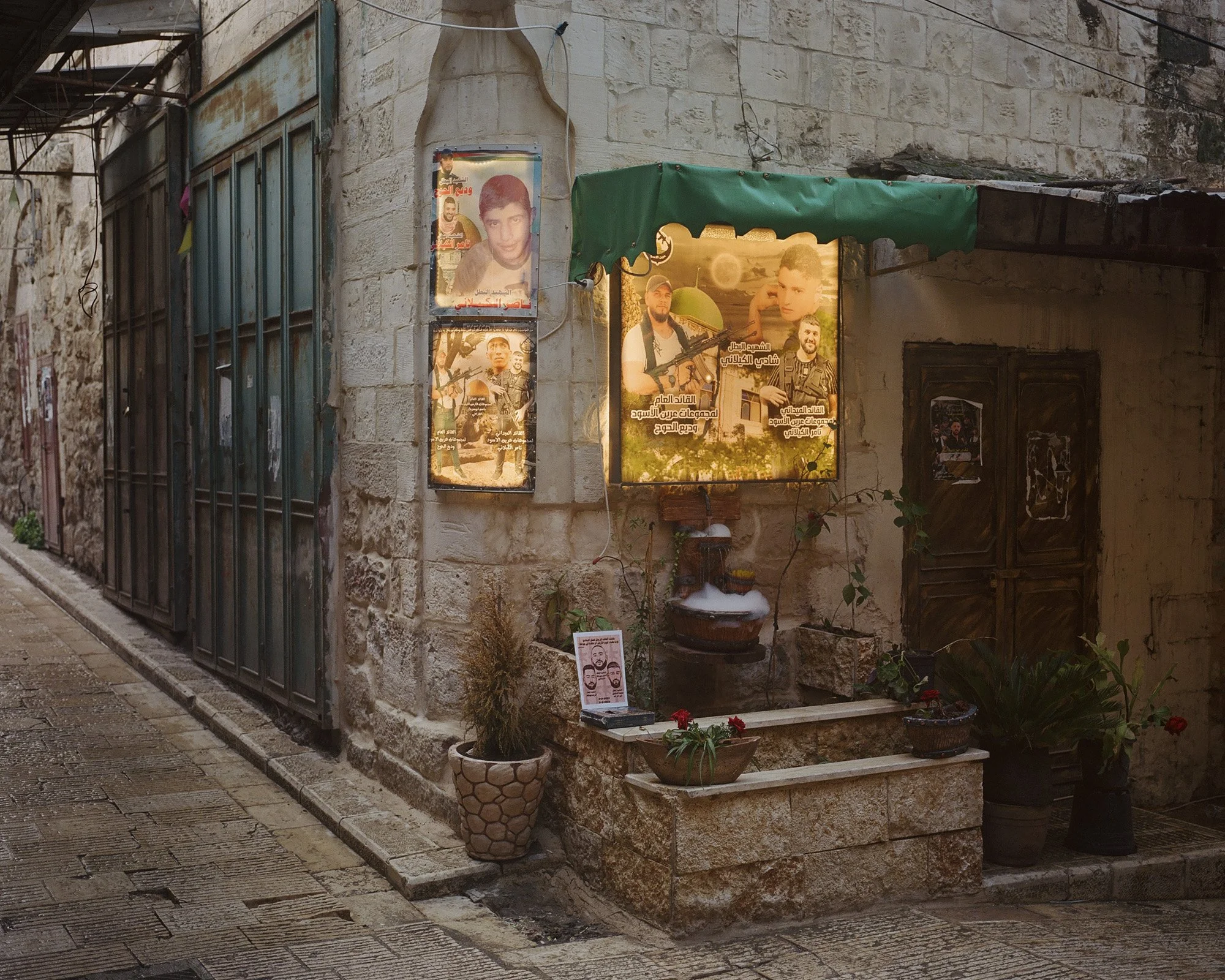
Images of martyrs, Nablus old city
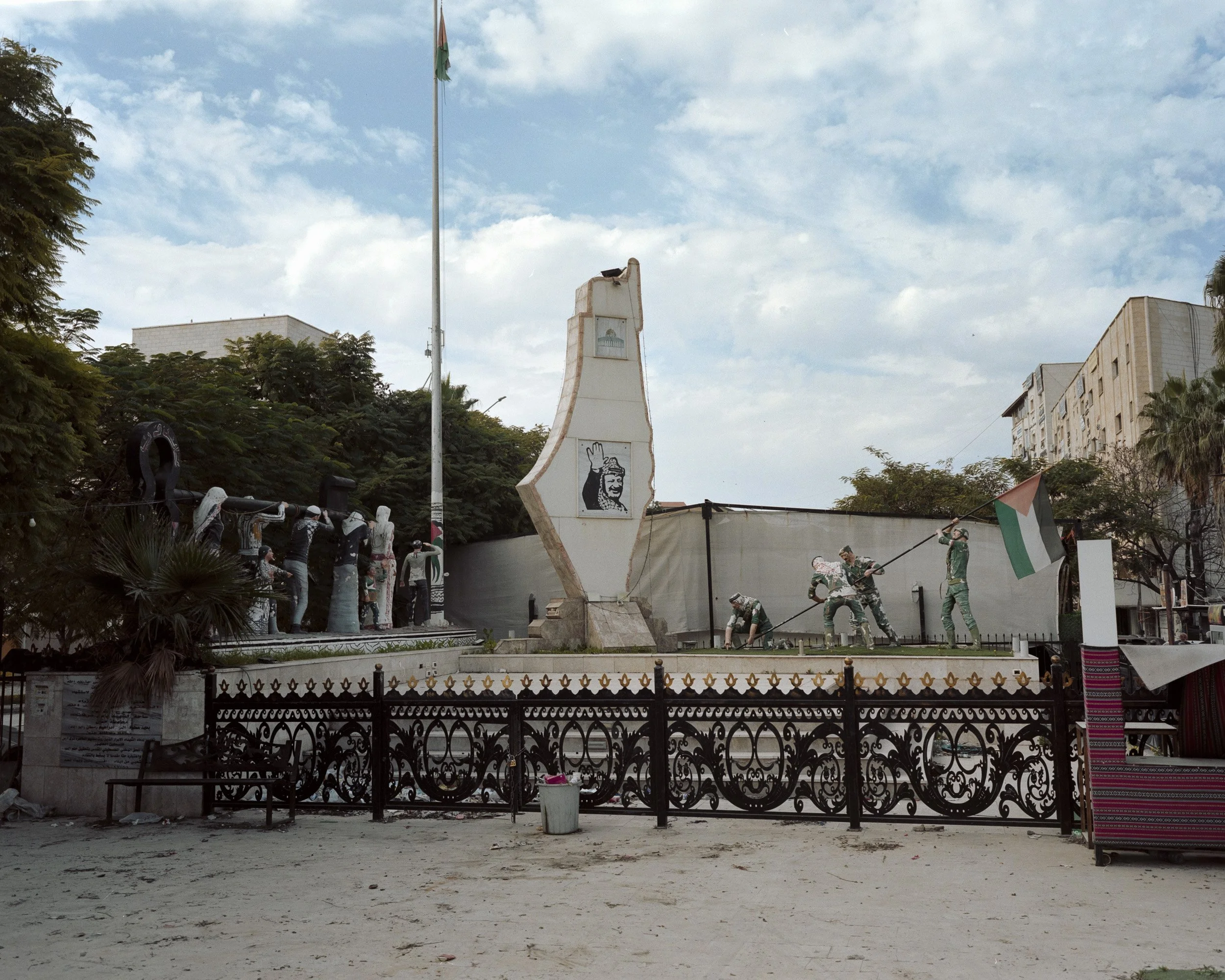
"Monument for Palestine", in front of Jenin governorate.
Next
Next

This was Gaza